
Introduction: Navratri Ashtami and Navmi
Navratri Ashtami and Navmi are among the most sacred and spiritually powerful days of the nine-day festival of Navratri. Celebrated with immense devotion across India, these two days mark the culmination of worship dedicated to Goddess Durga and her various forms.
While the entire Navratri period holds deep religious importance, Ashtami (8th day) and Navmi (9th day) are considered highly auspicious for performing rituals like Kanya Pujan, Havan, and special prayers. Devotees believe that observing these rituals with faith brings prosperity, protection, and divine blessings.
In this blog, we’ll explore everything about Navratri Ashtami and Navmi, including their significance, rituals, traditions, and how you can celebrate them meaningfully.
- Understanding Navmi (Maha Navami)
- Spiritual Significance of Navratri Ashtami and Navmi
- Important Rituals Performed on Ashtami and Navmi
- How to Perform Kanya Pujan at Home
- Foods Prepared on Navratri Ashtami and Navmi
- Regional Celebrations Across India
- Do’s and Don’ts for Navratri Ashtami and Navmi
- Why Kanya Pujan is So Important
- Conclusion
- Call-to-Action (CTA)
Understanding Ashtami (Durga Ashtami)
Navratri Ashtami, also known as Durga Ashtami, is dedicated to the fierce form of Goddess Durga, symbolizing strength and protection from evil forces.
- It represents the victory of good over evil
- Devotees perform special pujas and fasts
- Kanya Pujan is widely conducted on this day
Understanding Navmi (Maha Navami)
Navmi, or Maha Navami, marks the final day of Navratri celebrations.
- It signifies the completion of nine days of devotion
- Devotees perform Havan (holy fire ritual)
- It is associated with wisdom, power, and spiritual fulfillment
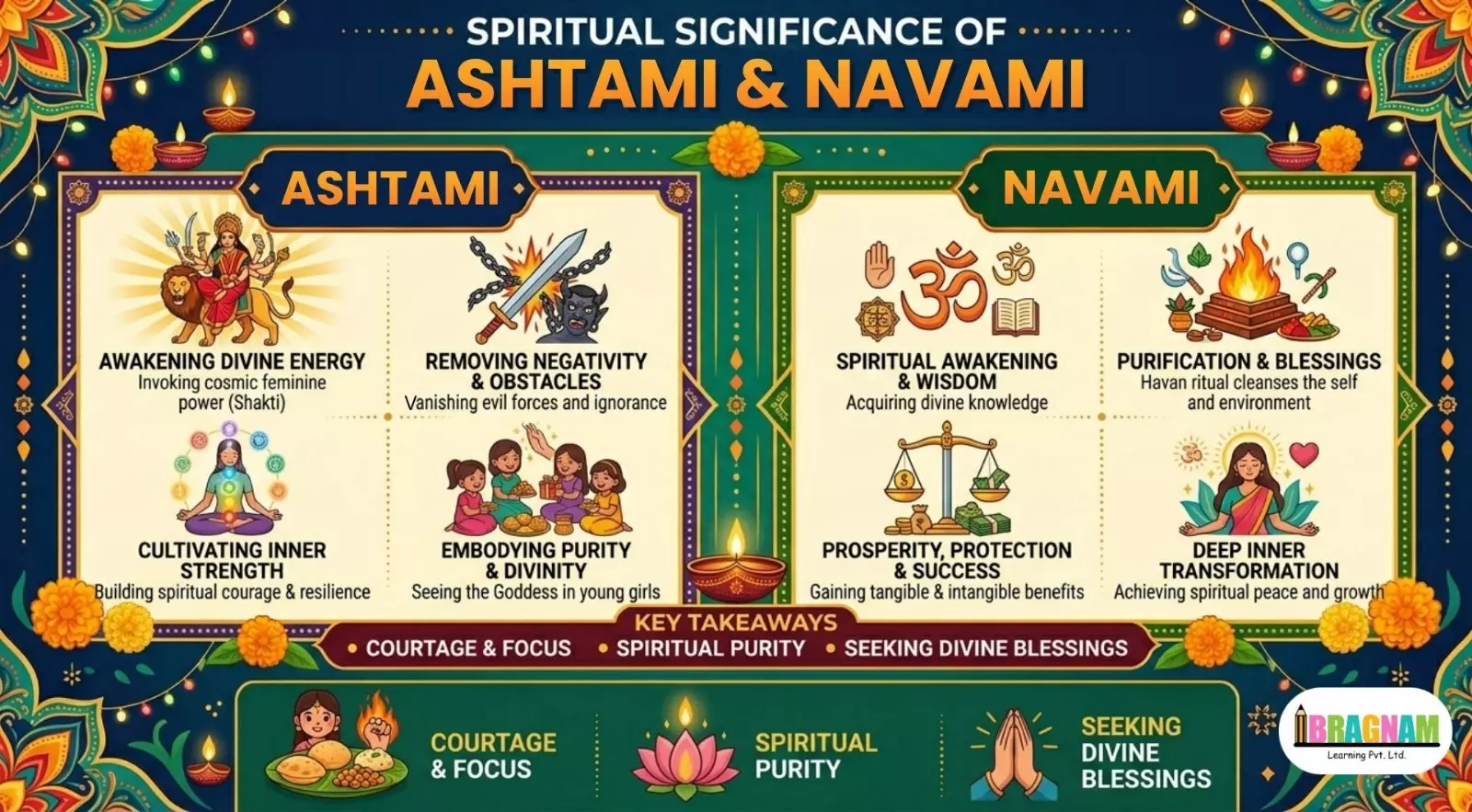
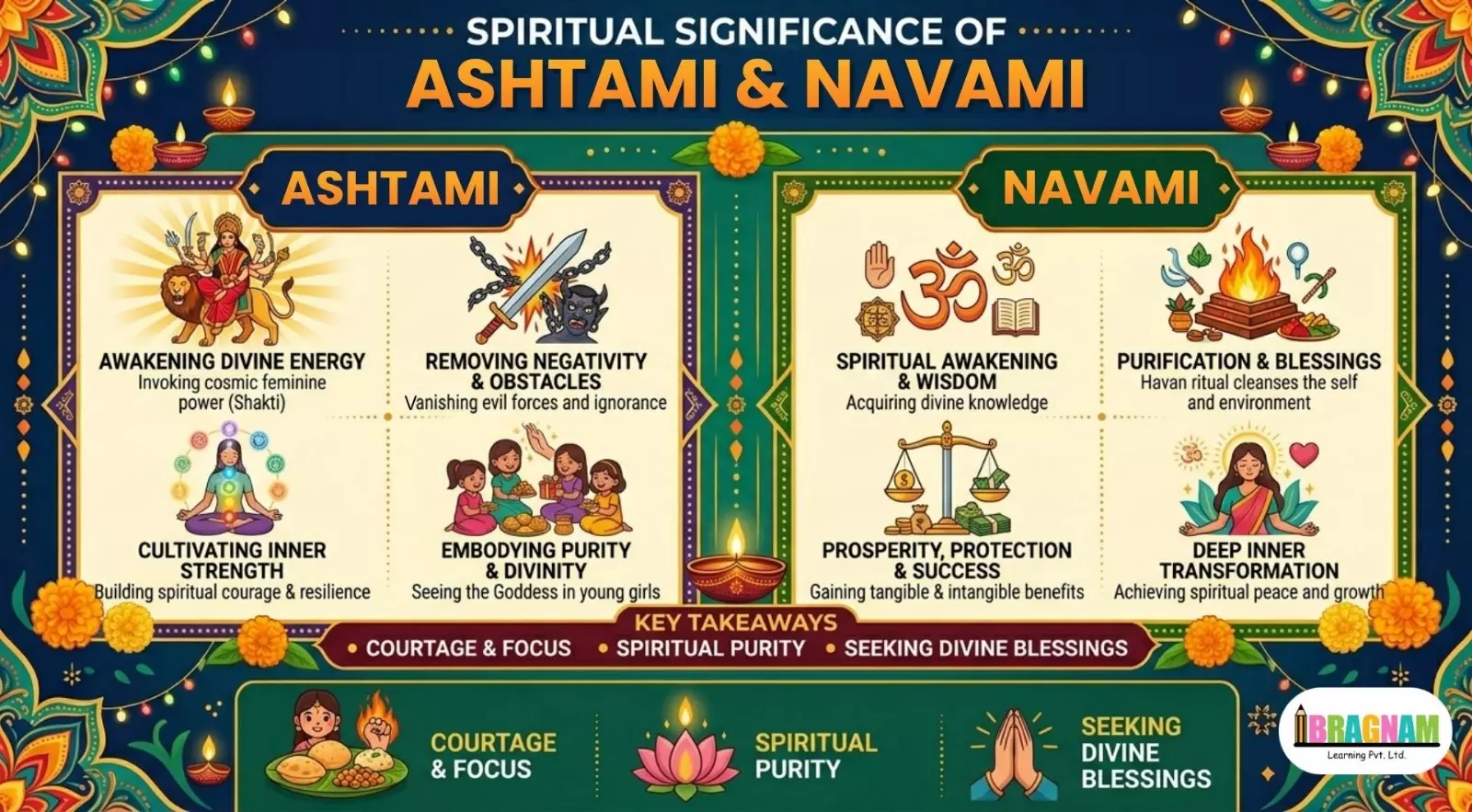
Spiritual Significance of Navratri Ashtami and Navmi
The spiritual importance of Navratri Ashtami and Navmi lies in the worship of feminine divine energy (Shakti).
Key Beliefs:
- Goddess Durga blesses devotees with courage and success
- Performing rituals removes negativity and obstacles
- These days symbolize inner transformation and purity
According to Hindu mythology, these days commemorate the victory of Goddess Durga over the demon Mahishasura, symbolizing the triumph of righteousness.
Important Rituals Performed on Ashtami and Navmi
1. Kanya Pujan (Kanjak Puja)
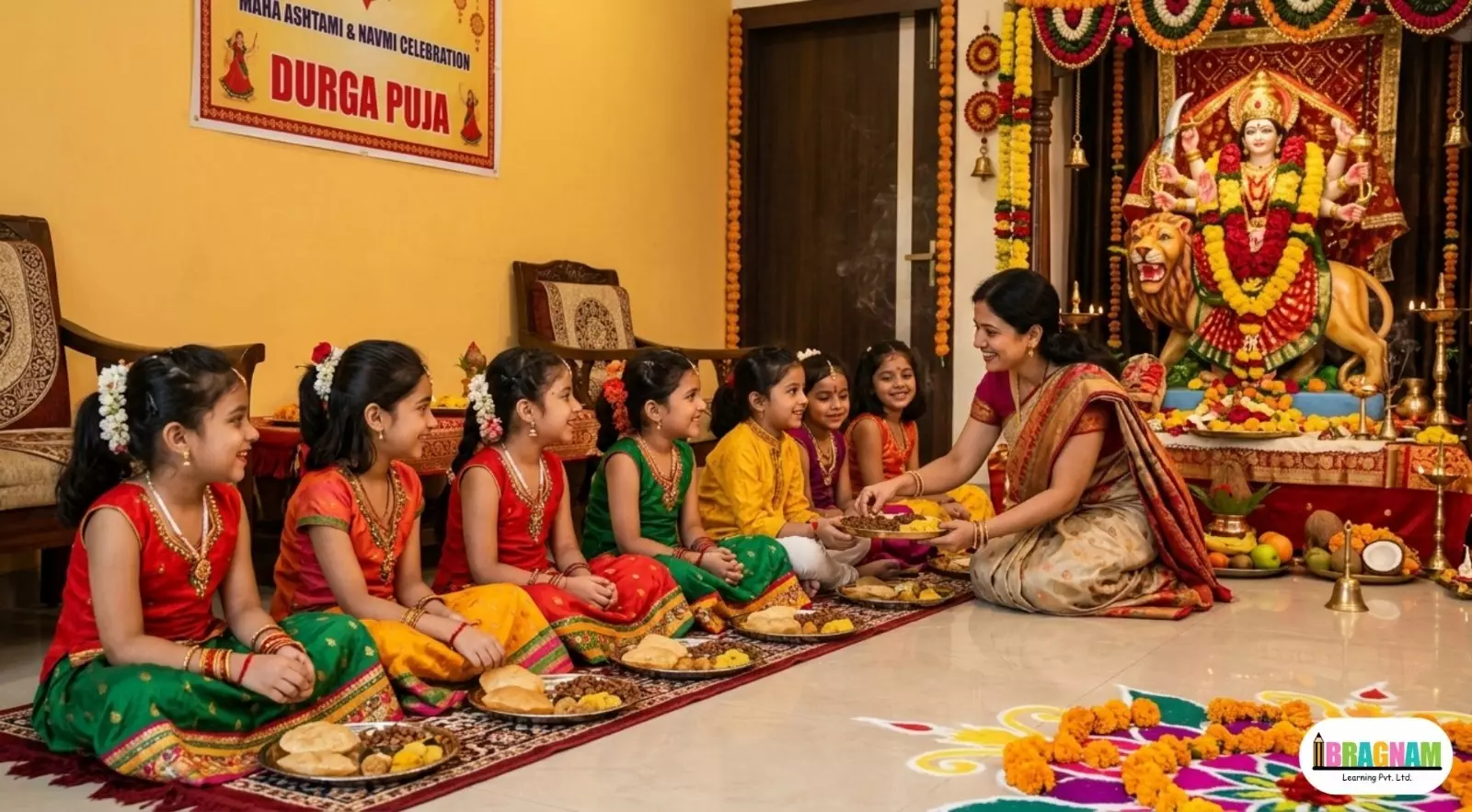
One of the most important rituals of Navratri Ashtami and Navmi is Kanya Pujan.
What is done:
- Young girls (representing Goddess Durga) are invited
- Their feet are washed as a mark of respect
- They are offered food, gifts, and blessings
Traditional Menu:
- Puri
- Kala chana
- Halwa
2. Fasting and Prayers
Devotees observe fasts and dedicate the day to prayer and meditation.
- Fruits, milk, and satvik food are consumed
- Chanting of Durga mantras is common
3. Havan (Sacred Fire Ritual)
Performed mainly on Navmi, Havan is believed to purify the environment and invite divine blessings.
How to Perform Kanya Pujan at Home
Here’s a simple step-by-step guide:
- Clean your home and puja area
- Invite 7–9 young girls (and one boy as Bhairav)
- Wash their feet respectfully
- Offer prasad (halwa, puri, chana)
- Give gifts like bangles, clothes, or money
- Seek their blessings
Tip: Perform the puja with sincerity rather than focusing on perfection.
Foods Prepared on Navratri Ashtami and Navmi
Food plays a vital role in Navratri Ashtami and Navmi celebrations.
Popular Dishes:
- Kala Chana – Rich in protein and traditionally offered
- Sooji Halwa – Sweet prasad symbolizing happiness
- Puri – A festive staple
These dishes are prepared without onion and garlic to maintain purity.
Regional Celebrations Across India
Different parts of India celebrate Navratri Ashtami and Navmi in unique ways:
- North India: Kanya Pujan and fasting are common
- West Bengal: Grand celebrations leading to Durga Puja
- Gujarat: Garba and Dandiya continue with full enthusiasm
- South India: Saraswati Puja and Ayudha Puja are observed
Do’s and Don’ts for Navratri Ashtami and Navmi
Do’s:
- Maintain cleanliness and purity
- Offer prayers with devotion
- Respect guests during Kanya Pujan
Don’ts:
- Avoid non-vegetarian food
- Do not consume alcohol
- Avoid negative thoughts and actions
Why Kanya Pujan is So Important
Kanya Pujan is not just a ritual but a reminder to respect and honor feminine energy.
Symbolism:
- Young girls represent purity and divinity
- It promotes respect for women in society
- It strengthens spiritual connection
Conclusion
Navratri Ashtami and Navmi are not just ritualistic days but a celebration of faith, devotion, and the power of good over evil. Whether you perform elaborate rituals or simple prayers, what truly matters is your intention and belief.
By observing these sacred days with devotion, you invite positivity, strength, and divine blessings into your life. Let this Navratri be a time for inner growth, gratitude, and spiritual awakening.
Call-to-Action (CTA)
Celebrate Navratri Ashtami and Navmi with devotion and positivity!
Share this blog with your friends and family, and let’s spread the spiritual essence of Navratri together. 🌼


Leave A Comment