
Why Are They Called Kindergarten? The Fascinating Story Behind the Word
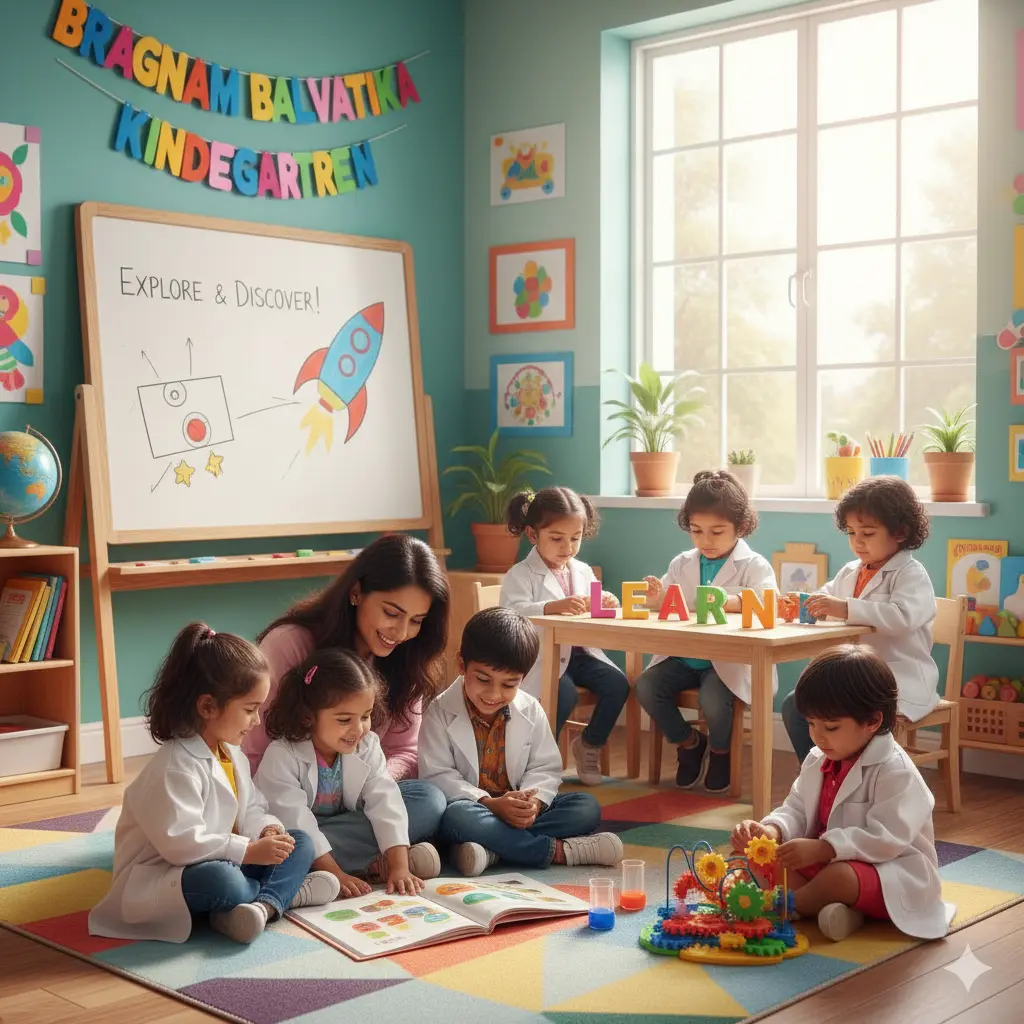
Have you ever wondered why we call the early years of schooling “Kindergarten” and not something like “child school” or “early learners’ class”?
The term sounds unique—almost musical—and it has a deep, meaningful origin that connects beautifully with how young children grow and learn.
Let’s dive into the history, meaning, and importance of the word Kindergarten, and also understand why enrolling your child in a trusted preschool like Bragnam/Balvatika Kindergarten can make a world of difference in their early education journey.
🌱 The Origin of the Word “Kindergarten”
The term “Kindergarten” comes from German—it’s a combination of two words:
“Kinder” means children
“Garten” means garden
So, Kindergarten literally translates to “Children’s Garden.”
The concept was introduced by a German educator named Friedrich Fröbel in the 19th century. Fröbel believed that children are like young plants that need to be nurtured, cared for, and allowed to grow naturally in a loving environment.
He envisioned a place where children could learn through play, creativity, and social interaction—not through strict academic instruction.
Thus, in 1837, he founded the first Kindergarten in Blankenburg, Germany, where children were encouraged to explore, sing, dance, garden, and engage in hands-on learning.
🌼 The Philosophy Behind Kindergarten
Fröbel’s philosophy was simple yet revolutionary:
“Play is the highest expression of human development in childhood.”
He believed that children learn best through play—by observing, experimenting, and interacting with their surroundings.
In Kindergarten, learning happens naturally as children engage in activities that stimulate their imagination, coordination, and curiosity.
Fröbel also introduced the idea of “gifts” and “occupations”—special learning tools and hands-on tasks designed to help children explore shapes, patterns, and relationships. These ideas later inspired the development of modern preschool learning materials used in Montessori and other play-based learning systems.
🎨 Kindergarten Today – More Than Just Play
Over time, the Kindergarten model spread across the world, evolving into what we now call preschool or early learning centers.
But the essence remains the same—helping children grow like flowers in a garden, where each child is unique and needs care and attention to bloom.
Modern Kindergartens, like Balvatika – An Initiative of Bragnam Learning Pvt Ltd, continue this philosophy by focusing on:
Holistic development – nurturing emotional, social, physical, and intellectual growth.
Activity-based learning – through storytelling, art, music, and outdoor play.
Practical life skills – encouraging independence, sharing, and teamwork.
Safe and stimulating environments – where children feel loved and motivated to learn.
Balvatika’s teaching approach celebrates the true spirit of Kindergarten by ensuring that learning is fun, joyful, and developmentally appropriate.
🌻 Why Is Kindergarten So Important?
Kindergarten is the foundation of lifelong learning.
This is the stage when a child develops essential skills like:
Communication and vocabulary
Early math and literacy understanding
Emotional confidence
Problem-solving and creativity
Social cooperation and empathy
It’s also when children learn the joy of discovery—something that stays with them forever.
Enrolling your child in a well-structured Kindergarten like Bragnam/Balvatika ensures they experience this magical stage of growth in a balanced and nurturing environment.
🏫 Bragnam/Balvatika Kindergarten – Nurturing Little Minds
At Bragnam Learning Pvt Ltd, we understand that every child learns differently.
Our Balvatika Kindergarten programs are designed with child-centric activities inspired by international early childhood frameworks while staying rooted in Indian cultural values.
We create a vibrant learning space where children:
Explore concepts through hands-on activities
Develop fine and gross motor skills through play
Build early literacy and numeracy readiness
Participate in creative storytelling, art, and music
Learn self-discipline, empathy, and responsibility
Every classroom feels like a garden of learning, where teachers act as gardeners—nurturing young minds to grow confidently and beautifully.
🌟 Fun Fact: The First Kindergarten in India
Did you know the first Kindergarten in India was established in Madras (now Chennai) in the early 20th century?
The concept quickly spread as educators recognized its value in shaping children’s learning habits and emotional intelligence from an early age.
Today, preschools and kindergartens across India—like Balvatika—continue to uphold these values, combining traditional learning with modern methodologies.
🌸 Final Thoughts
The name “Kindergarten” isn’t just a fancy word—it represents an entire philosophy of nurturing, growing, and caring for young minds.
It reminds us that children, like plants, need sunlight (love), water (care), and soil (guidance) to flourish.
So, the next time you drop your child at their Kindergarten, remember—you’re not just sending them to school. You’re letting them step into their own little garden of learning.
At Bragnam/Balvatika, we’re proud to continue Fröbel’s legacy by creating joyful spaces where every child blossoms with curiosity, creativity, and confidence.


Leave A Comment