
Opening a pre-school is much more than renting a space and buying toys; it is about creating a safe, loving, and stimulating environment where children take their first steps into formal learning. When done thoughtfully, a preschool can become a trusted second home for children and a respected brand in the community. This guide walks through the key things to keep in mind while opening a pre-school so you can start right and grow confidently.
- Clarify your vision and preschool model
- Understand legal and regulatory requirements
- Choose the right location and space
- Plan child-safe infrastructure and environment
- Design a child-centric curriculum and daily routine
- Hire and train the right staff
- Put strong safety and health policies in place
- Plan your fee structure and finances
- Build a parent-friendly communication strategy
- Create a simple but strong marketing plan
- Keep quality improvement and documentation in focus
- FAQ: Things to Keep in Mind While Opening a Pre-School
- Conclusion: Start small, stay child-centric, and grow steadily
Clarify your vision and preschool model
Before anything else, get clear about why you want to start a preschool and what kind of experience you want to offer. A well-defined vision keeps you focused when making decisions about curriculum, fees, location, and marketing.
- Decide whether you want to position your centre as a neighbourhood preschool, a premium brand, or a franchise unit.
- Choose your educational approach—play-way, Montessori-inspired, activity-based, or a blended model—that aligns with your philosophy and local demand.
- Define your age groups and programs (Playgroup, Nursery, LKG, UKG) so your space planning and staffing match your offerings.
Understand legal and regulatory requirements
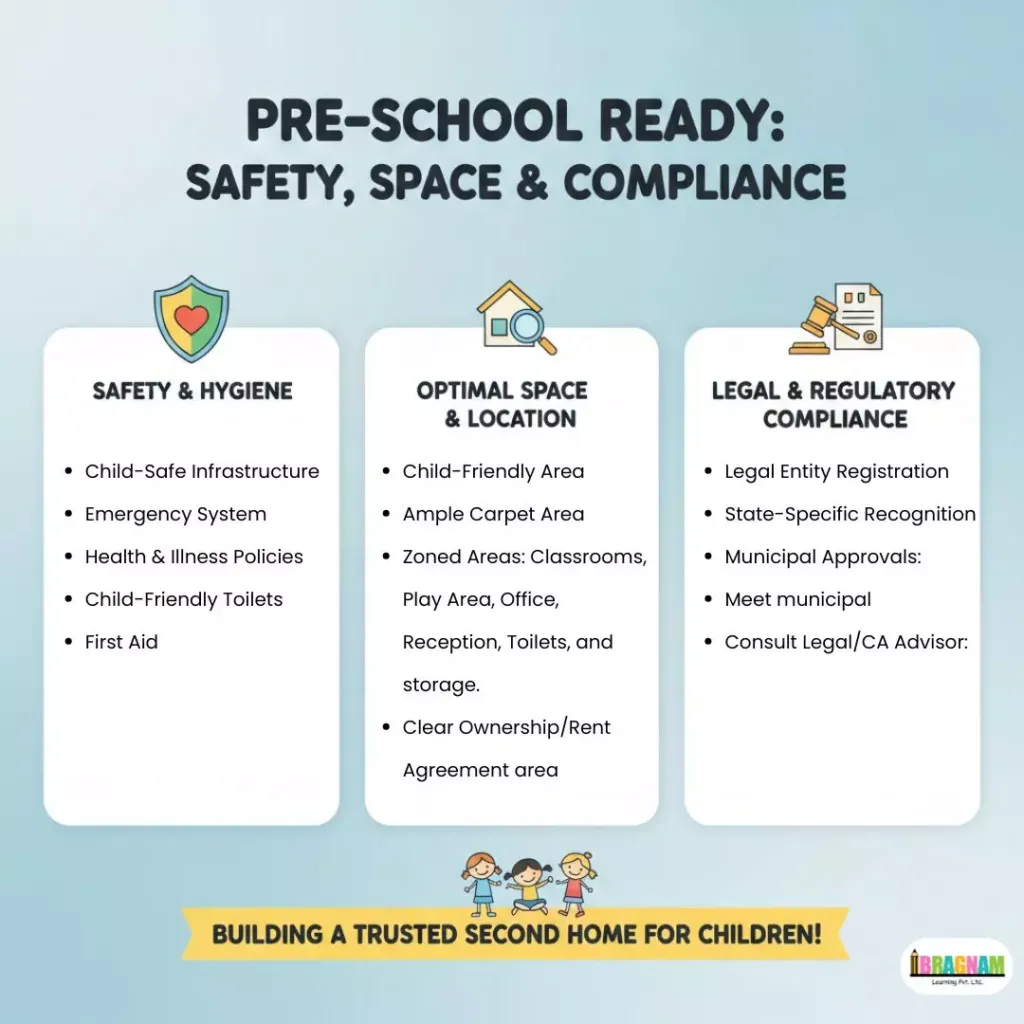
One of the most critical things to keep in mind while opening a pre-school is compliance with local regulations and registration norms. While preschool regulations in India are still evolving, many states and municipal bodies have clear guidelines for recognition, safety, and basic standards.
Key points to consider:
- Register your preschool as a legal entity such as a proprietorship, partnership, trust/society, or private limited company, depending on your long-term plans and scale.
- Check state-specific rules for preschool recognition, especially in states like Maharashtra, Karnataka, and Tamil Nadu, where registration and approval are mandatory.
- Ensure you meet municipal requirements related to land use, occupancy, fire safety, and building codes before starting operations.
- Consulting a local chartered accountant or legal advisor is usually worth the investment to avoid compliance issues later.
Choose the right location and space
Location is one of the biggest success factors and a major thing to keep in mind while opening a pre-school. Parents look for a centre that is easy to reach, secure, and away from heavy traffic and industrial noise.
When shortlisting spaces:
- Prefer a child-friendly residential or mixed-use area that is safe, calm, and has good visibility from the road.
- Ensure there is enough carpet area per child to avoid overcrowding and to comply with norms where prescribed by local authorities.
- Plan for separate zones: classrooms, reception, office, outdoor or indoor play area, toilets, and storage.
- Check that the property has clear ownership or a proper rental agreement and that it meets zoning norms for running an educational institution.
Plan child-safe infrastructure and environment
Safety and hygiene must be at the heart of your preschool design. A thoughtfully designed environment not only protects children but also reassures parents that their little ones are in safe hands.
Important infrastructure points to keep in mind:
- Classrooms should be well-lit, ventilated, and equipped with child-sized furniture with rounded edges and non-slippery flooring.
- Install safety gates, corner guards, socket covers, and child-proof locks where necessary.
- Maintain clean, child-friendly toilets with low-height basins and proper hygiene supplies.
- Set up emergency and safety systems: fire extinguishers, clear evacuation routes, smoke detectors where applicable, and visible emergency contact numbers.
- Keep first-aid kits handy in all key areas and ensure staff know where they are and how to use them.
- A neat, colourful, and clutter-free environment with age-appropriate learning corners makes a strong impression on parents during school tours.
Design a child-centric curriculum and daily routine
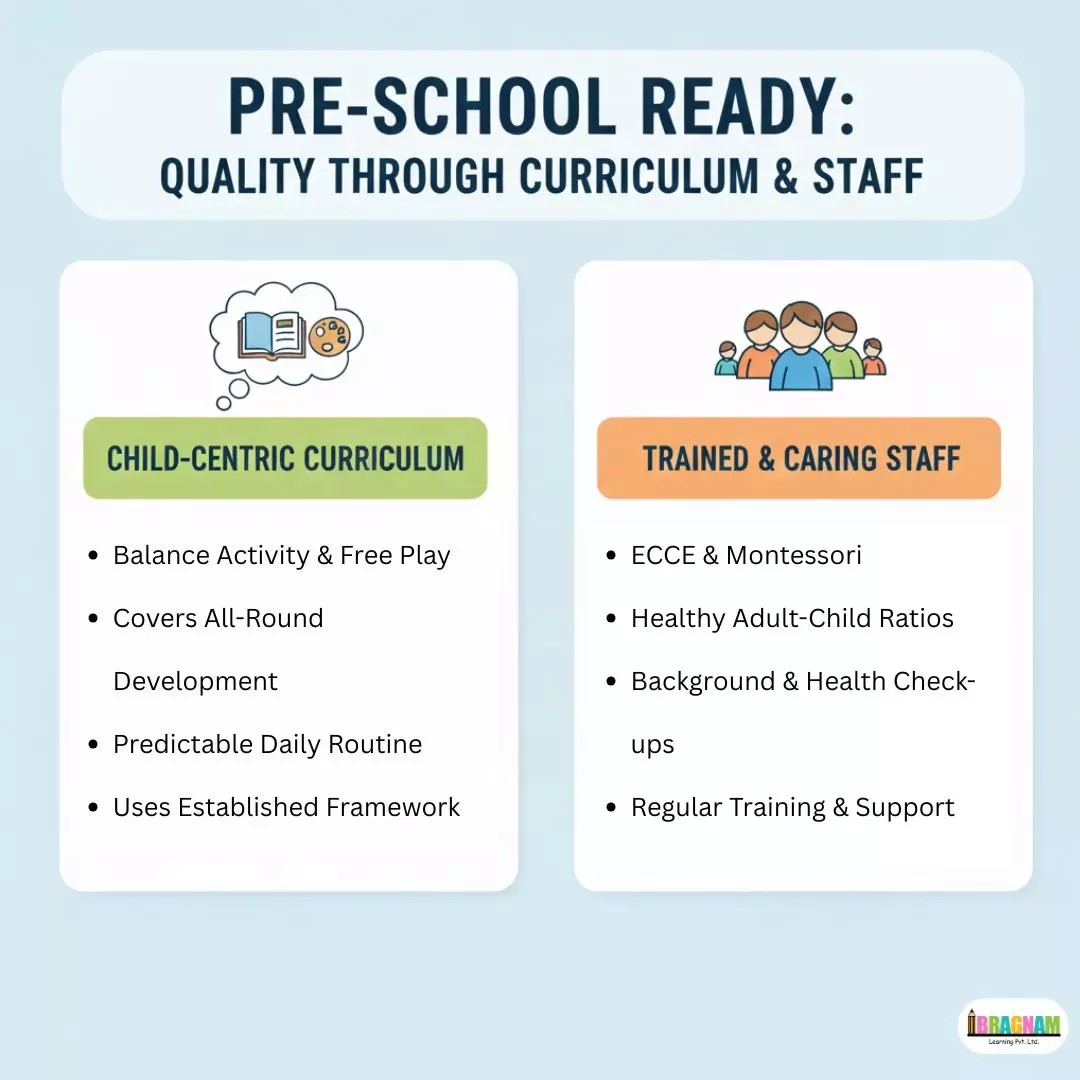
Curriculum is another vital thing to keep in mind while opening a pre-school, because it directly impacts the quality of learning and your brand reputation. Good preschool programs balance structured activities with free play and focus on all-round development—language, motor skills, social skills, and emotional growth.
While planning your curriculum:
- Align with early childhood education principles and age-appropriate milestones rather than pushing rote academics.
- Include activities across domains—music, movement, storytelling, art, pre-math, early literacy, and life skills.
- Build a predictable daily routine with a mix of circle time, free play, outdoor play, snack time, and rest time.
- Decide whether you want to adopt or adapt established frameworks such as Montessori elements, thematic learning, or inquiry-based projects.
Documenting your curriculum and sharing a broad outline with parents also helps build trust and transparency.
Hire and train the right staff
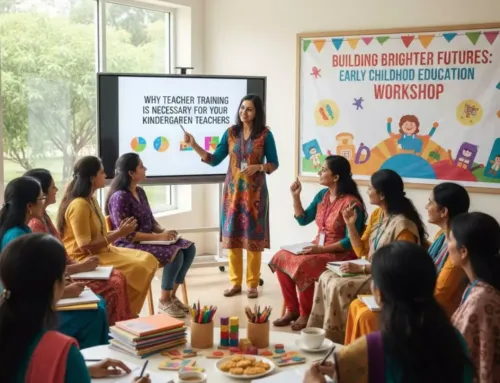
Teachers and caregivers are the backbone of your preschool and a major factor families consider while choosing a centre. One of the most important things to keep in mind while opening a pre-school is that warm, trained, and stable staff matter more than fancy interiors.
Staffing essentials:
- Recruit teachers with qualifications or training in Early Childhood Care and Education (ECCE), Montessori, or nursery teacher training where possible.
- Maintain healthy adult–child ratios to ensure safety and individual attention; best-practice ranges for preschoolers often fall between 1:8 and 1:12 depending on age and group size.
- Conduct background checks, reference checks, and basic health checks before onboarding any staff member.
- Provide regular in-house training on classroom management, safety protocols, first aid, and communication with parents.
Happy, motivated staff lead to low turnover, consistent classrooms, and stronger parent relationships.
Put strong safety and health policies in place
Parents today are very conscious about safety, hygiene, and emotional well-being. Having clear written policies is a key thing to keep in mind while opening a pre-school because it reduces confusion for staff and reassures families.
Policies to define and document:
- Visitor management, pick-up and drop-off rules, and authorised guardians.
- Illness policy, including when children should stay home and how you handle symptoms or contagious conditions on campus.
- Emergency procedures for fire, injuries, and natural disasters, along with periodic drills.
- Child protection and behaviour management guidelines with zero tolerance for abuse or harsh punishment.
Display key rules in reception and include them in your parent handbook so everyone knows the expectations.
Plan your fee structure and finances
Another important thing to keep in mind while opening a pre-school is how you will cover costs and stay profitable without compromising quality. A clear financial plan helps you manage salaries, rent, marketing, and learning materials while keeping your fees competitive for your location.
Consider the following:
- Estimate your initial investment in interiors, teaching aids, branding, and safety equipment, and separate it from monthly operating expenses.
- Research competitor fee ranges in your area so your pricing reflects your positioning and value.
- Decide on application fees, admission fees, security deposits, and monthly or quarterly tuition, and communicate them transparently to parents.
- Keep a contingency fund for at least 3–6 months of operating costs to handle slow admission seasons or unforeseen expenses.
Build a parent-friendly communication strategy
Preschool success depends heavily on parent satisfaction and word-of-mouth. From the first enquiry call to daily updates, parents look for proactive, respectful, and transparent communication.
Things to plan:
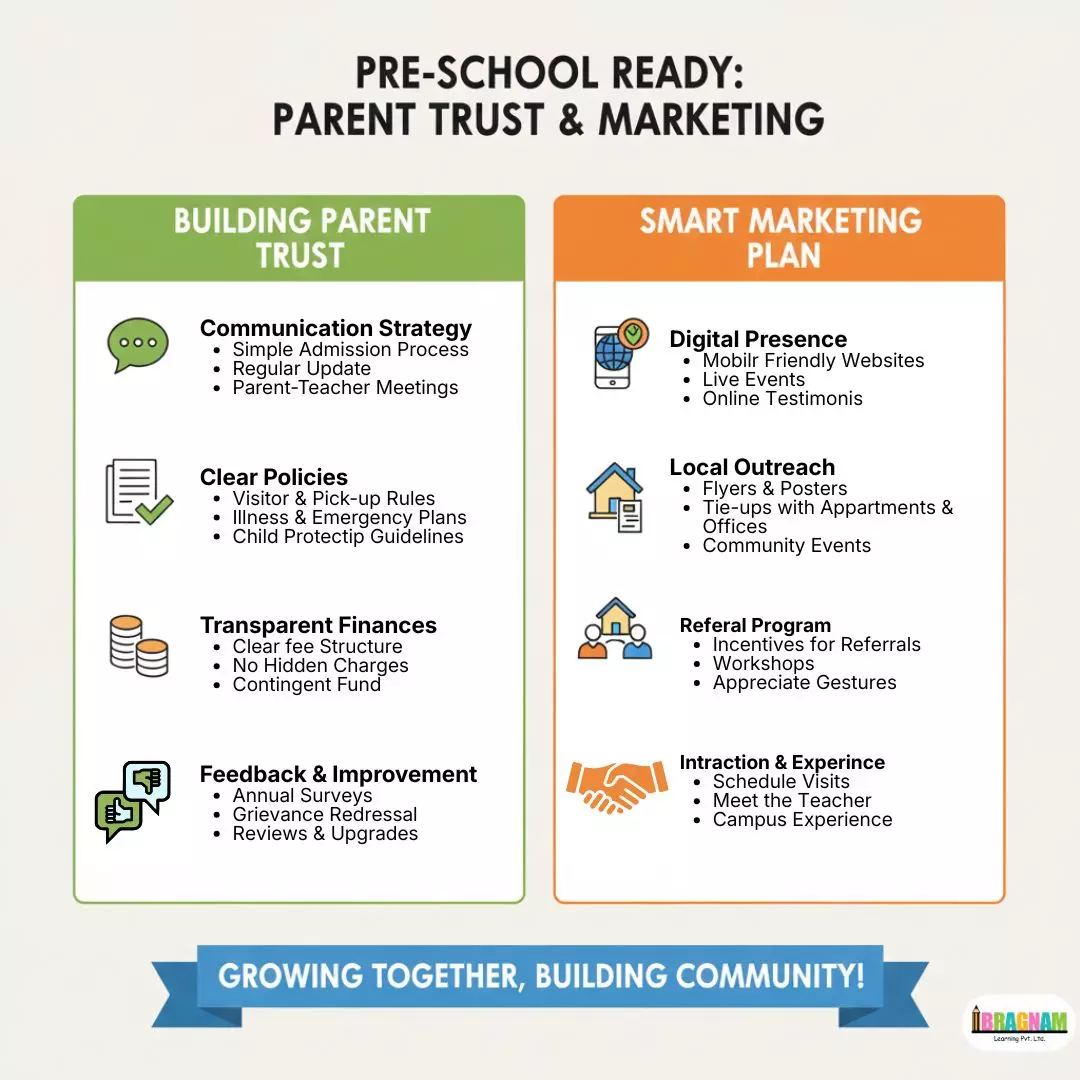
- A simple admission process with clear brochures, fee details, and program information.
- Regular updates through diaries, apps, WhatsApp broadcasts, or emails about activities, events, and important notices.
- Scheduled parent–teacher meetings, orientation sessions, and open days to build relationships and address concerns.
- A clear grievance redressal path so parents know whom to contact and how issues will be handled.
Positive, two-way communication helps you retain families and improve your services over time.
Create a simple but strong marketing plan
Marketing is often overlooked as a thing to keep in mind while opening a pre-school, but it is essential to reach the right families in your catchment. You do not need a huge budget; what you need is consistent, clear messaging and presence where parents are already looking.
Effective steps include:
- A basic, mobile-friendly website with details about your programs, philosophy, facilities, photos, and contact information.
- Active presence on social media platforms like Facebook and Instagram to showcase daily activities, events, and parent testimonials.
- Local awareness activities such as flyers, tie-ups with nearby apartments and offices, and community events like story sessions or parenting workshops.
- Encouraging referrals from existing parents through small incentives or appreciation gestures.
Keep quality improvement and documentation in focus
Finally, one of the most valuable things to keep in mind while opening a pre-school is that quality is not a one-time setup task but a continuous journey. Regular review of your practices will help you stay aligned with best standards and parent expectations.
Helpful practices:
- Maintain basic records such as attendance, health incidents, staff training logs, and safety checks.
- Collect feedback from parents and staff at least annually and implement realistic improvements.
- Review your curriculum, events calendar, and classroom practices every year to keep them fresh and relevant.
FAQ: Things to Keep in Mind While Opening a Pre-School
1. How much space is required to open a pre-school?
Space requirements vary by local rules, but many experts recommend enough area for safe movement, separate activity corners, and an outdoor or indoor play zone. Checking state or municipal guidelines on minimum space per child is one of the first things to keep in mind while opening a pre-school.
2. Do I need specific licences to start a pre-school in India?
Licensing requirements differ from state to state, and some states mandate registration or recognition with the education department or local authority. It is important to confirm current rules in your city and register your preschool as a proper business entity so you operate legally and build trust with parents.
3. What qualifications should preschool teachers have?
While regulations may not always specify teacher qualifications, hiring staff with Early Childhood Care and Education (ECCE), nursery teacher training, or Montessori certifications is strongly recommended. This is a key thing to keep in mind while opening a pre-school because trained teachers can better manage classrooms, support holistic development, and communicate effectively with parents.
4. How do I decide my preschool fee structure?
Start by listing your fixed and variable expenses, including rent, salaries, utilities, learning materials, and marketing, and then estimate a sustainable fee per child. Compare your planned fees with other preschools in your area to ensure your pricing matches your positioning and offers fair value to families.
5. How can I attract parents to a new preschool?
A combination of online and offline efforts works best, such as a simple website, active social media, community events, and open house days where parents can visit the campus and meet teachers. Clear communication, genuine child-centric practices, and early positive reviews are crucial things to keep in mind while opening a pre-school and building enrolments in the first year.
Conclusion: Start small, stay child-centric, and grow steadily
When you list out all the things to keep in mind while opening a pre-school—legal compliance, safety, curriculum, staffing, fees, and marketing—it can feel overwhelming at first. The good news is that with a clear vision, careful planning, and a genuine commitment to children’s well-being, you can build a preschool that parents trust and children love coming to every day. Start small, focus on quality over speed, and refine your processes as you grow—your preschool can then become a long-term, meaningful venture in your community.
If you are serious about opening a preschool and want support with planning, curriculum, and set-up, reach out today to explore how expert guidance can help you launch faster and more confidently.


Leave A Comment