
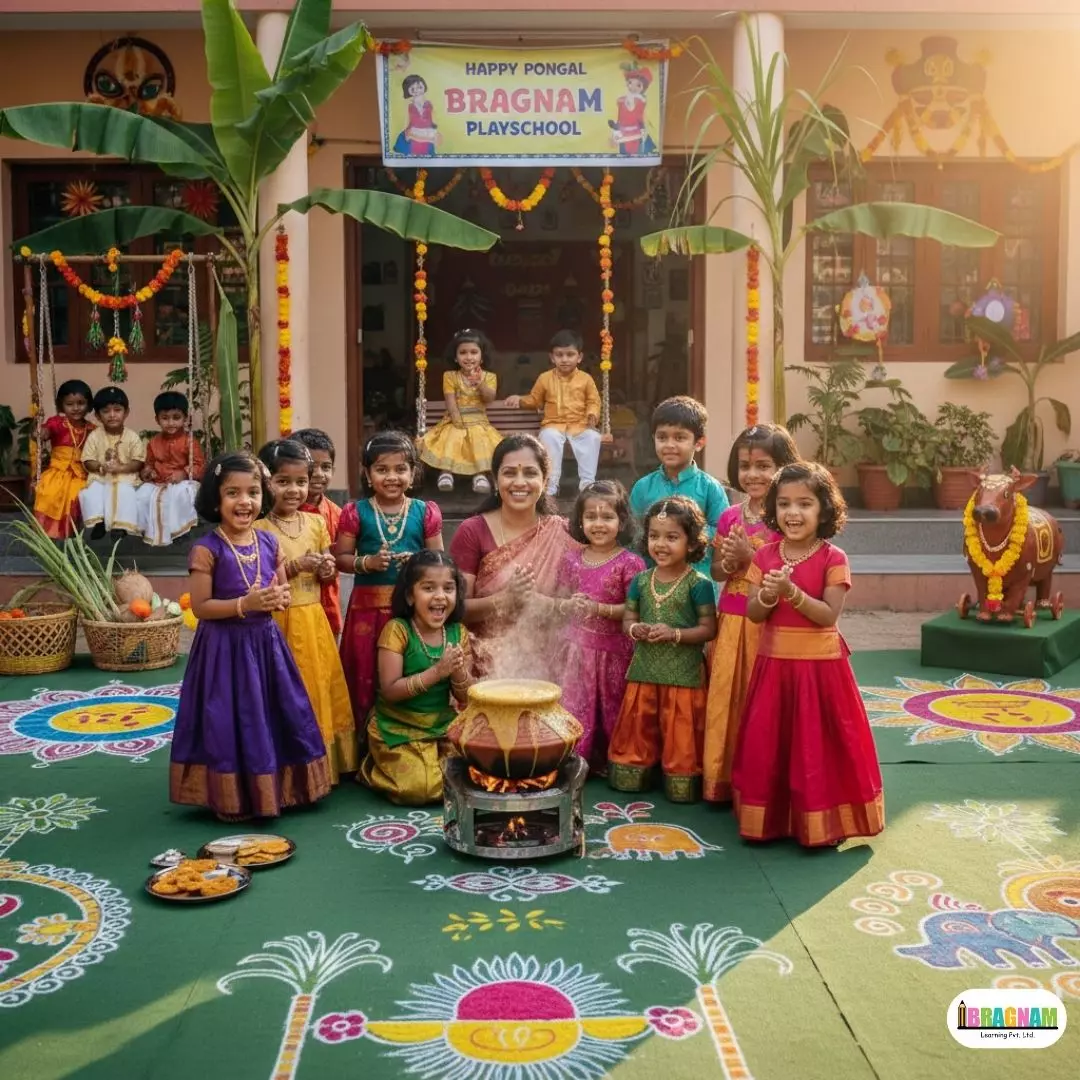
Pongal celebrates the harvest season in Tamil Nadu, marking gratitude to the sun god, nature, and farmers for abundance. This vibrant four-day festival brings families together with rituals, delicious food, and joyful traditions.
Origins of Pongal
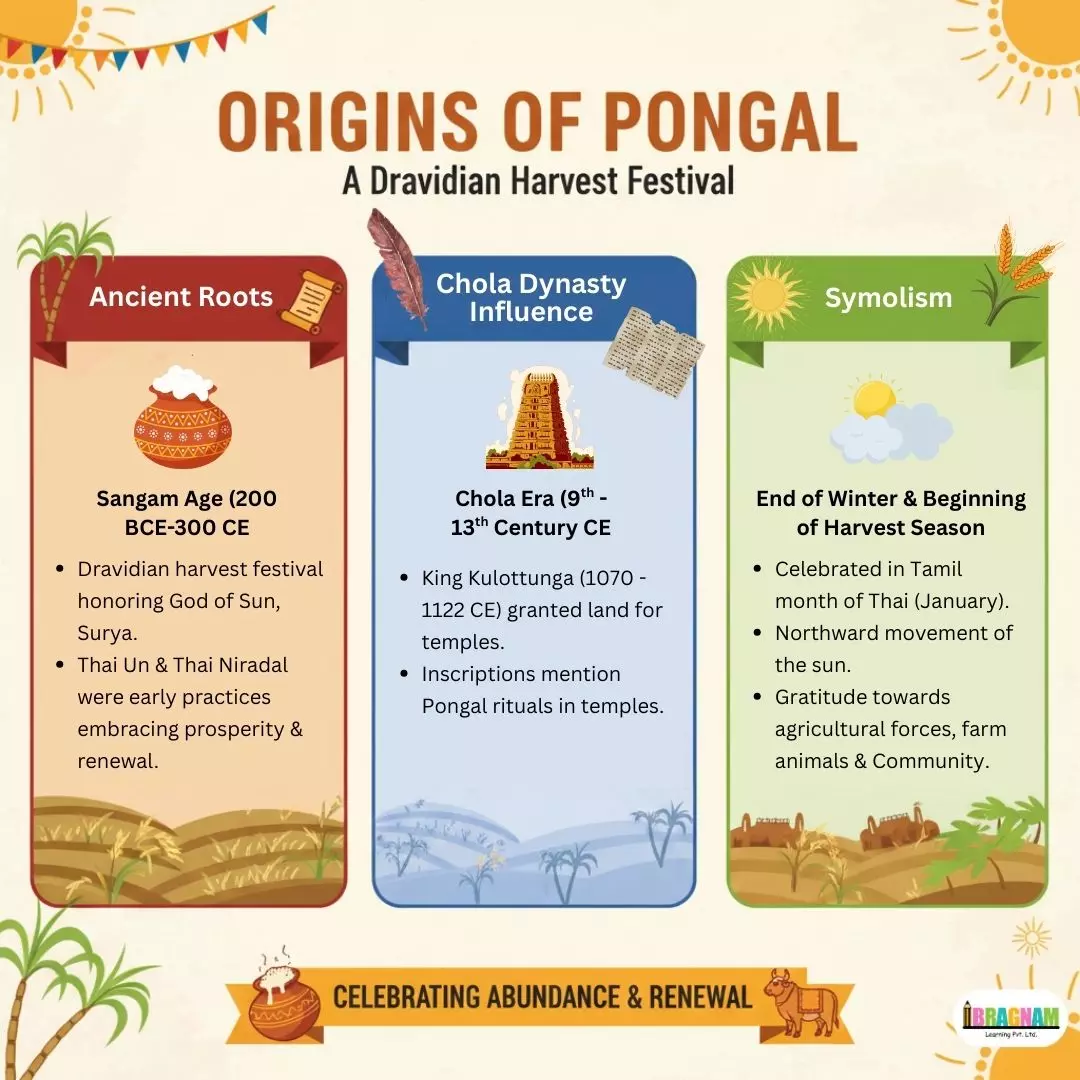
Pongal traces its roots to the Sangam Age, around 200 BCE to 300 CE, as a Dravidian harvest festival honoring the sun god Surya. Ancient inscriptions from the Chola era, like those from King Kulottunga I (1070–1122 CE), mention grants for temple celebrations. It symbolizes the end of winter and the start of the harvest, coinciding with the Tamil month of Thai.
The festival thanks agricultural forces, farm animals, and communities that sustain farming. Historians link it to early practices like Thai Un and Thai Niradal, emphasizing prosperity and renewal.
Four Days of Pongal
Pongal spans four days, each with unique rituals that build excitement and gratitude.
- Bhogi Pongal (Day 1, January 14, 2026): Families clean homes and discard old items in bonfires to welcome positivity. This act clears negativity, making space for new beginnings.
- Thai Pongal or Surya Pongal (Day 2, January 15, 2026): The core day involves cooking the signature Pongal dish—rice, milk, and jaggery—in clay pots outdoors until it overflows, chanting “Pongalo Pongal!” for abundance. Offerings go to the sun god at dawn.
- Mattu Pongal (Day 3, January 16, 2026): Cattle receive baths, paintings, and garlands for their role in farming; bullfights and races add thrill in villages.
- Kaanum Pongal (Day 4, January 17, 2026): A family reunion day with picnics, swings, and feasts to strengthen bonds.
These days align with the sun’s northward journey, marking Uttarayan.
Traditional Rituals and Customs
Homes buzz with preparations that blend spirituality and festivity.
Draw vibrant kolams (rangoli) at entrances using rice flour, rice water, or colors—designs feature overflowing pots, sugarcane, elephants, or “Happy Pongal” messages to invite prosperity. Women lead this, creating intricate patterns like Sankranti raths (chariots).
Decorate with mango leaves, flowers, and banana plants. Families wear new clothes, visit temples, and exchange sweets. Modern touches include social media shares and virtual gatherings.
Delicious Pongal Recipes
Food is the heart of Pongal, with sweet and savory dishes made fresh.
Sweet Pongal (Sakkarai Pongal)
- Ingredients: Raw rice (250g), moong dal (75g), jaggery (500g), ghee (100g), milk (100ml), cardamom, cashews, raisins, coconut slices.
- Method: Cook rice and dal in water and milk; add melted jaggery, ghee, and spices; garnish with fried nuts. Serve hot for divine sweetness.
Savory Pongal (Ven Pongal)
- Made with rice, moong dal, ghee, pepper, cumin, and curry leaves—ready in 30 minutes. Pair with sambar and chutney.
- Other favorites: Medu Vada (crispy fritters), Jackfruit Pongal. These use new harvest rice, symbolizing plenty.
Modern Celebrations and Significance
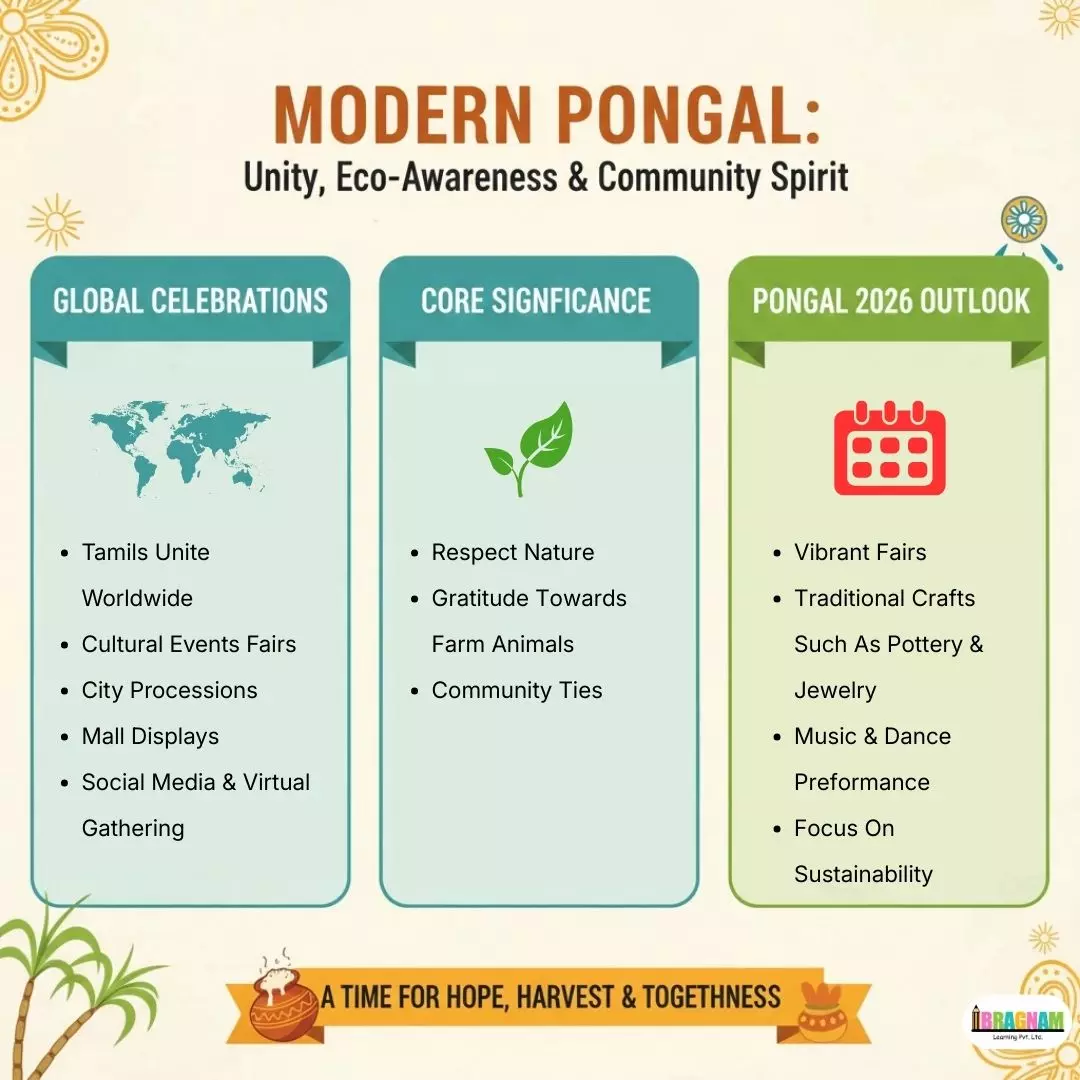
Today, Pongal unites Tamils worldwide, beyond Tamil Nadu, with fairs, crafts, and cultural events. Cities host processions, while malls feature displays.
It promotes eco-awareness, farm animal respect, and community ties. In 2026, expect vibrant melas with pottery and jewelry.
FAQ
What is Pongal festival?
Pongal is a four-day Tamil harvest festival thanking the sun god and nature for bountiful crops.
When is Pongal 2026?
Pongal 2026 falls from January 14 (Bhogi) to January 17 (Kaanum).
How do you celebrate Pongal?
Celebrate by cleaning homes, cooking overflowing Pongal, drawing kolams, honoring cattle, and family feasts.
What is the significance of Pongal?
It marks harvest abundance, sun’s northward path, and gratitude to farming elements.
What are traditional Pongal dishes?
Key dishes include sweet Sakkarai Pongal and savory Ven Pongal, plus vadas and payasam.
Conclusion
Pongal: A Harvest Festival of Joy and Abundance captures the essence of Tamil culture—gratitude, unity, and prosperity. As pots overflow with sweetness, so does life with hope. Embrace these traditions to feel the warmth of this timeless celebration.
Share your Pongal memories in the comments—what’s your favorite ritual or recipe? Subscribe for more festive insights and early childhood inspiration at Bragnam!


Leave A Comment