Why Teacher Training is Necessary for Your Kindergarten Teachers

Teacher Training

Kindergarten is the foundation of a child’s learning journey. It’s the first time many children interact with a structured environment, new faces, and guided learning experiences. But who ensures this environment is nurturing, stimulating, and developmentally appropriate?
The answer lies in well-trained kindergarten teachers. Teacher training isn’t just about lesson planning—it’s about understanding how young minds grow, play, and learn. Without proper training, even the most passionate educators may struggle to create the right learning atmosphere.

In this blog, we’ll explore why teacher training is essential for kindergarten educators, its benefits for children and institutions, and how investing in teacher development builds stronger early learning environments.


The Importance of Teacher Training in Early Education

At the kindergarten level, teachers aren’t just instructors—they are facilitators of emotional, cognitive, and social growth. A trained teacher possesses both the knowledge and skills to help every child develop holistically.

1. Understanding Child Development

Children aged 2–6 experience rapid growth physically, emotionally, and intellectually. Teacher training programs help educators:

  • Understand developmental milestones.
  • Identify learning challenges or behavioral concerns early.
  • Tailor activities according to each child’s learning style.

When teachers grasp the nuances of early childhood development, they can support children more effectively and prevent learning difficulties later on.


Benefits of Teacher Training for Kindergarten Educators

Comprehensive training bridges the gap between theoretical knowledge and classroom practice. Let’s explore the top benefits.

1. Builds Strong Classroom Management Skills

Managing a room full of curious toddlers is no easy feat! Trained teachers learn strategies to handle classroom routines, encourage positive behavior, and ensure discipline without being harsh.

2. Enhances Teaching Quality

A structured training program familiarizes teachers with various teaching methodologies—including play-based, Montessori, and experiential methods. This variety helps educators choose the right approach for their group of learners.

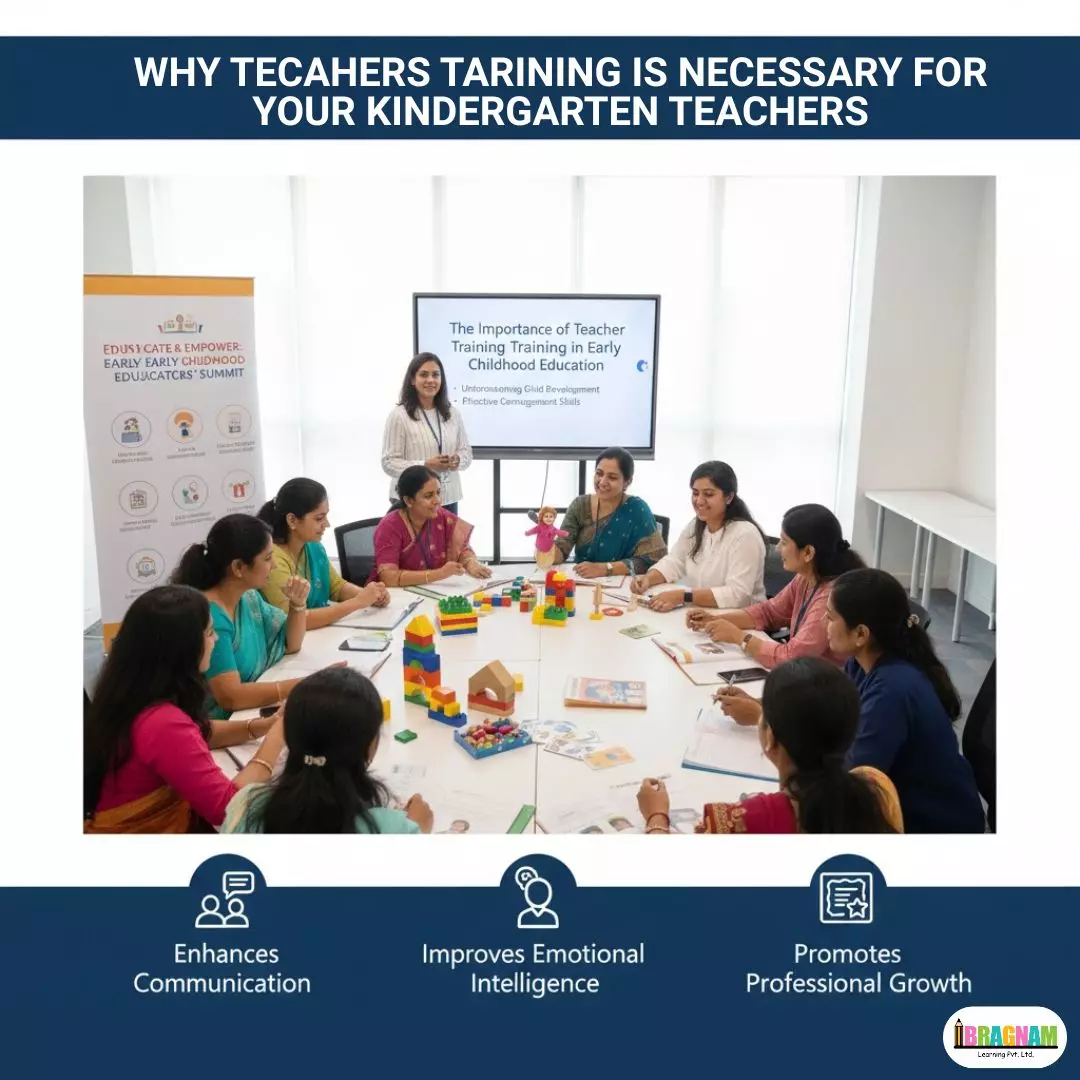
3. Promotes Effective Communication

Trained teachers communicate effectively not only with children but also with parents. They can provide constructive feedback about a child’s progress and collaborate with parents for better outcomes.

4. Improves Emotional Intelligence

Training programs also emphasize empathy, patience, and emotional awareness—qualities that define great kindergarten teachers. These traits help children feel safe, valued, and confident.

5. Encourages Continuous Professional Growth

When kindergartens invest in ongoing teacher training, educators remain motivated and updated with evolving educational practices. It enhances job satisfaction and reduces turnover rates.


Types of Training Every Kindergarten Teacher Should Receive

Not all training is the same. To nurture an educator’s full potential, schools should design programs covering key areas:

  • Early Childhood Pedagogy: Exploring how children learn best through play and exploration.
  • Classroom Management: Techniques for creating structured yet flexible classrooms.
  • Child Psychology: Understanding emotions, motivations, and behaviors in young learners.
  • Curriculum Planning: Designing balanced lesson plans that blend fun and learning.
  • Parent Communication: Building strong home-school partnerships.
  • Health and Safety Training: Ensuring hygiene, first aid, and emergency preparedness.

These modules collectively create confident, responsible, and creative teachers ready for real-world challenges.


The Role of Teacher Training in a Kindergarten’s Success

Teacher Training

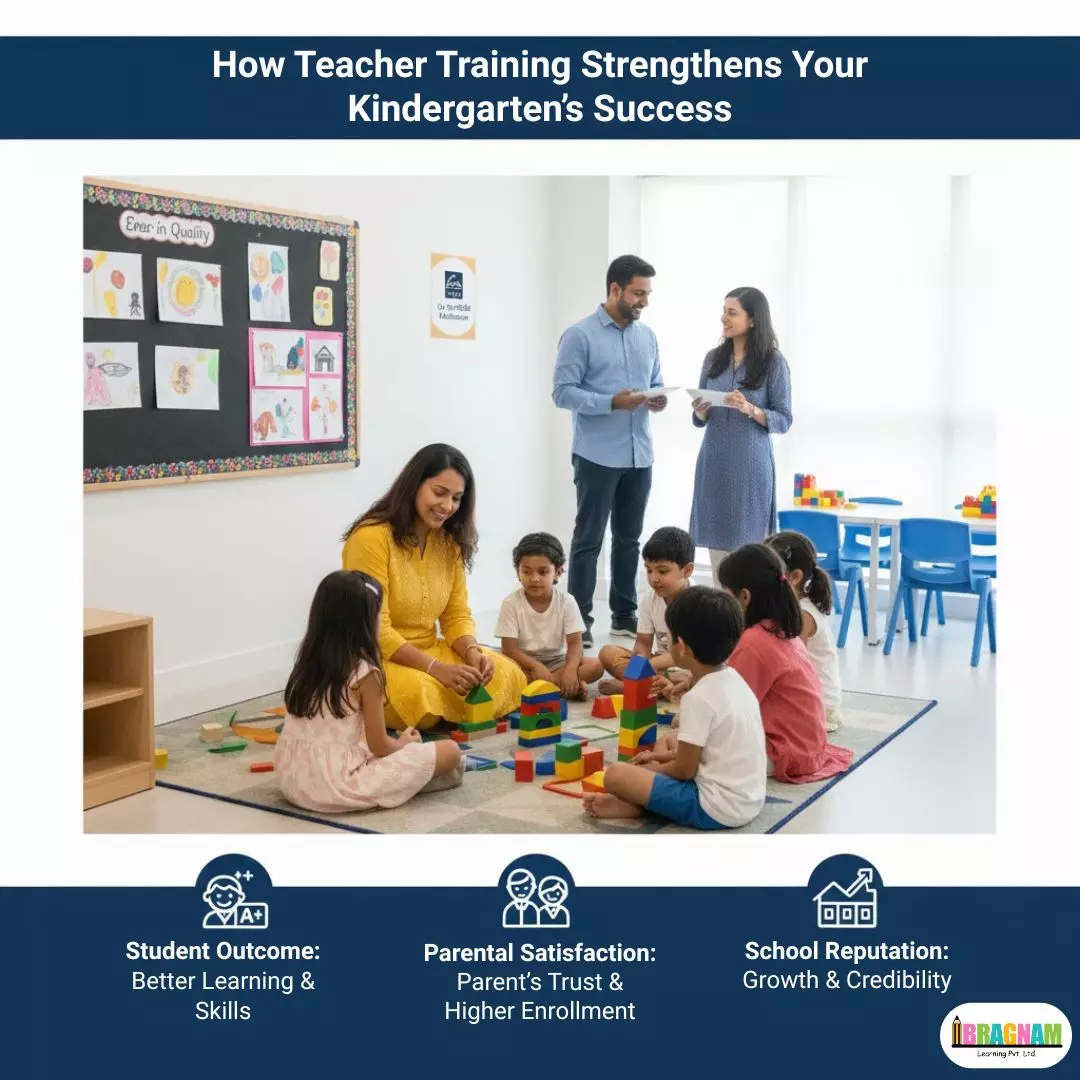
A kindergarten’s reputation depends heavily on teacher performance. Well-trained teachers directly influence:

  • Student outcomes: Better literacy, numeracy, and social skills.
  • Parental satisfaction: Increased trust and long-term enrollment.
  • Operational efficiency: Reduced classroom disruptions, smoother operations.

When teachers are trained regularly, kindergartens thrive as safe, joyful learning spaces.


How Schools Can Implement Effective Teacher Training

Here are simple, actionable steps schools can adopt:

  1. Partner with certified training institutions. Collaborate with professional teacher training organizations that specialize in early childhood education.
  2. Offer regular workshops and refresher courses. Schedule quarterly or annual training sessions to keep educators updated.
  3. Encourage mentorship. Senior teachers can guide new recruits, creating a collaborative learning culture.
  4. Monitor and evaluate. Assess teacher performance before and after training to ensure measurable impact.
  5. Recognize and reward progress. Celebrating teacher achievements boosts morale and commitment.

Why Investing in Teacher Training is a Win-Win

When schools prioritize teacher training, the benefits ripple across the ecosystem:

  • Children gain happier, more stimulating learning experiences.
  • Teachers feel valued, confident, and capable.
  • Parents trust the school’s quality and professionalism.
  • Institutions build credibility and attract more admissions.

In short, investing in teacher training isn’t an expense—it’s an investment in the future.


Frequently Asked Questions (FAQs)

1. What is the main purpose of kindergarten teacher training?
To equip teachers with the skills and understanding necessary to support children’s early learning, emotional development, and overall well-being.

2. How often should kindergarten teachers undergo training?
Ideally, teachers should participate in refresher workshops or online training sessions at least once a year to stay updated.

3. What topics are covered in kindergarten teacher training programs?
These include child psychology, classroom management, early learning pedagogy, communication skills, and safety practices.

4. Can untrained teachers handle kindergarten classes effectively?
While passion helps, untrained teachers often struggle with structured learning, behavior management, and developmental milestones.

5. How does teacher training benefit parents and schools?
Trained teachers build stronger home-school partnerships, improve satisfaction rates, and contribute to better institutional performance.


Conclusion

Teacher training is the cornerstone of quality early education. It ensures that children receive the best possible start in life and that educators feel empowered to guide with confidence and care.
For kindergartens, investing in training isn’t optional—it’s essential for success, growth, and lasting impact.

Ready to transform your preschool’s learning environment?
Invest in teacher training today and see how it builds happier teachers, confident learners, and a thriving kindergarten community.


By |2025-12-11T11:38:10+05:3014 December 2025|Uncategorized|

Why Testimonials Matter in preschool selection

Testimonials

Testimonials play a vital role in preschool selection, offering real-life insights that help parents make informed decisions about their child’s education. Authentic parent testimonials provide a transparent view of a preschool’s environment, curriculum, and staff, making them an indispensable resource for prospective families.

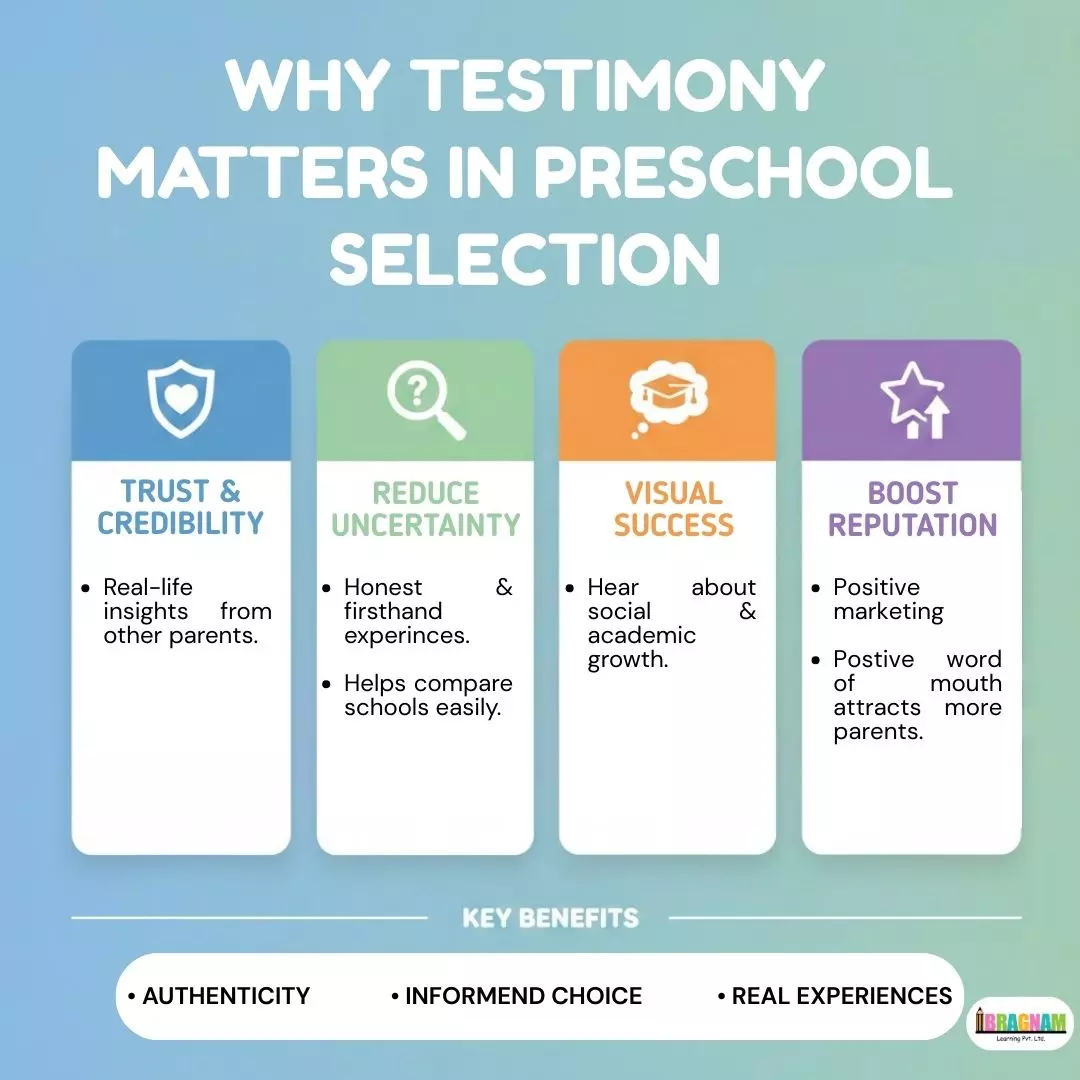
Why Testimonials Matter

Testimonial
  • Testimonials give prospective parents honest, firsthand experiences from families who have already navigated the preschool journey.
  • They reduce uncertainty and help parents compare schools, making the selection process less stressful.
  • Hearing about real outcomes—such as improvements in social skills or academic progress—helps parents visualize what to expect for their own child.

The Role of Testimonials in Preschool Selection

  • Testimonials offer a direct look into the school’s teaching methods, staff, and overall quality.
  • Social proof from other parents builds trust and credibility, encouraging new families to consider the preschool.
  • Positive reviews can significantly boost a preschool’s reputation and enrollment rates.

Key Benefits of Parent Testimonials

  • Real-life Insights: Parents share genuine experiences, highlighting standout features of the preschool.
  • Informed Decision-Making: Testimonials allow parents to compare schools and choose the best fit for their child.
  • Reduced Uncertainty: Honest reviews make the selection process more transparent and less overwhelming.

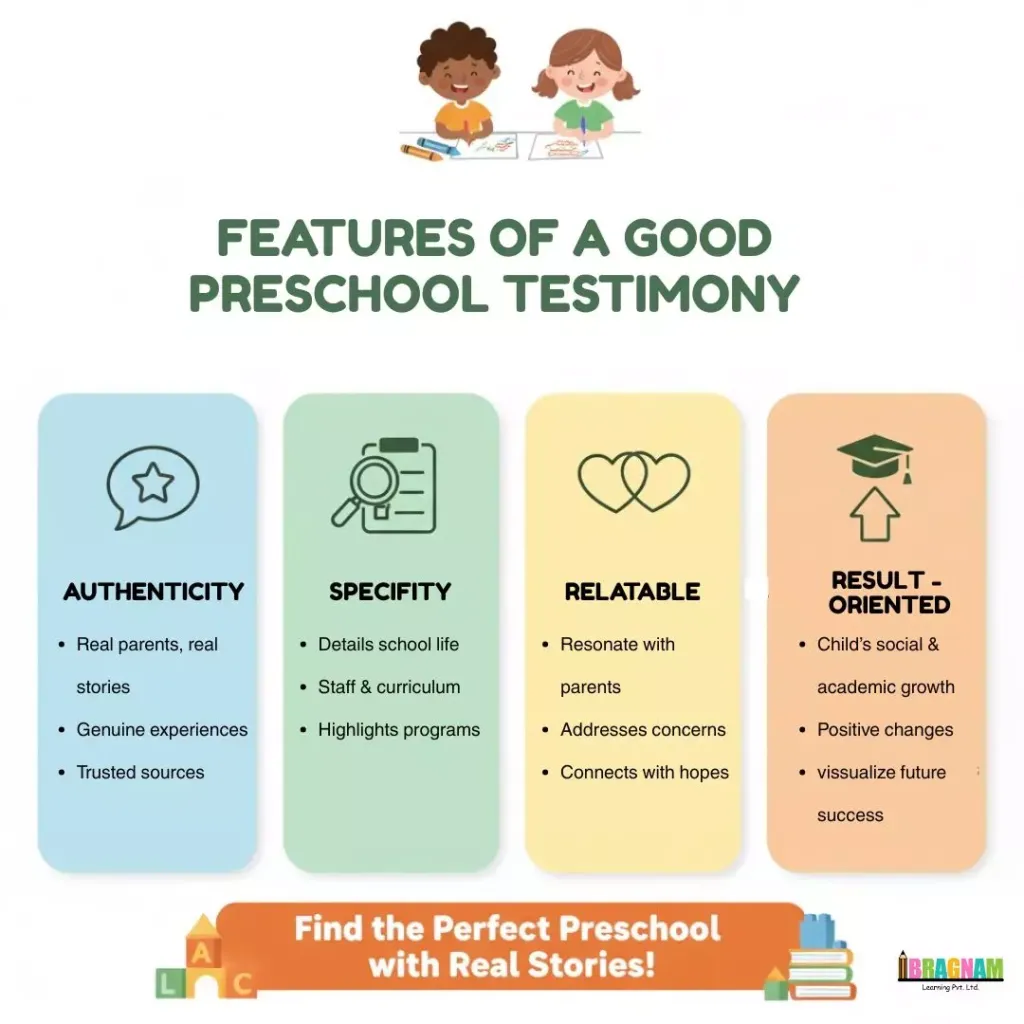
What Makes a Good Testimonial?

  • Authenticity: Comes from real parents with real experiences.
  • Specificity: Details specific aspects like the nurturing environment, creative curriculum, or caring staff.
  • Relatability: Resonates with the concerns and expectations of prospective parents.
  • Results-Oriented: Highlights changes or improvements in the child, such as social skills, academic progress, or behavior.

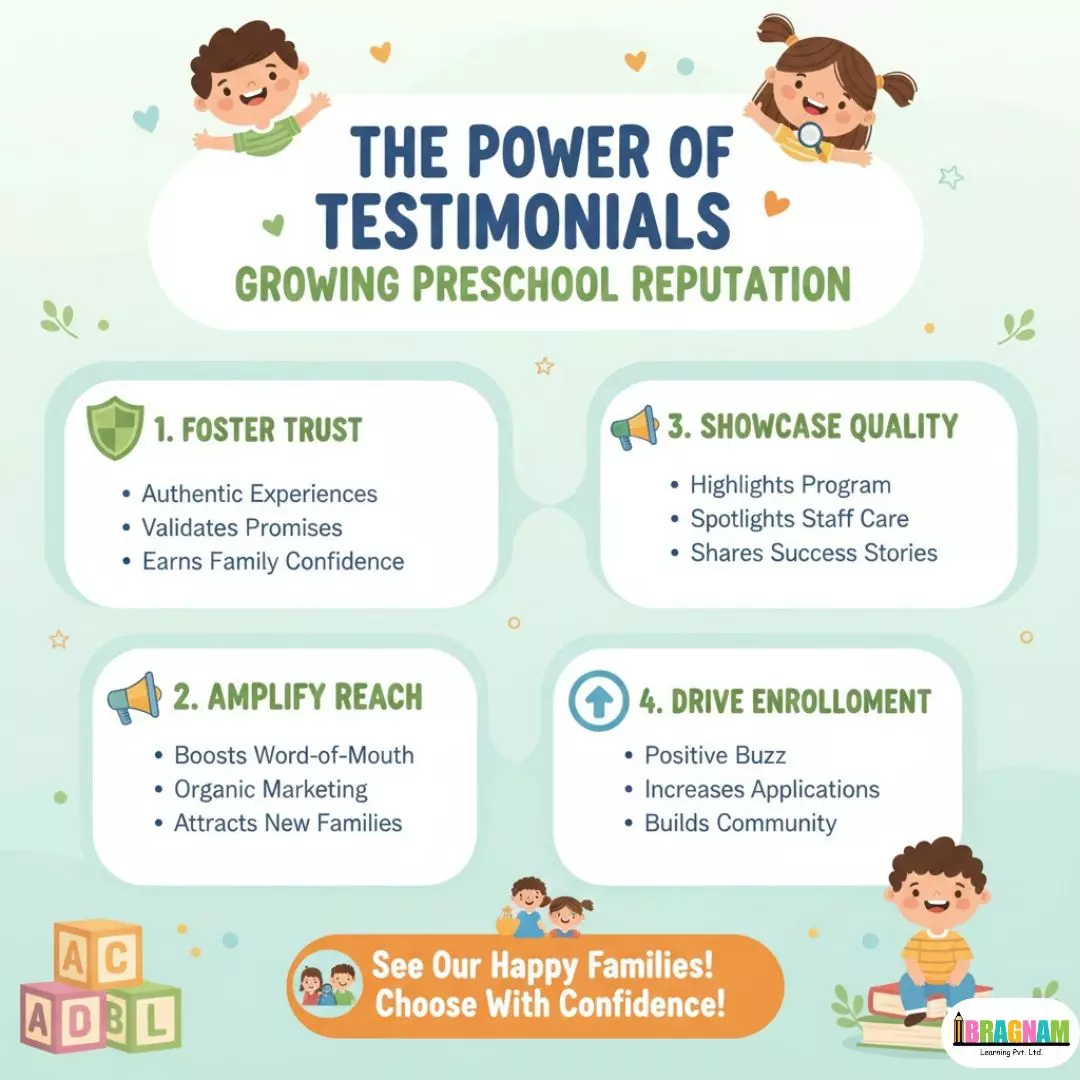
How Positive Testimonials Build Preschool Reputation

  • Positive testimonials strengthen a preschool’s credibility and trustworthiness.
  • Word-of-mouth marketing through testimonials is one of the most effective ways to boost enrollment and popularity.
  • Schools that actively encourage and share testimonials are seen as more transparent and trustworthy.
  • Seek out reviews and testimonials from parents whose children have attended the schools you’re considering.
  • Look for comments on the learning environment, staff, and curriculum.
  • Pay attention to reviews that mention experiences similar to your expectations.
  • While positive testimonials highlight strengths, negative ones can alert you to potential issues.

The Power of Social Proof

Testimonial
  • Parents naturally trust the experiences of other parents.
  • Testimonials offer real-life insights into a preschool’s environment, teaching methods, and overall quality.
  • Positive feedback from other families gives prospective parents the confidence to make their decision.

Case Study: The Real Impact of Testimonials

  • A preschool in Chicago saw a significant increase in enrollment after encouraging parents to share their positive experiences.
  • Testimonials highlighted the nurturing environment, creative curriculum, and noticeable development in children.
  • This case study demonstrates the power of testimonials in influencing preschool selection.

Spotting Fake or Misleading Testimonials

  • Avoid overly generic praises with no specific details.
  • Be cautious of testimonials that sound too good to be true.
  • Genuine testimonials often have a balanced tone, mentioning both strengths and areas for improvement.

How Preschools Can Encourage Genuine Testimonials

  • Reach out to parents for honest feedback.
  • Create simple forms or surveys to collect experiences and progress reports.
  • Share these testimonials on the website, social media, and marketing materials (with permission).

Conclusion: Making an Informed Decision

  • Testimonials play a significant role in choosing the right preschool, offering real-life insights and helping parents gauge the quality of the school.
  • However, every child is unique—what works for one may not work for another.
  • Use testimonials as one of many factors in your decision, and always consider your child’s individual needs and personality.

Frequently Asked Questions (FAQs)

Why are testimonials important when choosing a preschool?

Testimonials provide real-life experiences and honest opinions from parents who have firsthand knowledge, helping new parents make informed decisions.

How do testimonials help reduce uncertainty?

Testimonials offer a clearer picture of what to expect, reducing the stress and uncertainty involved in preschool selection.

What should I look for in a good preschool testimonial?

Look for authenticity, specificity, relatability, and results-oriented feedback in a testimonial.

Can testimonials influence preschool enrollment?

Yes, positive testimonials build trust and credibility, significantly boosting a preschool’s reputation and enrollment rates.

How can preschools encourage genuine testimonials?

Preschools can encourage testimonials by asking for honest feedback, using surveys, and sharing reviews with permission on their platforms.

By |2025-12-11T11:16:57+05:3013 December 2025|Blog|

Things to Keep in Mind While Opening a Pre-School

Opening a pre-school is much more than renting a space and buying toys; it is about creating a safe, loving, and stimulating environment where children take their first steps into formal learning. When done thoughtfully, a preschool can become a trusted second home for children and a respected brand in the community. This guide walks through the key things to keep in mind while opening a pre-school so you can start right and grow confidently.

start preschool

Clarify your vision and preschool model

Before anything else, get clear about why you want to start a preschool and what kind of experience you want to offer. A well-defined vision keeps you focused when making decisions about curriculum, fees, location, and marketing.

  • Decide whether you want to position your centre as a neighbourhood preschool, a premium brand, or a franchise unit.
  • Choose your educational approach—play-way, Montessori-inspired, activity-based, or a blended model—that aligns with your philosophy and local demand.
  • Define your age groups and programs (Playgroup, Nursery, LKG, UKG) so your space planning and staffing match your offerings.

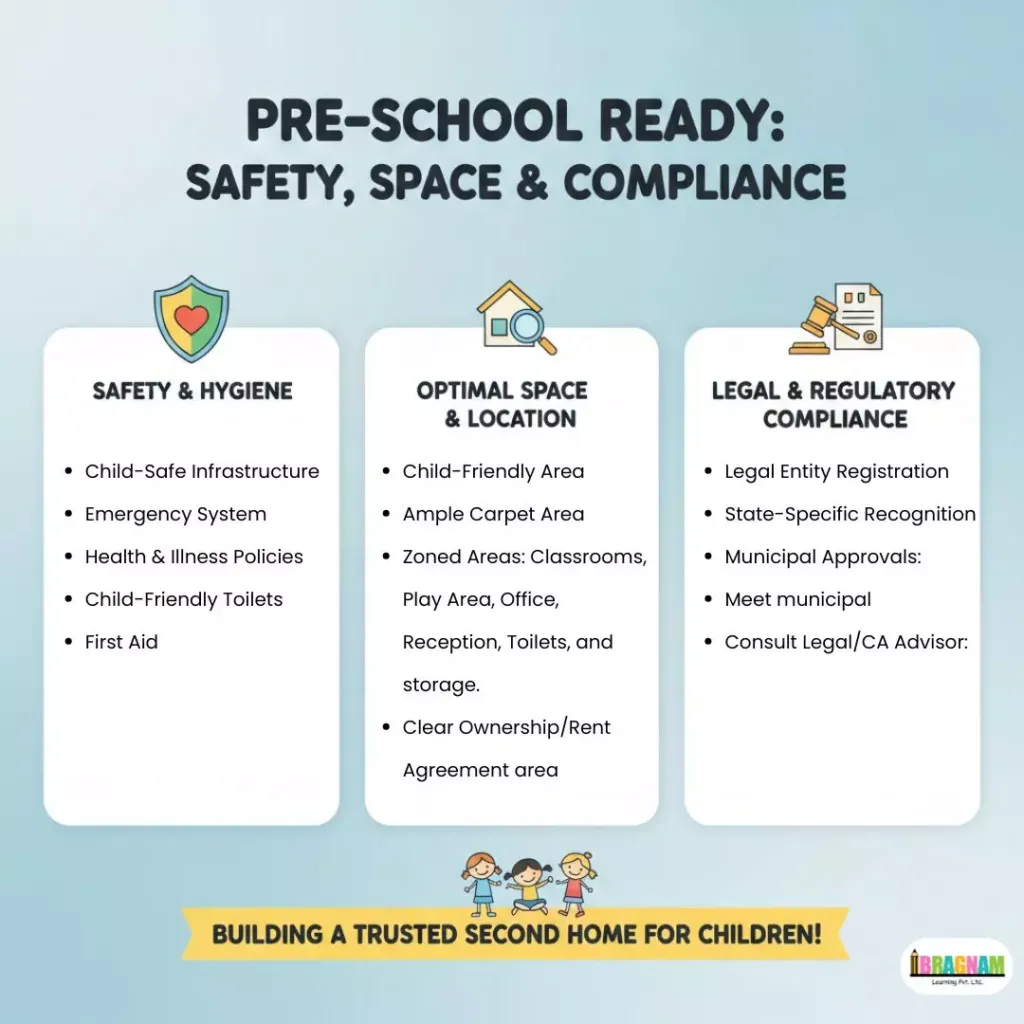
One of the most critical things to keep in mind while opening a pre-school is compliance with local regulations and registration norms. While preschool regulations in India are still evolving, many states and municipal bodies have clear guidelines for recognition, safety, and basic standards.

Key points to consider:

  • Register your preschool as a legal entity such as a proprietorship, partnership, trust/society, or private limited company, depending on your long-term plans and scale.
  • Check state-specific rules for preschool recognition, especially in states like Maharashtra, Karnataka, and Tamil Nadu, where registration and approval are mandatory.
  • Ensure you meet municipal requirements related to land use, occupancy, fire safety, and building codes before starting operations.
  • Consulting a local chartered accountant or legal advisor is usually worth the investment to avoid compliance issues later.

Choose the right location and space

Location is one of the biggest success factors and a major thing to keep in mind while opening a pre-school. Parents look for a centre that is easy to reach, secure, and away from heavy traffic and industrial noise.

When shortlisting spaces:

  • Prefer a child-friendly residential or mixed-use area that is safe, calm, and has good visibility from the road.
  • Ensure there is enough carpet area per child to avoid overcrowding and to comply with norms where prescribed by local authorities.
  • Plan for separate zones: classrooms, reception, office, outdoor or indoor play area, toilets, and storage.
  • Check that the property has clear ownership or a proper rental agreement and that it meets zoning norms for running an educational institution.

Plan child-safe infrastructure and environment

Safety and hygiene must be at the heart of your preschool design. A thoughtfully designed environment not only protects children but also reassures parents that their little ones are in safe hands.

Important infrastructure points to keep in mind:

  • Classrooms should be well-lit, ventilated, and equipped with child-sized furniture with rounded edges and non-slippery flooring.
  • Install safety gates, corner guards, socket covers, and child-proof locks where necessary.
  • Maintain clean, child-friendly toilets with low-height basins and proper hygiene supplies.
  • Set up emergency and safety systems: fire extinguishers, clear evacuation routes, smoke detectors where applicable, and visible emergency contact numbers.
  • Keep first-aid kits handy in all key areas and ensure staff know where they are and how to use them.
  • A neat, colourful, and clutter-free environment with age-appropriate learning corners makes a strong impression on parents during school tours.

Design a child-centric curriculum and daily routine

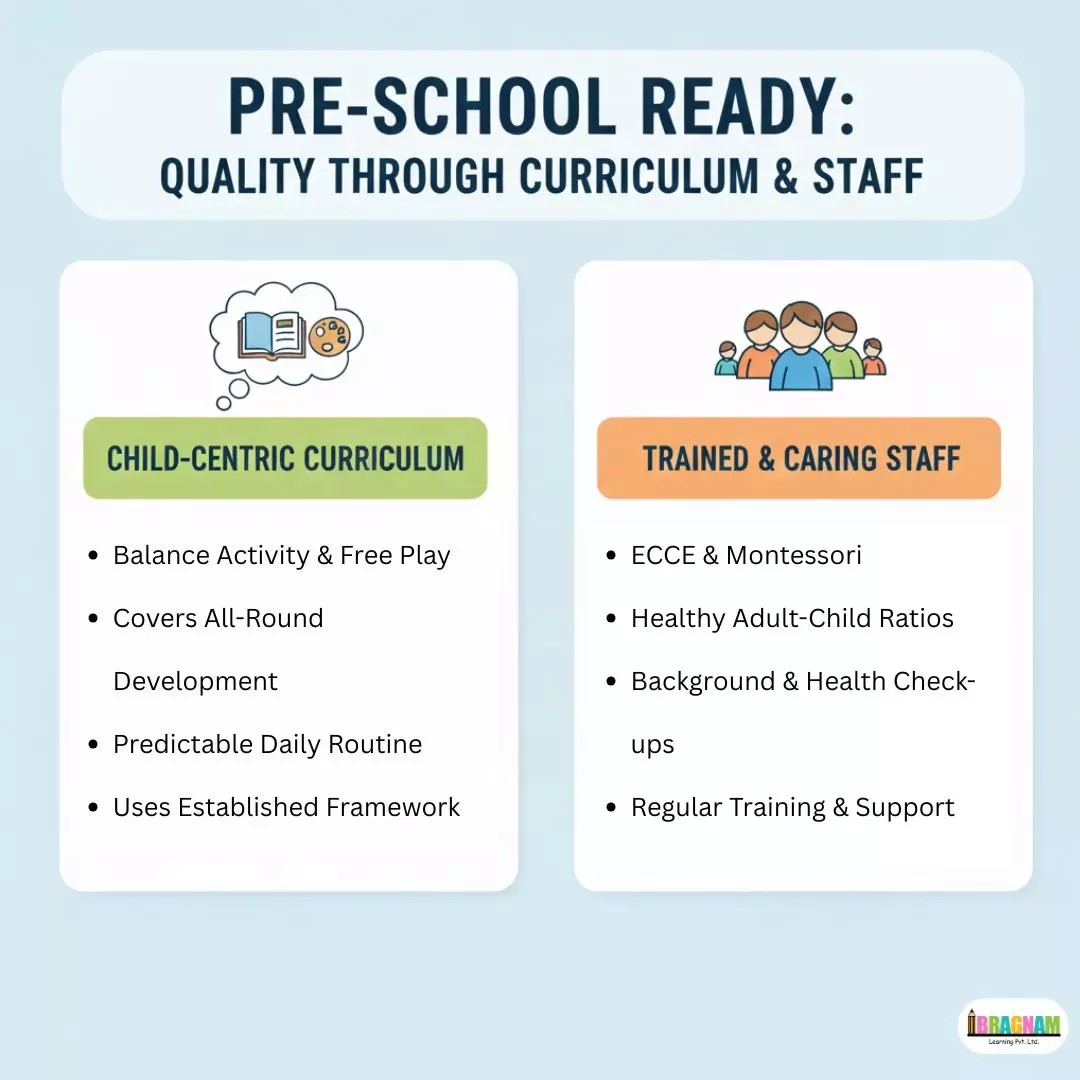
Curriculum is another vital thing to keep in mind while opening a pre-school, because it directly impacts the quality of learning and your brand reputation. Good preschool programs balance structured activities with free play and focus on all-round development—language, motor skills, social skills, and emotional growth.

While planning your curriculum:

  • Align with early childhood education principles and age-appropriate milestones rather than pushing rote academics.
  • Include activities across domains—music, movement, storytelling, art, pre-math, early literacy, and life skills.
  • Build a predictable daily routine with a mix of circle time, free play, outdoor play, snack time, and rest time.
  • Decide whether you want to adopt or adapt established frameworks such as Montessori elements, thematic learning, or inquiry-based projects.

Documenting your curriculum and sharing a broad outline with parents also helps build trust and transparency.

Hire and train the right staff

start preschool

Teachers and caregivers are the backbone of your preschool and a major factor families consider while choosing a centre. One of the most important things to keep in mind while opening a pre-school is that warm, trained, and stable staff matter more than fancy interiors.

Staffing essentials:

  • Recruit teachers with qualifications or training in Early Childhood Care and Education (ECCE), Montessori, or nursery teacher training where possible.
  • Maintain healthy adult–child ratios to ensure safety and individual attention; best-practice ranges for preschoolers often fall between 1:8 and 1:12 depending on age and group size.
  • Conduct background checks, reference checks, and basic health checks before onboarding any staff member.
  • Provide regular in-house training on classroom management, safety protocols, first aid, and communication with parents.

Happy, motivated staff lead to low turnover, consistent classrooms, and stronger parent relationships.

Put strong safety and health policies in place

Parents today are very conscious about safety, hygiene, and emotional well-being. Having clear written policies is a key thing to keep in mind while opening a pre-school because it reduces confusion for staff and reassures families.

Policies to define and document:

  • Visitor management, pick-up and drop-off rules, and authorised guardians.
  • Illness policy, including when children should stay home and how you handle symptoms or contagious conditions on campus.
  • Emergency procedures for fire, injuries, and natural disasters, along with periodic drills.
  • Child protection and behaviour management guidelines with zero tolerance for abuse or harsh punishment.

Display key rules in reception and include them in your parent handbook so everyone knows the expectations.

Plan your fee structure and finances

Another important thing to keep in mind while opening a pre-school is how you will cover costs and stay profitable without compromising quality. A clear financial plan helps you manage salaries, rent, marketing, and learning materials while keeping your fees competitive for your location.

Consider the following:

  • Estimate your initial investment in interiors, teaching aids, branding, and safety equipment, and separate it from monthly operating expenses.
  • Research competitor fee ranges in your area so your pricing reflects your positioning and value.
  • Decide on application fees, admission fees, security deposits, and monthly or quarterly tuition, and communicate them transparently to parents.
  • Keep a contingency fund for at least 3–6 months of operating costs to handle slow admission seasons or unforeseen expenses.

Build a parent-friendly communication strategy

start pre school

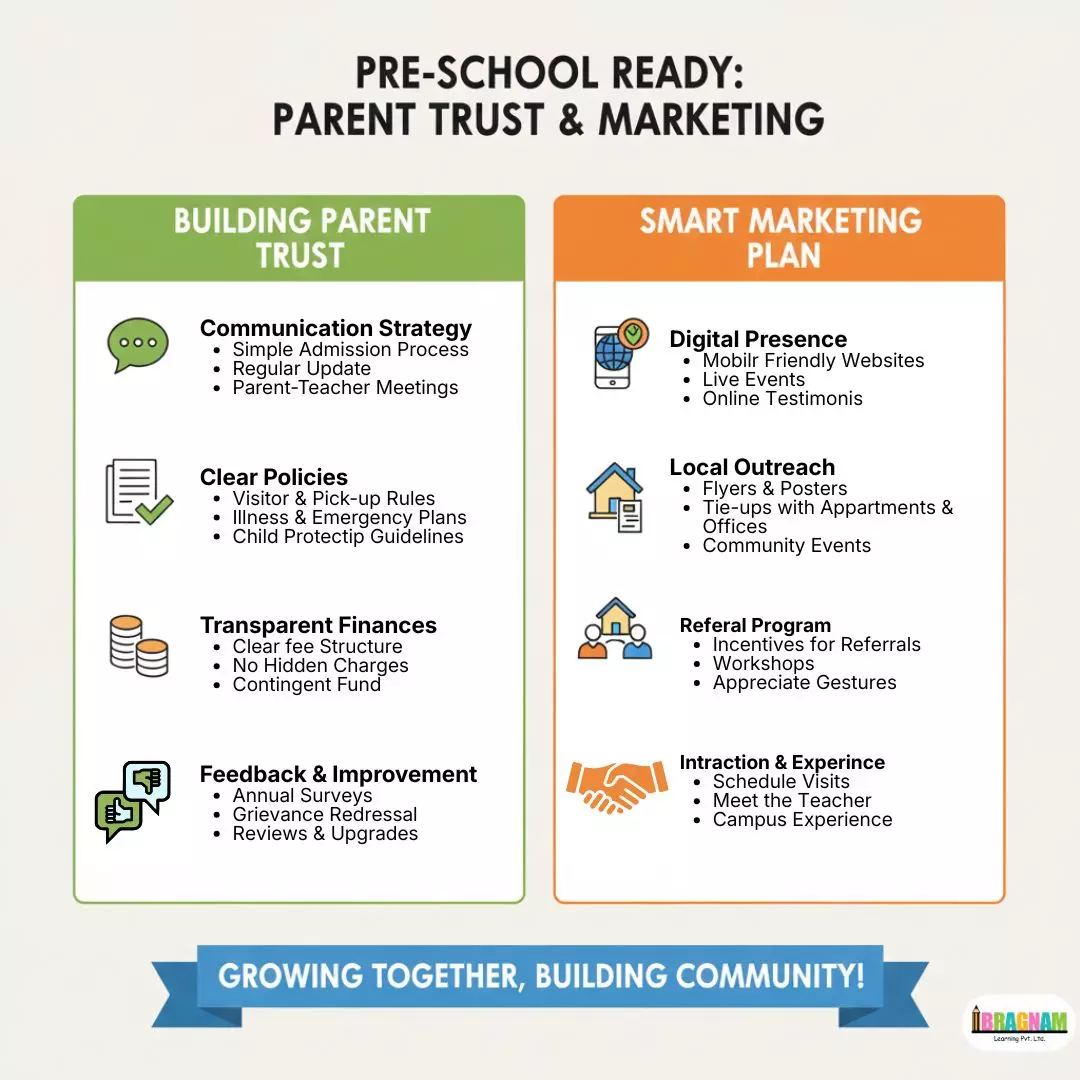
Preschool success depends heavily on parent satisfaction and word-of-mouth. From the first enquiry call to daily updates, parents look for proactive, respectful, and transparent communication.

Things to plan:

  • A simple admission process with clear brochures, fee details, and program information.
  • Regular updates through diaries, apps, WhatsApp broadcasts, or emails about activities, events, and important notices.
  • Scheduled parent–teacher meetings, orientation sessions, and open days to build relationships and address concerns.
  • A clear grievance redressal path so parents know whom to contact and how issues will be handled.

Positive, two-way communication helps you retain families and improve your services over time.

Create a simple but strong marketing plan

Marketing is often overlooked as a thing to keep in mind while opening a pre-school, but it is essential to reach the right families in your catchment. You do not need a huge budget; what you need is consistent, clear messaging and presence where parents are already looking.

Effective steps include:

  • A basic, mobile-friendly website with details about your programs, philosophy, facilities, photos, and contact information.
  • Active presence on social media platforms like Facebook and Instagram to showcase daily activities, events, and parent testimonials.
  • Local awareness activities such as flyers, tie-ups with nearby apartments and offices, and community events like story sessions or parenting workshops.
  • Encouraging referrals from existing parents through small incentives or appreciation gestures.

Keep quality improvement and documentation in focus

Finally, one of the most valuable things to keep in mind while opening a pre-school is that quality is not a one-time setup task but a continuous journey. Regular review of your practices will help you stay aligned with best standards and parent expectations.

Helpful practices:

  • Maintain basic records such as attendance, health incidents, staff training logs, and safety checks.
  • Collect feedback from parents and staff at least annually and implement realistic improvements.
  • Review your curriculum, events calendar, and classroom practices every year to keep them fresh and relevant.

FAQ: Things to Keep in Mind While Opening a Pre-School

1. How much space is required to open a pre-school?
Space requirements vary by local rules, but many experts recommend enough area for safe movement, separate activity corners, and an outdoor or indoor play zone. Checking state or municipal guidelines on minimum space per child is one of the first things to keep in mind while opening a pre-school.

2. Do I need specific licences to start a pre-school in India?
Licensing requirements differ from state to state, and some states mandate registration or recognition with the education department or local authority. It is important to confirm current rules in your city and register your preschool as a proper business entity so you operate legally and build trust with parents.

3. What qualifications should preschool teachers have?
While regulations may not always specify teacher qualifications, hiring staff with Early Childhood Care and Education (ECCE), nursery teacher training, or Montessori certifications is strongly recommended. This is a key thing to keep in mind while opening a pre-school because trained teachers can better manage classrooms, support holistic development, and communicate effectively with parents.

4. How do I decide my preschool fee structure?
Start by listing your fixed and variable expenses, including rent, salaries, utilities, learning materials, and marketing, and then estimate a sustainable fee per child. Compare your planned fees with other preschools in your area to ensure your pricing matches your positioning and offers fair value to families.

5. How can I attract parents to a new preschool?
A combination of online and offline efforts works best, such as a simple website, active social media, community events, and open house days where parents can visit the campus and meet teachers. Clear communication, genuine child-centric practices, and early positive reviews are crucial things to keep in mind while opening a pre-school and building enrolments in the first year.

Conclusion: Start small, stay child-centric, and grow steadily

When you list out all the things to keep in mind while opening a pre-school—legal compliance, safety, curriculum, staffing, fees, and marketing—it can feel overwhelming at first. The good news is that with a clear vision, careful planning, and a genuine commitment to children’s well-being, you can build a preschool that parents trust and children love coming to every day. Start small, focus on quality over speed, and refine your processes as you grow—your preschool can then become a long-term, meaningful venture in your community.

If you are serious about opening a preschool and want support with planning, curriculum, and set-up, reach out today to explore how expert guidance can help you launch faster and more confidently.

By |2025-12-11T10:36:24+05:3012 December 2025|Uncategorized|

Why You Should Opt for Balvatika Montessori Franchise for Your Playschool

Balvatika Montessori

Starting a playschool is a rewarding venture, especially in India, where the demand for quality early childhood education is rapidly growing. Among the various franchise options available, Balvatika Montessori stands out as a trusted, affordable, and supportive choice for aspiring educators and entrepreneurs. Choosing Balvatika Montessori franchise means you are not just starting a business, but joining a movement that prioritizes holistic child development and proven educational practices.​

What Makes Balvatika Montessori Special?

Balvatika Montessori

Balvatika Montessori, an initiative by Bragnam Learning Pvt Ltd, offers a unique blend of Montessori philosophy and modern teaching methodologies. The franchise is designed to be accessible, with a modest investment and no royalty or renewal charges, making it an attractive option for new and experienced franchisees alike.

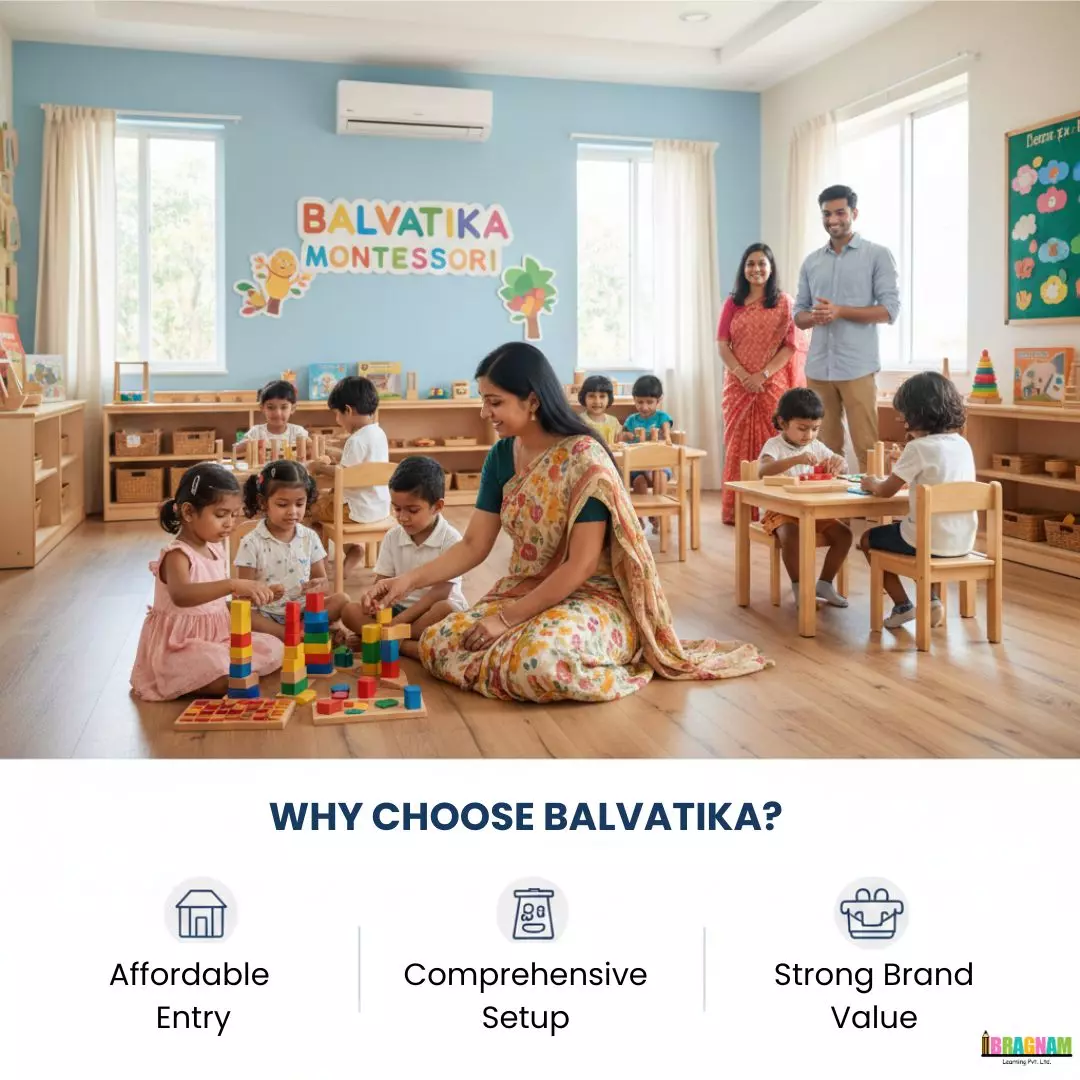
  • Affordable Entry: The initial franchise fee is just 49,000 INR plus GST, with no hidden costs or ongoing royalty payments.
  • Comprehensive Setup: Balvatika provides furniture, toys, and essential educational kits for up to 30 students, reducing your startup investment and helping you launch quickly.​
  • Strong Brand Value: As a Balvatika franchisee, you receive an official franchise certificate, boosting your credibility and trust among parents in your community.

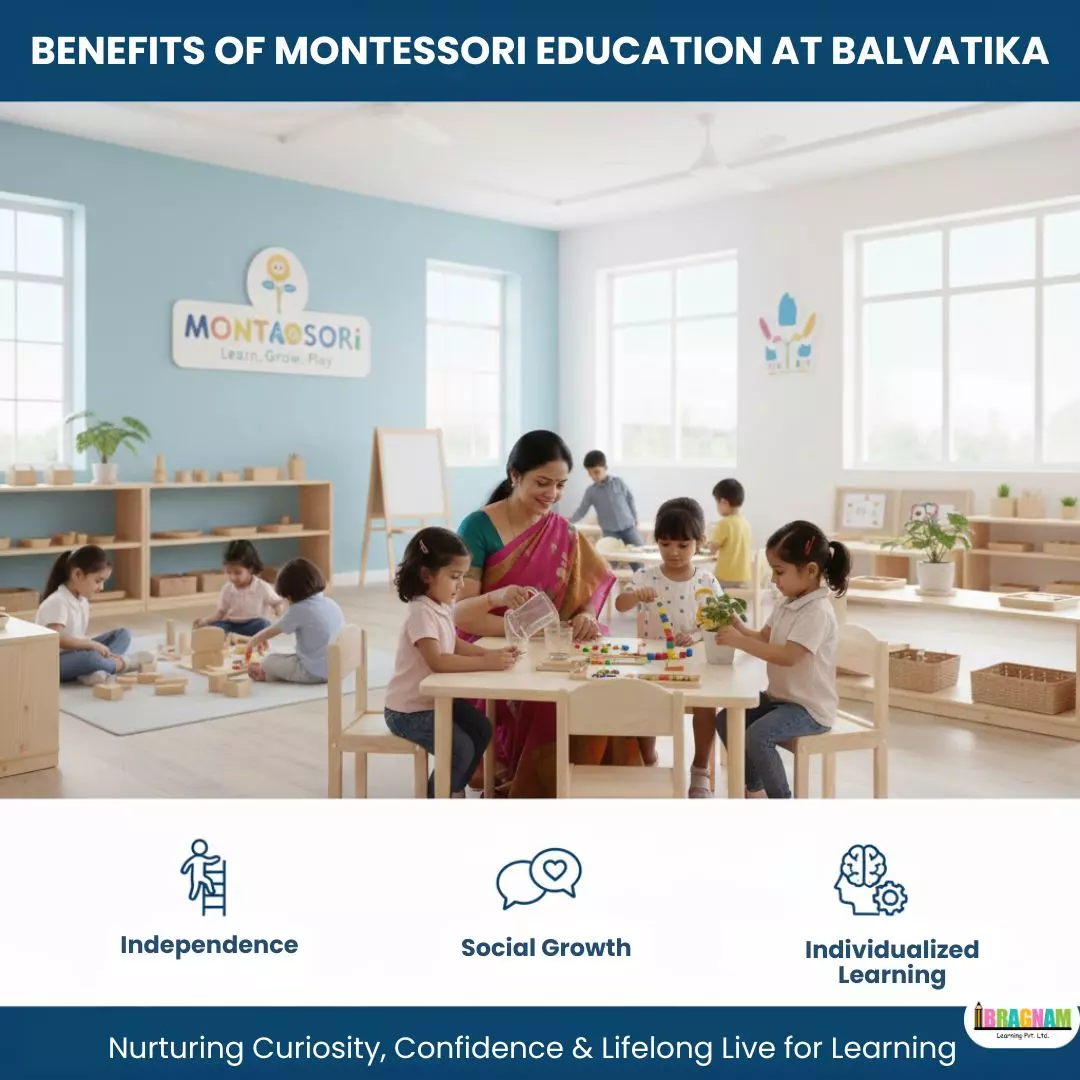
Benefits of Montessori Education at Balvatika

Balvatika Montessori

Montessori education is renowned for nurturing independence, creativity, and a love for learning in children. Balvatika’s curriculum is built on these principles, ensuring that every child gets a strong foundation for lifelong learning.​

Key Advantages of Montessori at Balvatika

  • Independence: Children are encouraged to handle daily tasks and projects, building confidence and self-reliance from an early age.​
  • Social Growth: Mixed-age classrooms promote peer learning, empathy, and leadership, helping children develop social skills naturally.​
  • Individualized Learning: Each child progresses at their own pace, with activities tailored to their interests and abilities.
  • Hands-On Activities: Practical life skills and sensory-based learning are central to the Montessori approach, making education engaging and meaningful.

Comprehensive Support for Franchisees

Running a playschool can be challenging, but Balvatika Montessori franchisees receive ongoing support to ensure smooth operations and long-term success.​

What Support You Get

  • Curriculum Guidance: Access to a proven, age-appropriate curriculum designed by education experts.
  • Teacher Training: Regular training sessions keep your staff updated on the latest teaching methodologies and child development trends.​
  • Marketing Assistance: Balvatika offers marketing strategies, promotional materials, and digital marketing support to help attract students and build your brand.
  • Operational Guidance: Dedicated team support for any challenges, from setup to day-to-day operations.​

Why Balvatika Montessori Franchise Is a Smart Investment

Balvatika Montessori franchise is not just about education; it’s a profitable business opportunity. The franchise model is scalable, with a clear financial roadmap and a short payback period.

  • Investment Range: 2–5 lakh INR, with franchise fee at 49,000 INR.
  • Expected ROI: Around 40%, with a payback period of 1–2 years.
  • Territorial Rights: Exclusive rights for your location, reducing competition.

Montessori vs. Traditional Playschool

Choosing between Montessori and traditional education is crucial. Here’s how Balvatika Montessori compares:

FeatureBalvatika MontessoriTraditional Playschool
Learning EnvironmentChild-centric, open spacesStructured, group activities
Teaching StyleFacilitator, child-ledTeacher-led, group instruction
CurriculumIndividualized, hands-onStandardized, group benchmarks
Child DevelopmentIndependence, creativityRoutine, discipline

Balvatika Montessori empowers children to explore, learn, and grow at their own pace, making it a preferred choice for modern parents.

Success Stories and Testimonials

Many franchisees have found success with Balvatika Montessori. Testimonials highlight the ease of setup, ongoing support, and the positive impact on children’s learning and development. Parents appreciate the nurturing environment and visible growth in their children.​​

By |2025-12-08T12:42:49+05:3011 December 2025|Uncategorized|

Why You Should Take a Franchise to Start Your Playschool

Playschool Franchise

Starting a playschool franchise can be an exciting venture, but the journey is filled with challenges—especially for first-time entrepreneurs. Choosing a franchise model can make all the difference, offering a proven path to success in the competitive world of early childhood education. With the right franchise partner, such as Balvatika or Bragnam Learning Pvt Ltd, you gain access to a tested business model, strong brand recognition, and continuous support, making it easier to launch and grow your playschool with confidence.


What Is a Playschool Franchise?

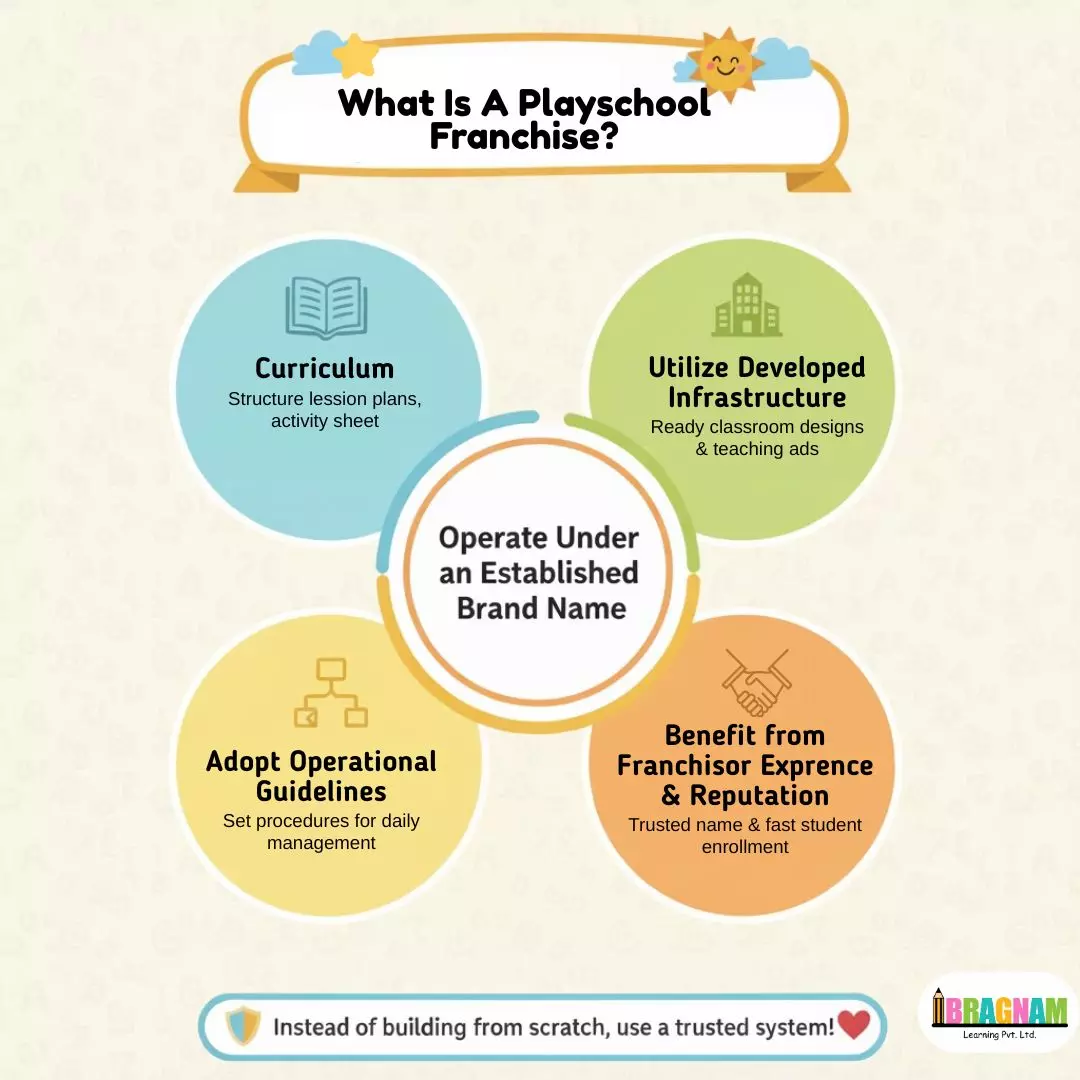
A playschool franchise allows you to operate under an established brand name, like Balvatika or Bragnam, using their curriculum, infrastructure, and operational guidelines. Instead of building everything from scratch, you leverage the franchisor’s experience and reputation to set up a school that parents trust and children love.


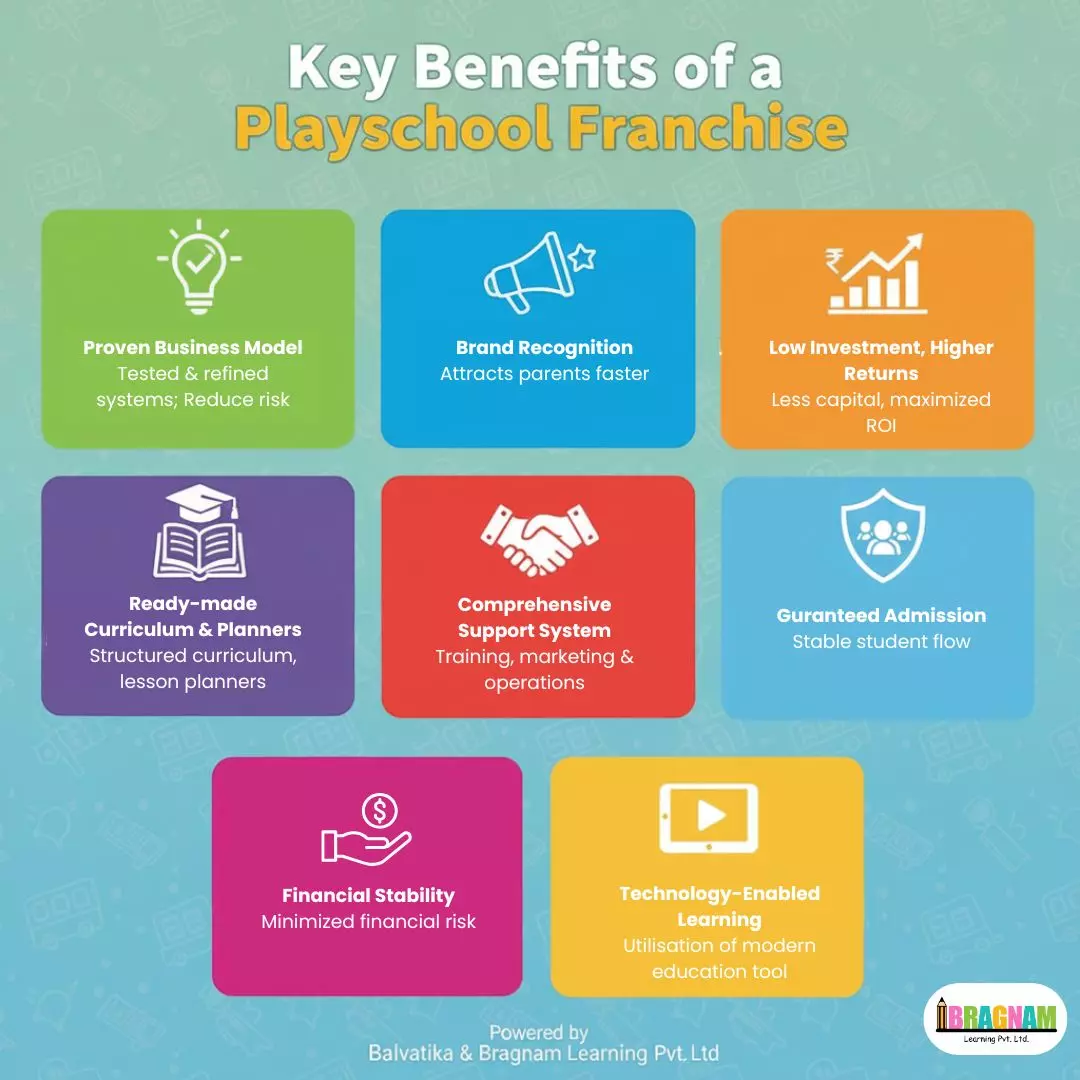
Key Benefits of a Playschool Franchise

 Playschool Franchise

1. Proven Business Model

  • Franchise brands like Balvatika and Bragnam have already tested and refined their systems for success.
  • You benefit from their research, curriculum, and operational expertise, reducing the risk of failure.

2. Brand Recognition

  • Parents prefer schools with a reputable name like Balvatika or Bragnam.
  • A recognized brand brings instant credibility and helps attract students faster.​

3. Lower Investment, Higher Returns

  • Franchise setups often require less capital compared to independent schools.
  • Operational costs are streamlined, and support systems help maximize your return on investment.​

4. Ready Curriculum and Academic Planning

  • You receive a structured curriculum, lesson plans, activity sheets, and assessment formats from Balvatika or Bragnam.
  • This saves time and ensures quality education for young learners.

5. Comprehensive Support System

  • Franchise partners like Balvatika and Bragnam offer end-to-end support, including teacher training, marketing, and operational guidance.
  • Even if you lack an education background, you can run the school smoothly with expert help.

6. Guaranteed Admissions and Shortfall Compensation

  • Many franchises, including Balvatika and Bragnam, offer guaranteed admissions or shortfall compensation, minimizing your financial risk.
  • This ensures a steady flow of students and stable revenue.​

7. Technology-Enabled Learning

  • Leading franchises like Bragnam integrate technology into their teaching, preparing children for modern education needs.

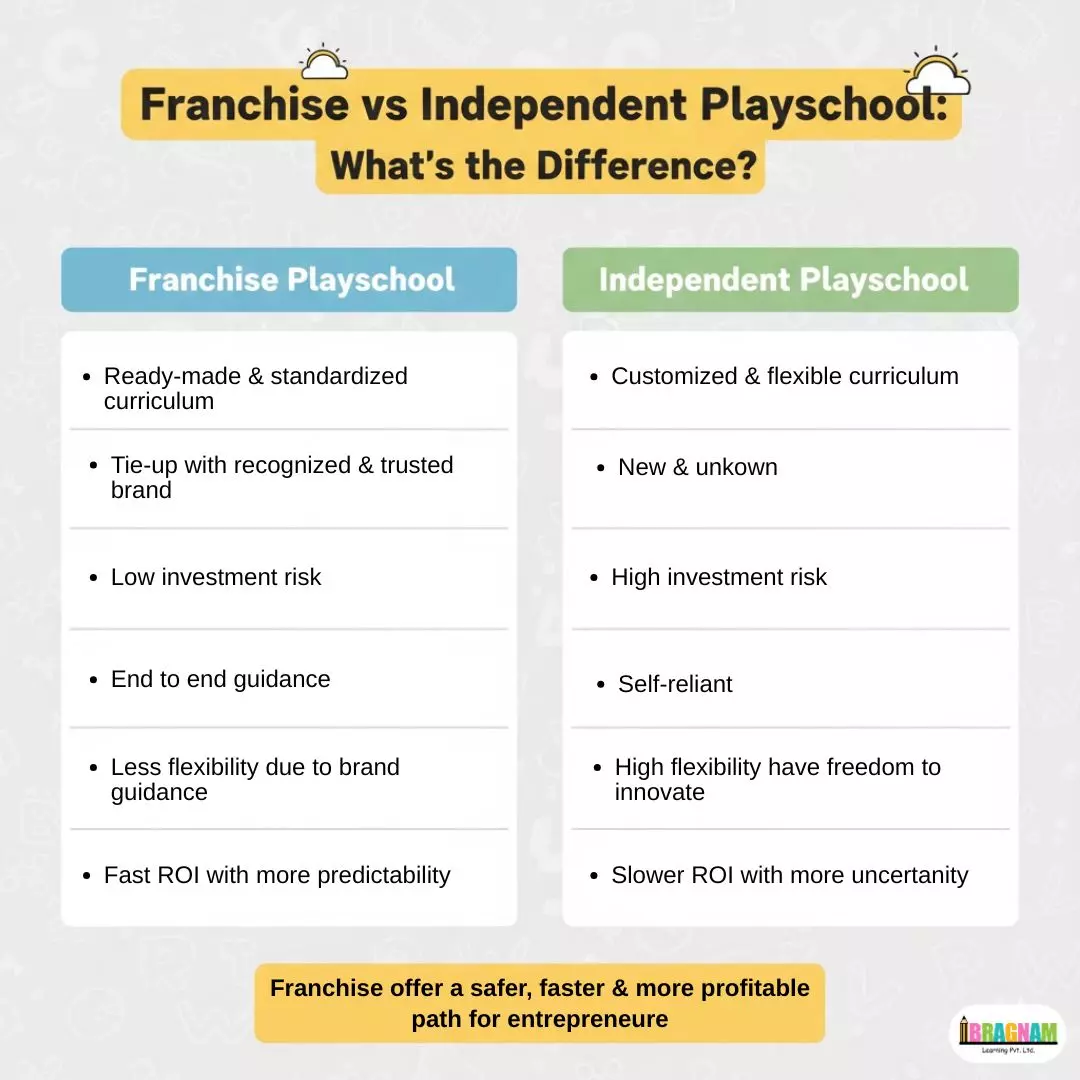
Franchise vs Independent Playschool: What’s the Difference?

FeatureFranchise Playschool (Balvatika/Bragnam)Independent Playschool
CurriculumReady-made, standardizedCustomized, flexible
Brand RecognitionEstablished, trustedNew, unknown
InvestmentModerate, lower riskHigh, higher risk
SupportEnd-to-end guidanceSelf-reliant
FlexibilityLimited (brand guidelines)High (freedom to innovate)
ROIFaster, more predictableSlower, uncertain

While independent schools offer more flexibility, franchises like Balvatika and Bragnam provide a safer, faster, and more profitable path for most entrepreneurs.


Playschool Franchise

How to Choose the Right Playschool Franchise

  • Research Brand Reputation: Pick a franchise with a strong track record and positive reviews, such as Balvatika or Bragnam.​
  • Evaluate Curriculum: Ensure the curriculum is research-based and aligned with national guidelines.
  • Check Support Systems: Look for franchises like Balvatika and Bragnam that offer training, marketing, and operational help.
  • Consider Investment & ROI: Compare franchise fees, setup costs, and projected returns.​
  • Assess Location Demand: Choose a franchise in an area with high demand for quality preschools.​

Why Franchise Is the Smart Choice for New Entrepreneurs

A playschool franchise with Balvatika or Bragnam is more than just a business opportunity—it’s a partnership that sets you up for success. With proven systems, brand power, and continuous support, you can focus on what matters most: providing quality education for young children.

By |2025-12-08T12:14:20+05:3010 December 2025|Uncategorized|

The Power of Social Media for Your Playschool


Social media has transformed the way businesses connect with their audiences, and playschools are no exception. In today’s digital world, leveraging the power of social media for your playschool can significantly boost visibility, engagement, and enrollments. With parents increasingly turning to online platforms to research and choose educational institutions for their children, a strong social media presence is no longer optional—it’s essential. This article explores how social media can empower your playschool, offering practical strategies and insights to help you stand out in a competitive market.

social media

Why Social Media Matters for Playschools

Social media platforms like Facebook, Instagram, and WhatsApp provide direct channels to connect with parents and the local community. Research shows that 92% of parents are more likely to enroll their child in a preschool that maintains an active social media presence, and 87% trust schools more when they see positive testimonials and reviews online. These platforms allow you to showcase your playschool’s unique environment, teaching philosophy, and daily activities, helping build trust and credibility.

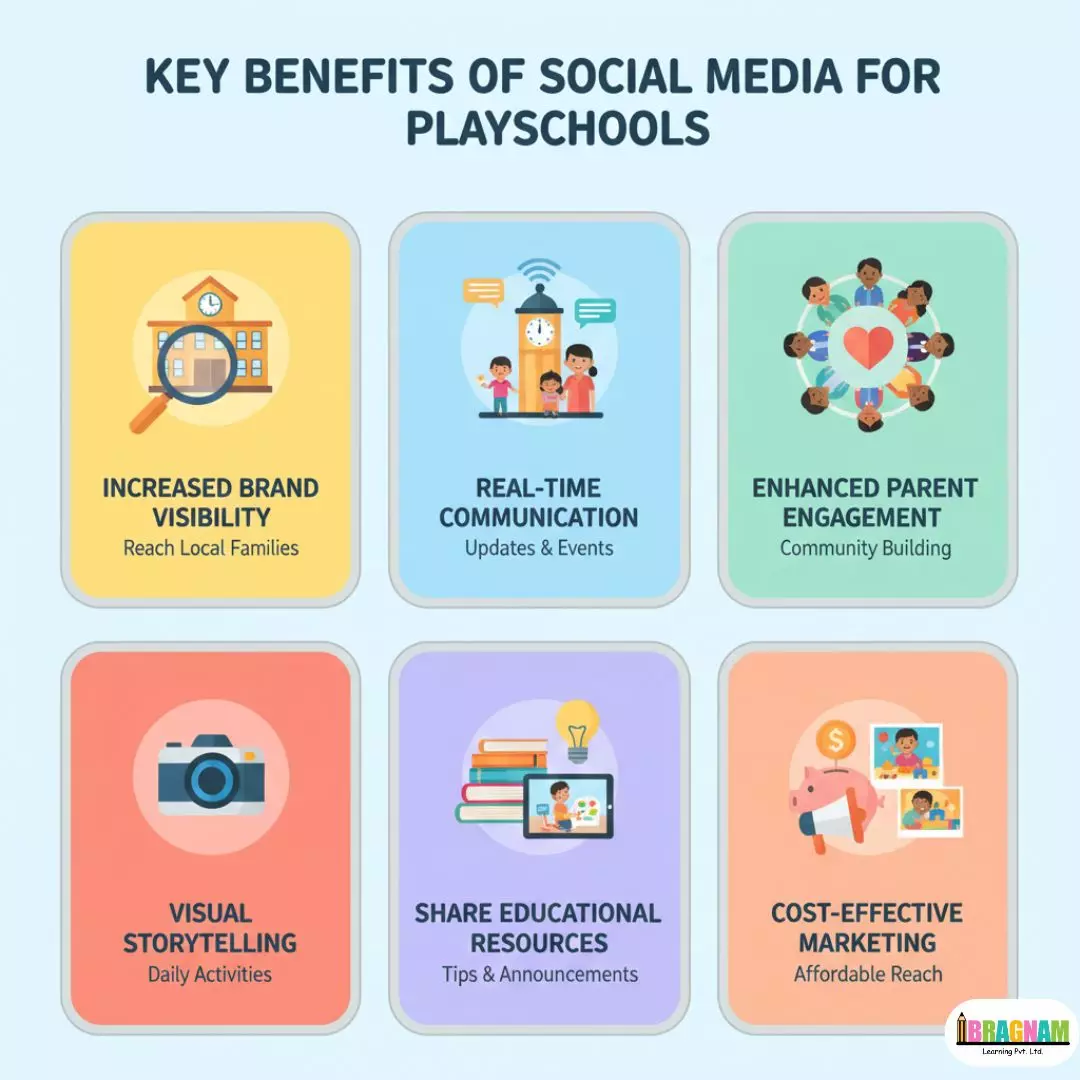
Key Benefits of Social Media for Playschools

  • Increased brand awareness and visibility among local families​
  • Real-time communication with parents and instant updates about school events
  • Enhanced parent engagement and community building​
  • Visual storytelling through photos and videos of classroom activities​
  • Easy sharing of educational resources, parenting tips, and event announcements
  • Cost-effective marketing compared to traditional advertising​

How to Use Social Media for Your Playschool

Choose the Right Platforms

Not all social media platforms are equally effective for playschools. Facebook is ideal for community building and targeted advertising, while Instagram excels at visual storytelling and engaging younger parents. WhatsApp can be used for direct, instant communication with parents and sharing daily updates.

Share Engaging Content

  • Post photos and videos of classroom activities, events, and children’s artwork (with parental permission)​
  • Share testimonials and success stories from parents and students​
  • Highlight your teachers and their expertise to build trust
  • Promote upcoming events, workshops, and open house days​
  • Offer educational content and parenting tips to position your playschool as a knowledgeable partner​

Build a Community

Encourage interaction by responding to comments, running contests, and hosting Q&A sessions. Create a sense of belonging by sharing stories, celebrating milestones, and featuring parent contributions.

Monitor and Adapt

Regularly review your social media analytics to understand what content resonates most with your audience. Adjust your strategy based on engagement metrics, feedback, and changing trends.

Best Practices for Social Media Success

  • Post consistently and at optimal times to maximize reach​
  • Use local hashtags to increase visibility in your area
  • Collaborate with local mom bloggers or parenting influencers
  • Maintain privacy and safety by getting parental consent before posting photos of children
  • Stay updated on platform features and trends to keep your content fresh and engaging​

FAQ: Social Media for Playschools

1. How often should a playschool post on social media?

Aim for 3–5 posts per week, focusing on quality over quantity. Share updates, photos, events, and educational content to keep your audience engaged.

2. What type of content works best for playschools on social media?

Photos and videos of classroom activities, testimonials, event promotions, and educational tips are highly effective for engaging parents and showcasing your playschool.​

3. How can social media help increase playschool enrollments?

Active social media profiles increase visibility, build trust, and allow parents to see the value of your playschool firsthand, making them more likely to enroll their children.​

4. Is it safe to post photos of children on social media?

Always obtain written parental consent before posting photos of children. Avoid sharing sensitive information and respect privacy guidelines.

5. What platforms should a playschool focus on?

Facebook and Instagram are most effective for building community and showcasing activities. WhatsApp is useful for direct communication with parents.

By |2025-12-08T11:36:14+05:309 December 2025|Uncategorized|

How to Promote Your Playschool

promote your playschool

Promote your playschool effectively is crucial for attracting new families, building trust, and ensuring steady admissions. With increasing competition in early education, a smart, multi-channel approach can make all the difference. This guide shares proven strategies, creative ideas, and actionable tips to help you market your playschool and stand out in your community.

Why Playschool Promotion Matters

Parents today are more informed and selective than ever. They look for schools that offer not just education, but a nurturing environment, experienced staff, and engaging activities. A strong promotion plan helps communicate your playschool’s unique strengths and values, making it easier for parents to choose you over others.

promote your playschool

10 Proven Playschool Promotion Strategies

1. Build a Strong Brand Identity

A memorable brand helps parents instantly recognize your playschool. Invest in a professional logo, consistent color scheme, and a clear mission statement. Make sure your branding is visible on all marketing materials, from pamphlets to your website.

2. Create a User-Friendly Website

Your website is often the first point of contact for parents. Ensure it is mobile-friendly, easy to navigate, and includes information about your curriculum, staff, facilities, and contact details. Add a photo gallery and testimonials for authenticity.

3. Leverage Social Media

Social media platforms like Facebook, Instagram, and WhatsApp are powerful tools for reaching parents. Share engaging content—photos, videos, event updates, and parenting tips. Run contests and encourage parents to share their experiences.

4. Host Open Houses and Demo Classes

Invite parents and children to experience your playschool firsthand. Open houses, trial classes, and fun activity sessions allow families to see your environment, meet teachers, and learn about your curriculum.

5. Engage with the Local Community

Participate in local events, sponsor community activities, and collaborate with nearby schools or businesses. This builds trust and increases your visibility.

6. Use Digital Marketing

Invest in Google Ads, local SEO, and targeted social media ads. Create landing pages for admissions and use email newsletters to keep parents informed about your latest programs and events.​

7. Distribute Pamphlets and Flyers

Hand out informative pamphlets and flyers at local markets, parks, and community centers. Make sure they highlight your unique selling points and include a clear call-to-action.​

8. Collect and Showcase Testimonials

Happy parents are your best advocates. Ask for reviews and testimonials, and feature them on your website and social media. Video testimonials are especially effective.

9. Run Referral Programs

Encourage current parents to refer friends and family by offering incentives such as discounts or free admission days. Word-of-mouth is one of the most powerful marketing tools.​

10. Collaborate with Influencers and Experts

Partner with parenting bloggers, local influencers, or education experts to promote your playschool. Their endorsement can boost your credibility and reach.​

Creative Playschool Marketing Ideas

  • Organize themed playgroups (arts & crafts, storytelling, science exploration).
  • Host fun events like carnivals, storytelling sessions, or parent-child workshops.​
  • Create informative video content showing a “day in the life” at your playschool.​
  • Sponsor local sports teams or family festivals to increase visibility.​
  • Offer free parenting workshops or seminars on early childhood development.

Maximizing Parent Engagement

  • Respond promptly to inquiries on social media and your website.​
  • Share regular updates about classroom activities, upcoming events, and parenting tips.​
  • Create a WhatsApp group for parents to foster a sense of community.​

Frequently Asked Questions (FAQs)

Q1: What are the best ways to attract parents to my playschool?
A: Focus on building a strong online presence, hosting open houses, sharing testimonials, and engaging with the local community.​

Q2: How can I promote my playschool on a budget?
A: Use social media, distribute flyers, run referral programs, and participate in local events—all cost-effective ways to boost visibility.​

Q3: Why is branding important for a playschool?
A: A strong brand helps parents recognize and trust your playschool, making it easier for them to choose you over competitors.​

Q4: How do I use digital marketing for my playschool?
A: Invest in local SEO, run targeted ads, create a user-friendly website, and use email newsletters to stay connected with parents.​

Q5: What kind of events can I organize to promote my playschool?
A: Host open houses, demo classes, carnivals, storytelling sessions, and parenting workshops to attract families and build community connections.

By |2025-12-08T11:12:57+05:308 December 2025|Blog|

How to upgrade your playschool: 8 simple steps to modernise your centre

How to upgrade your playschool

Upgrading your playschool is about much more than adding a few new toys or painting the walls a brighter colour. It means reimagining your space, systems, and teaching so that children learn better, parents feel confident, and your team enjoys coming to work every day.

When you focus on how to upgrade your playschool in a planned way, you can improve learning outcomes, increase admissions, and build a strong reputation in your community. Simple, step-by-step changes in infrastructure, curriculum, teacher training, and parent communication can transform your centre without wasting money or confusing your staff.

Why upgrading your playschool matters

Parents today are more aware, research-focused, and selective when choosing a playschool. They look at safety, cleanliness, teaching methods, communication, and overall experience before making a decision. Upgrading your playschool helps you match these expectations and stand out in a competitive market.

A well-upgraded playschool:

  • Builds stronger trust with families
  • Increases word-of-mouth admissions
  • Creates a happier, more engaging environment for children and staff
How to upgrade your playschool

Step 1: Audit before you upgrade your playschool

The first step in how to upgrade your playschool is to honestly review where you are today. Before buying anything new, spend time observing, listing gaps, and collecting feedback from parents, teachers, and support staff.

You can create a simple audit checklist with points like:

  • Classroom layout and space usage
  • Safety, cleanliness, and hygiene
  • Learning corners and teaching materials
  • Outdoor play and gross motor activities
  • Parent communication and satisfaction

Once you finish this audit, you will know exactly how to upgrade your playschool in a focused way, instead of making random, disconnected changes.

Step 2: Upgrade infrastructure and safety

A huge part of how to upgrade your playschool is improving the physical environment and safety standards. Parents notice lighting, ventilation, toilets, flooring, and entry–exit security from the very first visit. Basic early childhood guidelines stress age-appropriate furniture, safe play spaces, and hygiene facilities.

Think about upgrading:

  • Classrooms: Child-sized tables and chairs, open shelves at child height, soft floor rugs, and clear walking paths
  • Toilets and wash areas: Low basins, liquid soap, tissue or towels, clean dustbins, and non-slippery tiles
  • Safety: Fire extinguishers, visible exit plans, covered electrical points, CCTV (with clear privacy rules), and safe outdoor equipment
  • Cleanliness: Daily cleaning schedule, sanitisation routines, and organised storage for toys and learning aids

These changes make your centre safer and more comfortable, and they directly support your promise to parents when you talk about how to upgrade your playschool.

Step 3: Upgrade your curriculum and classroom experience

How to upgrade your playschool also means upgrading what children actually do every day. A strong early years programme is play-based, child-centred, and aligned with age-appropriate learning outcomes like language, numeracy, motor skills, and social–emotional development.​

To upgrade your curriculum, you can:

  • Use monthly or weekly themes (seasons, community helpers, animals, transport, festivals) to organise activities and keep learning engaging
  • Blend free play, circle time, storytelling, art, music, movement, and simple experiments into each day
  • Add hands-on materials such as puzzles, blocks, sorting trays, pretend-play corners, and fine-motor activities

This keeps your promise in the title “How to upgrade your playschool” by making learning richer, more joyful, and more meaningful for children.

Create learning corners when you upgrade your playschool

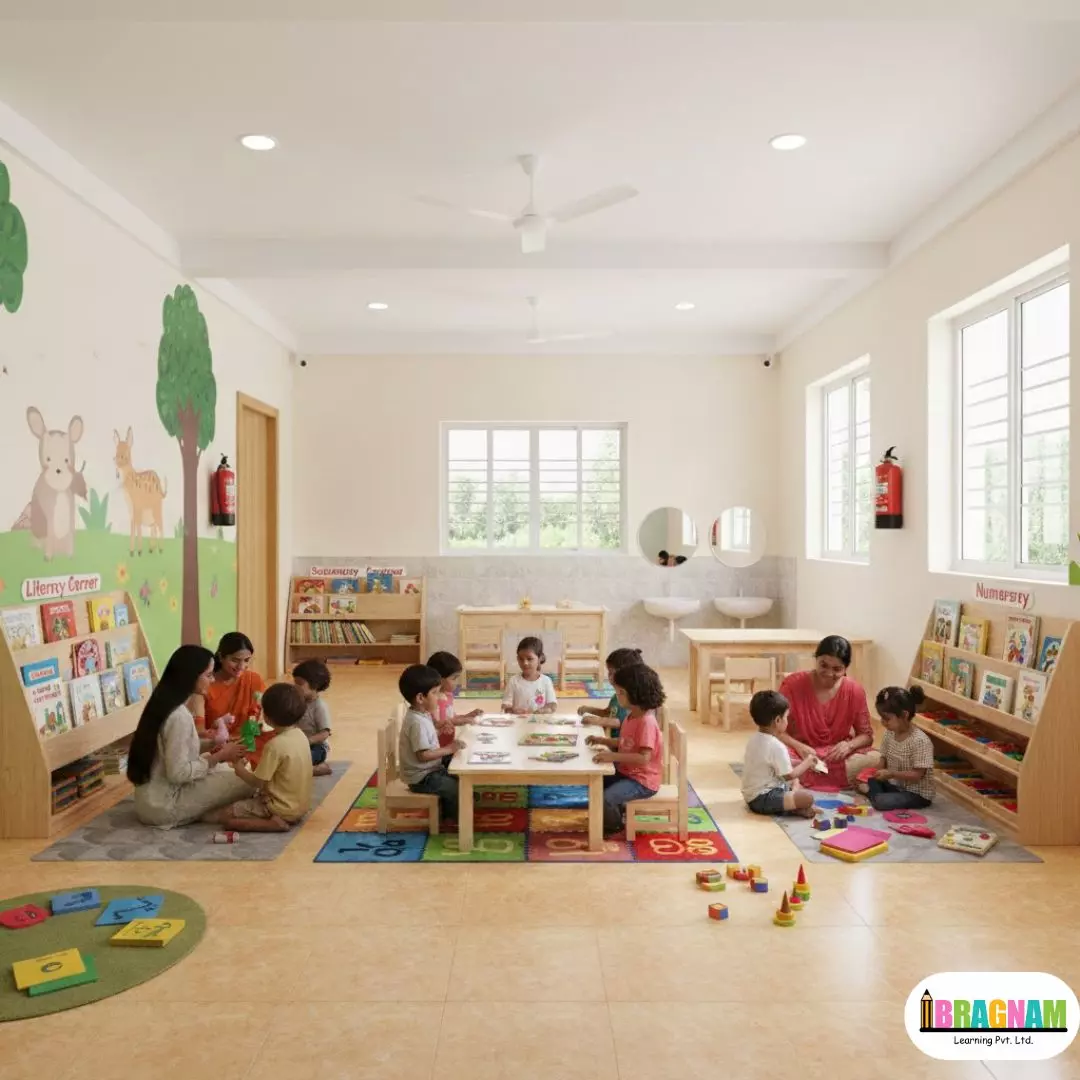
Learning corners are a simple, powerful way to upgrade classrooms:

  • Literacy corner: Picture books, alphabet cards, puppets, and story mats
  • Numeracy corner: Counting objects, shape sorters, number puzzles, and patterning games
  • Sensory corner: Sand trays, water play (supervised), textured materials, and simple science activities
  • Art corner: Crayons, paper, child-safe scissors, glue, and collage materials

Clearly labelled corners help children move, choose, and explore on their own, which is an essential part of early childhood development.

Step 4: Invest in teacher training and support

No plan on how to upgrade your playschool is complete without investing in your teachers. Even the best curriculum and materials will not work if teachers are not trained, supported, and motivated.

You can upgrade your playschool by:

  • Organising regular training sessions on classroom management, play-based teaching, observation, and documentation
  • Sharing simple lesson plan templates, activity banks, and monthly planning formats
  • Encouraging teachers to reflect, share ideas, and visit each other’s classes for inspiration

When teachers feel confident and supported, they deliver more engaging activities, communicate better with parents, and naturally become ambassadors for your upgraded playschool.

Step 5: Use technology smartly when you upgrade your playschool

Modern parents appreciate playschools that use technology wisely to communicate, record learning, and manage operations. The secret of how to upgrade your playschool with technology is to keep it child-safe, age-appropriate, and helpful for adults, not screen-heavy for children.

Smart ways to use technology include:

  • A simple app or portal for attendance, announcements, and fee reminders
  • Sharing photos and short videos of classroom activities with parental consent
  • Digital records for progress reports and portfolio-style documentation
  • Occasional use of audio stories, rhymes, or interactive whiteboards to support lessons

This kind of thoughtful technology upgrade supports transparency, builds trust, and shows parents that your playschool is modern yet child-focused.

Step 6: Strengthen parent engagement when you upgrade your playschool

How to upgrade your playschool also includes upgrading your relationship with families. Parents want to feel informed, included, and heard.

Simple, consistent parent engagement ideas:

  • Monthly newsletters or WhatsApp updates summarising learning themes, events, and reminders
  • Parent–teacher meetings that focus on the child’s strengths and practical suggestions, not just problems
  • Open days, class presentations, and celebrations where parents can see their child in action
  • Feedback forms or quick digital surveys after events and at the end of each term

Upgraded communication builds a strong playschool community and makes parents more likely to recommend your centre to others.

Step 7: Refresh branding, marketing, and admissions

If you are thinking about how to upgrade your playschool, also think about how your brand looks and sounds to the outside world. Many centres upgrade internally but forget to update their marketing, which means parents do not notice the improvements.​

You can:

  • Update your website and social media pages with new photos, videos, and clear information about your upgraded features
  • Rewrite your brochure, Google My Business listing, and online profiles to highlight safety, curriculum, activities, and parent engagement
  • Collect and showcase genuine testimonials and success stories from satisfied parents

These steps ensure that when people search for playschools in your area, your upgraded centre makes a strong, professional impression.

Step 8: Make upgrading your playschool an ongoing habit

How to upgrade your playschool should not be a one-time project. The best centres build small, regular improvements into their yearly plan so they keep growing and adapting.

You can:

  • Set yearly priorities (for example: “This year we will focus on outdoor play and teacher training”)
  • Review progress every quarter with your team
  • Keep a running list of ideas, parent suggestions, and teacher requests for future upgrades

This mindset helps your playschool stay fresh, innovative, and responsive to children’s and parents’ needs.

FAQs about how to upgrade your playschool

  1. How do I start if I have a limited budget to upgrade my playschool?
    Begin with low-cost, high-impact changes like decluttering classrooms, rearranging furniture, creating learning corners, and improving cleanliness and communication. Focus first on safety and daily classroom experience before investing in big décor or equipment.
  2. What is the most important area to focus on when upgrading a playschool?
    Safety and classroom quality should always come first. Once basic safety, hygiene, and child-friendly furniture are in place, you can upgrade curriculum, teacher training, and parent engagement step by step.
  3. How can I show parents that I have upgraded my playschool?
    Share before–after photos, highlight new features in your admission counselling, update your website and social media, and communicate clearly during parent meetings and open house events. Encourage existing parents to share their experience with other families.
  4. How often should I review how to upgrade my playschool?
    A simple internal review once a year is a good routine, with smaller check-ins every term. This helps you catch gaps early and plan upgrades during holidays or low-enrolment periods.
  5. Can technology really help upgrade my playschool?
    Yes, when used wisely. Technology can improve communication, record-keeping, and transparency without replacing play-based learning. Use it mainly for parent updates, documentation, and basic admin tasks rather than heavy screen time for children.

Conclusion: Take the next step to upgrade your playschool

How to upgrade your playschool becomes easy and manageable when you break it into clear steps: audit your current setup, improve safety and infrastructure, refresh curriculum, support teachers, add smart technology, and deepen parent engagement. Each small improvement builds a better experience for children and a stronger brand for your centre.

If you are serious about how to upgrade your playschool, start today with one simple change—rearrange a classroom, plan a new theme, schedule a teacher training, or send a more thoughtful update to parents. These actions will move you closer to the upgraded, high-quality playschool you imagine.

By |2025-12-04T16:40:45+05:304 December 2025|Blog|

Winter Wonderland: Fun Activities for Kids Indoors and Outdoors

Winter Wonderland

Introduction: Turning Cold Days into Magic

When temperatures drop, many parents worry that children will be “stuck” indoors and glued to screens, but winter can actually be one of the most playful, imaginative seasons of the year. With the right winter wonderland fun activities for kids, you can create routines that boost immunity, build resilience, and keep little ones learning through play.​

Winter-themed games, crafts, and outdoor experiences help children strengthen their muscles, practice problem-solving, and develop social skills as they play with siblings and friends. The key is offering a mix of indoor and outdoor options so families can choose what works best for the weather and their child’s energy level each day.

Winter Wonderland

Benefits of Winter Play for Kids

Cold-weather activities are about much more than “passing time”; they play a real role in holistic child development.

  • Physical fitness: Building snowmen, running through parks, or navigating indoor obstacle courses all improve strength, coordination, and balance.​
  • Emotional well-being: Time in nature and active play reduce stress and anxiety, helping children regulate big feelings more effectively.
  • Social skills: Cooperative games, fort-building, and team challenges encourage communication, turn-taking, and problem-solving with peers
  • Cognitive growth: Exploring ice, snow, and seasonal changes gives children hands-on science experiences that build curiosity and critical thinking.​

Embracing winter as a season of exploration rather than something to “get through” helps children build resilience and a lifelong love of the outdoors.

Outdoor Winter Wonderland Fun

When the weather is safe, stepping outside can transform an ordinary day into a magical winter wonderland for kids.​

Simple Snowy Adventures

Even a small outdoor space can host plenty of winter play ideas.

  • Build a snow family: Invite children to roll different-sized snowballs, stack them, and decorate with natural materials like twigs and pinecones.​
  • Snow fort or castle building (with safety rules): Use buckets or plastic containers to pack “snow bricks” and create low, open structures for imaginative play.
  • Winter nature walk: Go for a slow walk to look for animal tracks, frost patterns, and winter birds, encouraging children to describe what they see, hear, and feel.
  • Sunlit winter picnic: On milder days, spread a blanket in a park, sip warm soup or cocoa, and let kids run and play between bites.​

These activities keep children moving, which supports cardiovascular health while also feeding their sense of wonder.

Movement Games in the Snow

Structured games can make winter exercise feel like an adventure.

  • Snow target toss: Shape soft snowballs and aim them at targets like buckets or chalk circles on the ground, focusing on accuracy, not hitting people.​
  • Follow-the-leader tracks: One child leads while others step into their footprints, practicing balance and coordination on snow or frost.​
  • Winter obstacle trail: Use cones, sticks, or natural landmarks to create a path where kids jump, hop, tiptoe, and crawl through the snow.

Games like these improve gross motor skills and body awareness, often without children realizing how much exercise they are getting.

Indoor Winter Wonderland Activities

On very cold, wet, or polluted days, indoor winter wonderland fun activities for kids keep them upbeat and engaged without needing to step outside.​

Cozy Crafts and Creative Play

Winter crafts double as quiet-time activities and fine-motor workouts.

  • Snowflake art: Children can cut simple paper shapes (with support) and decorate with crayons, cotton, or glitter to explore symmetry and patterns.
  • Winter sensory bins: Fill tubs with cotton balls, rice, or pasta and add scoops, toy animals, and “ice cubes” for scooping, pouring, and imaginative stories.​
  • DIY winter storybooks: Encourage children to draw a snow-day adventure and dictate the story while an adult writes their words, blending literacy with creativity.

These activities support creativity, hand–eye coordination, and early language skills in a calm, enjoyable way.​

Indoor Movement and Gross Motor Fun

Even inside, children need chances to stretch, jump, and use their big muscles.

  • Indoor obstacle course: Arrange cushions, chairs, tunnels made from blankets, and taped “balancing lines” to create a safe challenge path.
  • Dance party in the “snow”: Play winter songs and let children dance with scarves or ribbons, pretending they are snowflakes swirling in the wind.​
  • Yoga and stretching: Simple animal poses, “ice skater” lunges, and breathing exercises help children strengthen their bodies and calm their minds.

Indoor movement not only burns energy but also improves focus and mood for the rest of the day.

Safety Tips for Winter Play

To keep winter wonderland fun activities for kids safe, a few simple guidelines go a long way.

  • Dress in layers: Start with moisture-wicking clothing, add warm layers, and top with a waterproof jacket, mittens, and boots.
  • Protect “cold zones”: Ensure ears, nose, fingers, and toes are covered because these areas are more prone to frostbite.​
  • Set time limits: Plan regular warm-up breaks indoors to prevent hypothermia and overexposure to cold.​
  • Choose safe play areas: Keep children away from roads, snowbanks, and snowplows; opt for clear, open spaces instead.​
  • Hydrate and fuel: Offer water and healthy snacks because children burn energy faster in cold temperatures.​

Following these precautions allows families to enjoy the magic of winter while minimizing risk.

Winter Wonderland Ideas for Preschools and Playschools

Early years settings can turn their campuses into seasonal learning labs with a few thoughtful setups.​

  • Winter-themed learning centers: Set up corners for sensory play, art, pretend “winter café,” and science exploration with ice and water.
  • Group outdoor sessions: Short, supervised outdoor playtimes with clear rules for clothing and safety help children build healthy cold-weather habits.​
  • Integrated curriculum: Link winter stories, songs, counting games, and craft projects so children meet academic goals through seasonal play.​

Communicating these ideas with parents encourages them to continue similar activities at home, strengthening home–school partnerships.

Conclusion: Make Winter Your Child’s Favorite Season

Winter wonderland fun activities for kids show children that every season offers something special to explore, learn, and enjoy. With a mix of outdoor adventures, indoor creativity, and a few simple safety rules, families and educators can turn chilly days into cozy, joy-filled experiences that children remember for years.​

Encourage your child to jump into the magic of winter—layer up, step outside (or get creative indoors), and let imagination lead the way.

FAQs: Winter Wonderland Fun Activities for Kids

1. What are some easy winter wonderland activities for toddlers?
Simple activities like sensory bins with cotton “snow,” water play with floating ice cubes, and short outdoor walks to feel the cold air are perfect for toddlers. Always keep sessions short, supervised, and focused on exploring textures and simple movements.

2. How can I keep my child active indoors during winter?
Create an indoor obstacle course, hold daily dance breaks, and use simple yoga or stretching routines to keep your child moving. Rotating these options across the week prevents boredom and supports healthy sleep patterns.​

3. Are outdoor winter activities safe for young children?
Yes, outdoor winter play is safe when children are dressed warmly in layers, kept dry, and given regular warm-up breaks. Choosing safe play areas away from roads, snowbanks, and snow-clearing equipment is essential.​

4. How does winter play support my child’s development?
Winter activities strengthen muscles, improve balance, and build cardiovascular fitness through running, climbing, and exploring. They also support creativity, problem-solving, and emotional resilience as children adapt to new sensations and environments.​

5. What if there is no snow where we live?
You can still create a winter wonderland at home with cotton “snow,” ice cube experiments, winter-themed storytime, and outdoor nature walks in the cool air. Focus on the feelings of the season—coziness, exploration, and togetherness—rather than snow itself.​

By |2025-12-03T13:11:37+05:303 December 2025|Blog|

Winter Science Exploration for Kindergarten: Fun, Easy Activities for Young Learners

winter science exploration

Winter Science Exploration for Kindergarten

Winter science exploration for kindergarten turns chilly days into magical, hands-on learning experiences that build curiosity, early STEM skills, and language development. With simple, safe experiments, teachers and parents can help young children explore ice, snow, temperature, and seasonal changes in a playful, engaging way.​

What Is Winter Science Exploration?

Winter science exploration means using winter-themed activities and experiments to help young children observe, ask questions, and discover how the world changes in cold weather. It focuses on simple, sensory-rich experiences like melting ice, making pretend snow, or watching how water changes from liquid to solid and back again.

For kindergarteners, these activities introduce early concepts of science, technology, engineering, and math (STEM) in a way that feels like play, not “formal” study. Children learn by doing, touching, and experimenting with real materials instead of only listening or watching

Why Winter Science Is Perfect for Kindergarten

Winter gives a natural “laboratory” where children can see big changes in weather, light, and temperature, making science feel real and meaningful. Even in places without real snow, teachers can recreate winter experiences with ice, water, and sensory materials.

Key benefits for kindergarteners include:

  • Stronger observation and prediction skills
  • Better vocabulary and language development
  • Improved problem-solving and fine motor skills​

These activities also support curiosity, resilience, and confidence as children test ideas and see what happens.

Learning Goals in Winter Science Exploration

Winter science exploration can support several early learning goals that align with kindergarten curricula.

Common goals include:

  • Observing and describing properties of materials (hot/cold, solid/liquid, rough/smooth)
  • Noticing and comparing changes over time (melting, freezing, dissolving)
  • Asking questions and making simple predictions (“What will happen if…?”)
  • Using simple tools such as droppers, cups, and magnifiers safely​

These goals also link naturally with early literacy, as children talk about what they see, draw what happens, and dictate simple “science stories.”

Simple Winter Science Activities for Kindergarten

Below are easy, classroom-friendly ideas you can run in small groups or at learning stations.

1. Melting Ice Exploration

Children explore how ice melts and what can make it melt faster.​

You can:

  • Freeze colored ice cubes and place them in trays
  • Offer warm water, room-temperature water, and salt
  • Let children drip, pour, and sprinkle, then talk about what they notice

Concepts covered: states of matter, temperature, and cause-and-effect.​

2. Snowstorm in a Jar (Snow-in-a-Bottle)

Even without real snow, children can create a “snowstorm” using a clear jar, water, oil, and small white particles like glitter or tiny foam bits.​

Children shake the jar and watch how the “snow” falls and settles, building observation skills and language (“floating,” “sinking,” “swirling”).​

3. Animal Tracks and Winter Animals

Use pictures, toy animals, or simple stamps to show how animals leave tracks in snow or mud.

Children can:

  • Press toy animal feet into playdough or salt dough “snow”
  • Match tracks to animals in picture cards
  • Talk about where animals go in winter and how they stay warm

This blends science with early environmental awareness and storytelling.​

4. Paper Snowflakes and Symmetry

Folding and cutting paper snowflakes introduces basic geometry and symmetry in a hands-on way.

As children open their snowflakes, guide them to notice:

  • Matching sides and repeating shapes
  • Different patterns created by different cuts

This supports math skills like shape recognition, patterning, and spatial reasoning.​

5. Winter Sensory Bins

Fill tubs with safe materials such as ice cubes, cotton balls, shredded paper, or gel beads to mimic “snow” and “ice.”​

Add scoops, cups, and small toys for:

  • Pouring and transferring
  • Sorting objects by size, texture, or color
  • Creating simple winter stories and small-world play

These bins can be especially helpful for children with sensory needs when thoughtfully designed and supervised.​

Safety Tips for Winter Science with Young Children

Safety is essential so that winter science exploration stays fun and stress-free for everyone.

Key safety practices:

  • Always supervise closely, especially around ice, water, and small loose parts
  • Avoid extremely hot or extremely cold materials; test temperatures beforehand
  • Use child-safe materials such as water, salt, baking soda, food colouring, and non-toxic craft items​
  • Remind children about gentle hands, walking slowly, and not tasting the materials
  • Keep towels and spare warm clothing nearby for spills and wet sleeves

Clear safety routines help children feel secure and build good habits for future science learning.

Tips to Make Winter Science Exploration Meaningful

A few simple strategies can turn each activity into a rich learning experience.

Try to:

  • Start with a question: “What do you think will happen if we sprinkle salt on the ice?”
  • Encourage children to describe what they see, feel, and hear using full sentences
  • Add drawing or simple charts where children can record what they noticed
  • Connect activities to daily life (“How do we stay warm in winter?” “Where does water go when ice melts?”)​

Linking winter science exploration with stories, songs, and circle-time discussions keeps learning integrated and memorable.

Integrating Winter Science into Your Kindergarten Day

Winter science exploration does not need to be a separate “big project.” It can fit into everyday routines.​

Ideas for easy integration:

  • Morning circle: Talk about the weather and track temperature changes on a simple chart
  • Learning centres: Set up a “winter lab” table with rotating activities (ice melting one day, snowflakes the next)
  • Outdoor time: Look for frost, dew, puddles, shadows, and seasonal changes in plants and trees​

This approach helps children see science as part of their real world, not just a “special subject.”

FAQ: Winter Science Exploration for Kindergarten

1. What is winter science exploration in kindergarten?

Winter science exploration is a set of playful, hands-on activities that help young children investigate ice, water, weather, and seasonal changes using simple materials and guided questions.

2. Are winter science activities safe for kindergarteners?

Yes, winter science activities are safe when adults supervise closely, use comfortable temperatures, and choose child-friendly ingredients like water, salt, baking soda, and food colouring.

3. Do we need real snow for winter science?

No, most winter science activities can be done with ice cubes, water, paper, and sensory materials, making them suitable for classrooms that do not get real snow.

4. What skills do children develop through winter science exploration?

Children develop observation, prediction, comparison, problem-solving, language skills, and fine motor control as they explore, test ideas, and describe what they see.​

5. How often should I include winter science in my kindergarten plan?

Even one or two short winter science activities each week can make a big difference, especially when they are linked to stories, art, and outdoor observations.

Conclusion

Winter science exploration for kindergarten transforms cold days into warm, joyful learning moments where children feel like real scientists. With simple materials, clear safety routines, and curious questions, teachers and parents can nurture lifelong curiosity and confidence in young learners

By |2025-12-01T14:02:29+05:302 December 2025|Blog|
Go to Top