From Pawan To Powerhouse: Mastering Chess Strategy

Introduction: From Pawan To Powerhouse
Pawan To Powerhouse

From Pawan To Powerhouse: Mastering Chess Strategy is all about turning simple pawn moves into powerful, game-winning plans. Chess is not only about knowing how pieces move; it is about using them with purpose. When players learn clear, practical strategy, even an ordinary โ€œpawanโ€ (pawn) can become the hero of the board.

This guide breaks down essential ideas so beginners and casual players can think ahead with confidence, avoid common traps, and slowly transform their play from random moves to purposeful strategy.
Pawan To Powerhouse

H1: What Does Chess Strategy Really Mean?

Chess strategy is the long-term plan behind your moves, not just quick tricks or one-move threats. It focuses on improving piece activity, keeping the king safe, and building a strong pawn structure that supports your ideas over many moves.

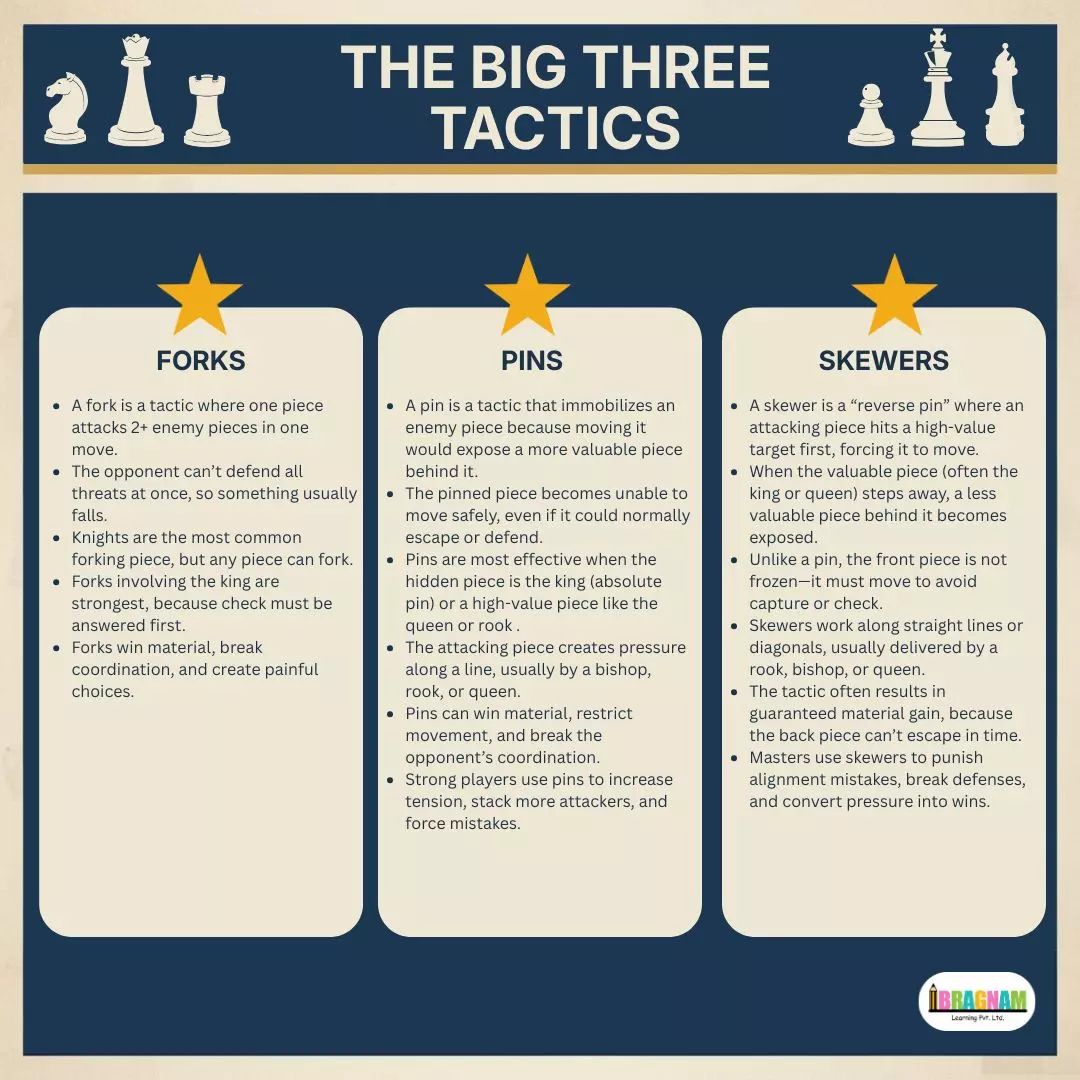
Tactics like forks, pins, and skewers help you win material immediately, but strategy decides why you put your pieces on certain squares in the first place. When players combine sound strategy with basic tactics, their overall game improves dramatically.

H2: From Pawn To Power โ€“ Core Strategic Principles

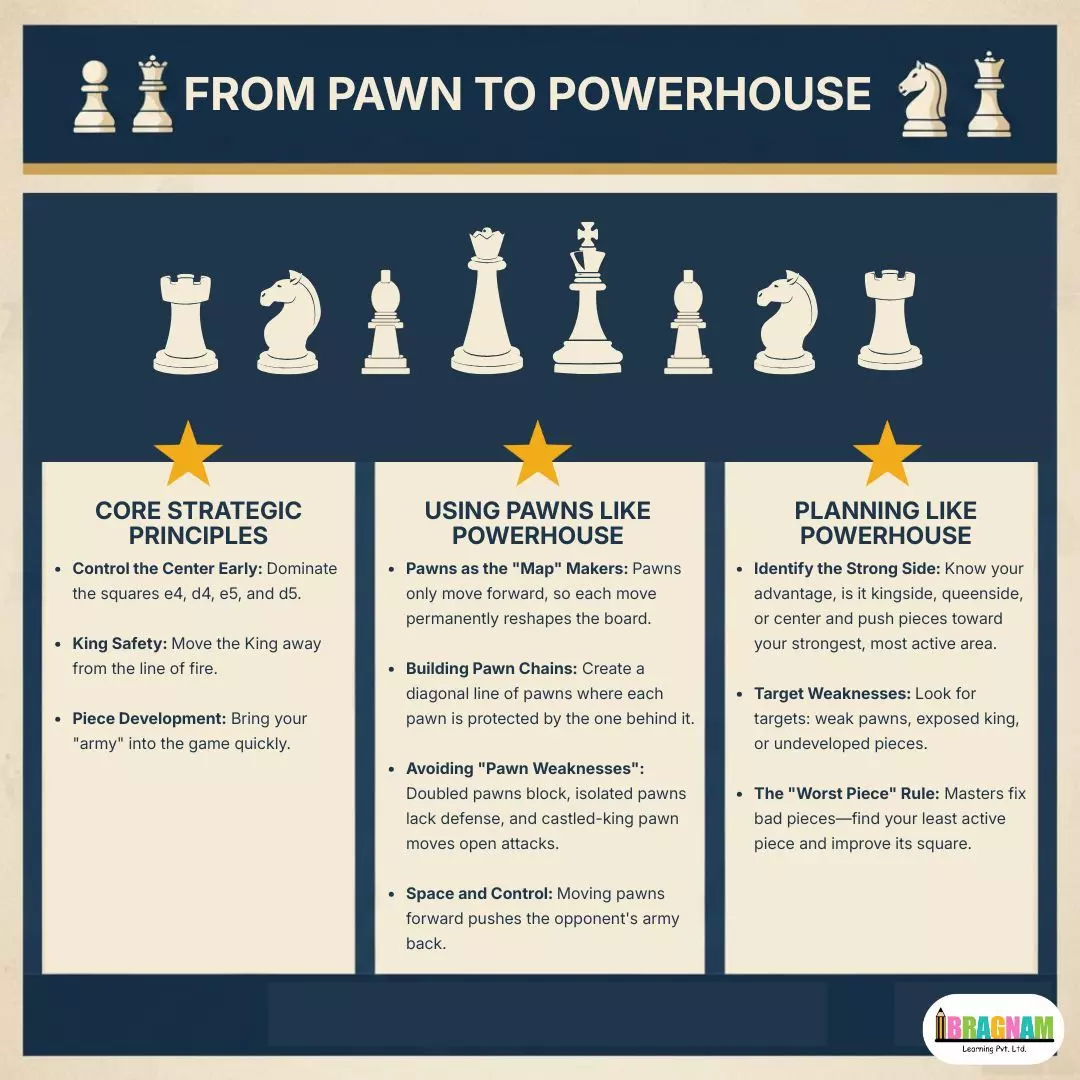
H3: Control the Center Early

  • The central squares (e4, d4, e5, d5) give your pieces maximum influence and flexibility.
  • Use pawns and knights to fight for the center instead of moving random edge pawns or chasing early attacks.
  • โ€‹Central control makes every piece stronger, giving you more room to attack and defend while restricting your opponentโ€™s options.

H3: Keep Your King Safe

  • Castle early so your king leaves the center and your rook joins the game.
  • Avoid weakening the pawns in front of your castled king unless there is a clear reason.โ€‹
  • โ€‹A safe king means you can focus on building pressure instead of constantly parrying threats and cheap checkmates.

H3: Develop Pieces, Not Just Pawns

  • Bring knights and bishops out quickly; avoid moving the same piece again and again in the opening.
  • Each piece should move toward an active square where it controls important lines or supports a future plan.
  • โ€‹Good development is like assembling a team: once all your pieces are active, they can coordinate for strong attacks or rock-solid defense.

H2: Using Pawns Like a Powerhouse

Pawns shape the โ€œmapโ€ of the game. Their structure decides where you are strong, where you are weak, and which side of the board you should play on.

  • Avoid unnecessary pawn moves, especially near your king, because every pawn move creates new squares to defend.
  • Use pawn chains (connected pawns supporting each other diagonally) to claim space and guide your pieces.
  • โ€‹A healthy pawn structure is often more valuable than a flashy one-move trick because it gives lasting advantages that are hard for your opponent to undo.

H2: Simple Chess Tactics Every โ€œPawanโ€ Should Know

Strategy tells you where to play; tactics show you how to win material or finish an attack. Learning a few basic patterns can instantly turn ordinary positions into winning ones.

H3: Forks

A fork happens when one piece attacks two or more enemy pieces at the same time. Knights, queens, and even pawns can create forks that force your opponent to lose material.โ€‹

H3: Pins

A pin freezes a piece in place because moving it would expose something more valuable, often the king or queen. Bishops, rooks, and queens are excellent at creating pins along files, ranks, and diagonals.

H3: Skewers

In a skewer, a more valuable piece stands in front of a less valuable one on the same line. When the front piece moves away from attack, the back piece is left hanging and can be captured.

By keeping pieces active in the center and on open lines, players naturally create more chances for forks, pins, and skewers.

H2: Planning Like a Powerhouse

Many beginners โ€œjust move somethingโ€ each turn; stronger players always try to play with a plan. After the opening, pause and ask a few simple questions.

  • Which side of the board is stronger for my pieces: kingside, queenside, or center?
  • What are my opponentโ€™s weaknesses (weak pawns, exposed king, undeveloped pieces)?
  • Which piece of mine is the worst placed, and how can I improve it?

Even a โ€œsmallโ€ planโ€”such as doubling rooks on an open file or targeting one weak pawnโ€”can turn a passive position into a powerful one over time.

H2: Practical Ways To Improve Your Strategy

Turning From Pawan To Powerhouse: Mastering Chess Strategy into reality needs consistent, focused practice, not just reading.

  • Play slower time controls (like 15+10) so there is time to think, not just react.
  • Review your games and ask where your plan went wrong or where you missed a better strategic idea.
  • Study one concept at a time (e.g., centralization this week, pawn structure next week) and apply it in your games.

This kind of deliberate practice helps players steadily build real understanding, not just memorized moves.
Pawan To Powerhouse

FAQ: From Pawan To Powerhouse โ€“ Mastering Chess Strategy

Q1. What is the difference between chess strategy and tactics?
Strategy is the long-term plan that guides your moves, focusing on piece activity, king safety, and pawn structure. Tactics are short-term combinations like forks, pins, and skewers that win material or deliver checkmate.

Q2. How can a beginner start mastering chess strategy?
Beginners should first learn to control the center, develop pieces quickly, and castle early. Then they can slowly study pawn structures and basic planning, one concept at a time.

Q3. Are pawns really that important in strategy?
Yes, pawns decide where the battles happen and which squares are weak or strong. Strong pawn formations support attacks and defense, while weak ones become long-term targets.

Q4. How often should players practice tactics like forks, pins, and skewers?
Regular daily practice of even a few puzzles helps players spot tactical patterns more quickly in real games. Consistency is more important than long, rare study sessions.

Q5. What time control is best for learning strategy?
Slower games, such as 15+10 or 30-minute rapid, give enough time to think about plans instead of playing only on instinct. After each game, reviewing critical moments deepens strategic understanding.

Conclusion: Your Journey From Pawan To Powerhouse

From Pawan To Powerhouse: Mastering Chess Strategy is not about memorizing hundreds of openings; it is about understanding a few timeless principles and using them in every game. When you control the center, protect your king, build a solid pawn structure, and combine that with simple tactics, your results and confidence will naturally grow.

Take the next step today: choose one idea from this articleโ€”like central control or king safetyโ€”and apply it in your very next game. Over time, each small, consistent improvement will turn your simple pawns and pieces into a true powerhouse on the chessboard.
By |2026-01-07T11:17:13+05:306 January 2026|Blog|

Checkmate Your Boredom: Why Chess is the Ultimate Brain Workout

Introduction: Chess, Boredom & Your Brain

When boredom strikes, most people reach for a screen, scroll endlessly, and still feel tired, dull, and unfocused afterward. Checkmate Your Boredom: Why Chess is the Ultimate Brain Workout shows a smarter way outโ€”by turning to a timeless board game that actually trains your mind instead of numbing it. Playing chess is like sending your brain to the gym: it sharpens memory, boosts focus, improves problem-solving, and may even support long-term brain health.

In this blog, you will see how chess transforms idle time into powerful mental training, why it is beneficial at every age, and how even a few games a week can rewire the way you think, plan, and make decisions.

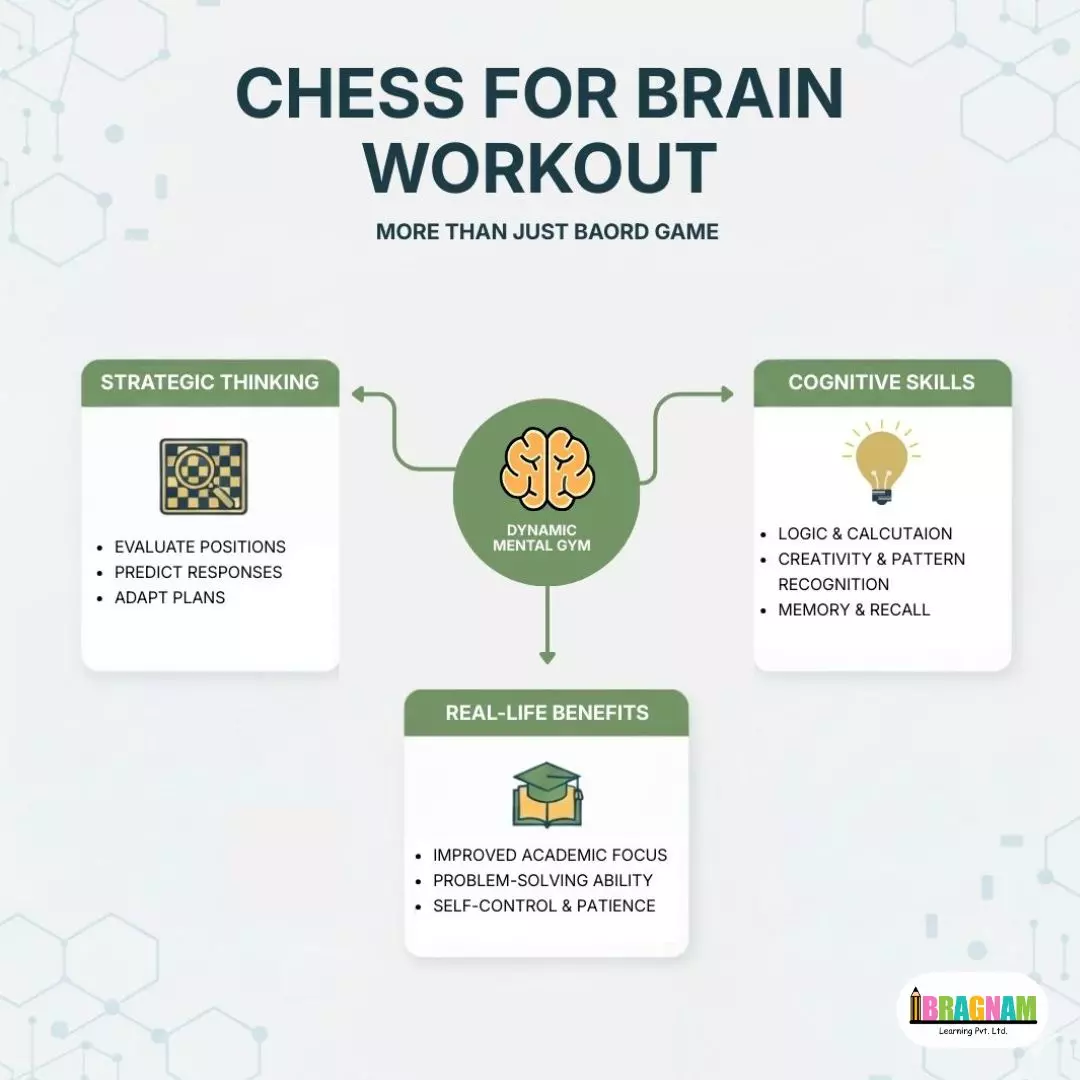
What Makes Chess a โ€œBrain Workoutโ€?

More than just a board game

Boredom

Chess is not about luck; every move is a decision, a calculation, and a mini brain exercise. Players constantly evaluate positions, predict opponent responses, and adapt their plans. This dynamic mix of logic, creativity, and memory is what turns chess into a complete mental workout.

Researchers and educators increasingly treat chess as a tool for cognitive training, especially in schools and academies, because it strengthens core mental skills like attention, strategic thinking, and self-control that transfer to studies and real life.

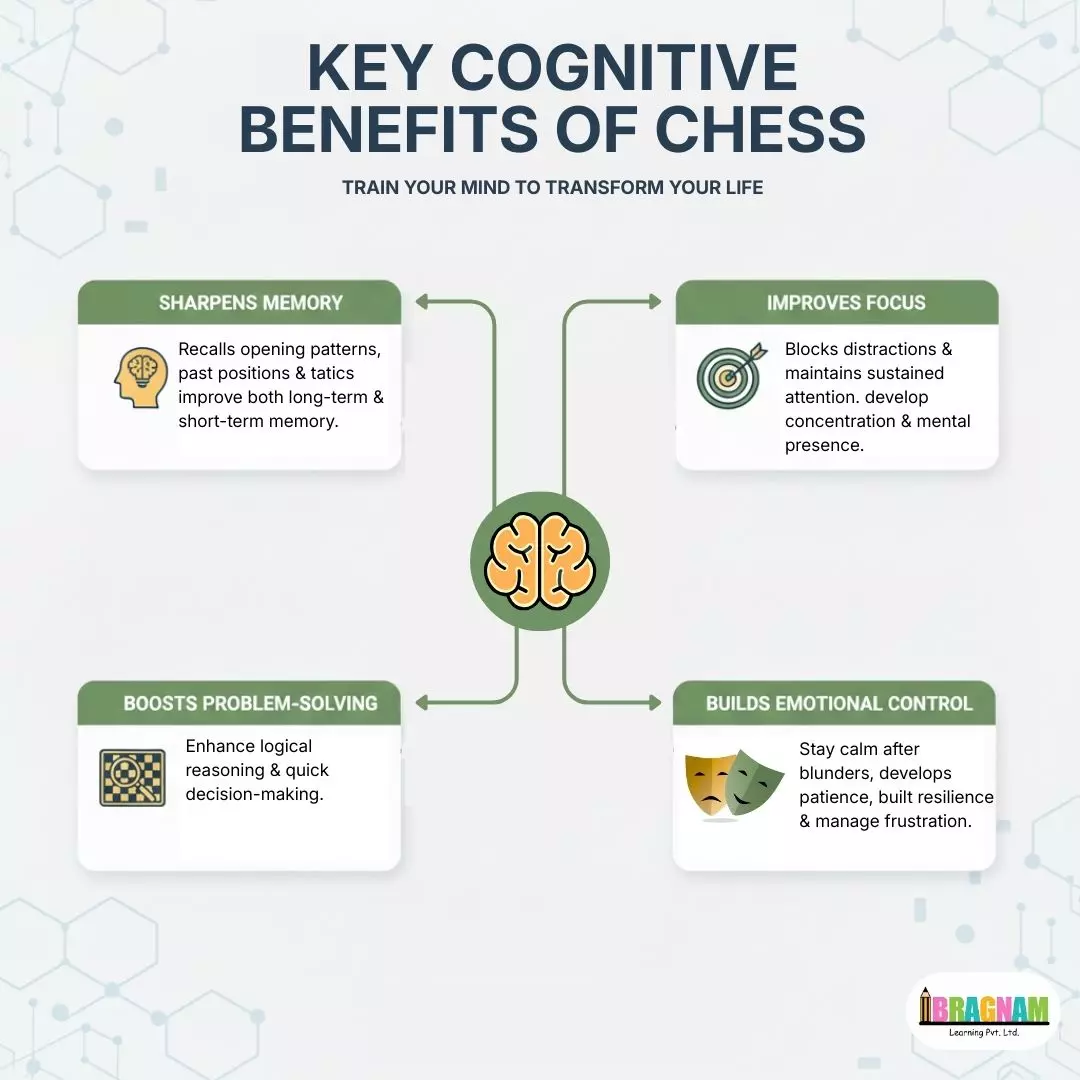
Key Cognitive Benefits of Chess

Boredom

1. Sharpens memory and recall

Every game of chess asks the brain to remember previous positions, opening patterns, tactical motifs, and endgame ideas.

  • Players recall typical checkmating patterns and defensive setups.
  • Regular practice strengthens both short-term and long-term memory, and studies show that chess players often perform better on memory-based tasks.
  • โ€‹Some research suggests that mentally demanding activities like chess help build โ€œcognitive reserve,โ€ which may delay or reduce the impact of age-related memory decline and dementia.

2. Boosts problem-solving and critical thinking

In chess, every position is a problem:

  • What is my opponent threatening?
  • What are my options?
  • What happens if I choose this move?

This constant evaluation trains:

  • Logical reasoning and calculation
  • Comparing alternatives and weighing pros and cons
  • Making decisions under constraints (limited time, complex positions)
  • โ€‹A large meta-analysis of school chess programs found moderate, meaningful improvements in mathematics achievement and overall cognitive ability in students who received chess instruction.

3. Improves focus and concentration

In an age of notifications and endless scrolling, sustained concentration is rare. Chess forces you to:

  • Block out distractions while you calculate variations
  • Maintain attention over many moves
  • Stay mentally present, even when positions become complicated

Studies and academy reports indicate that children who play chess regularly show better academic focus and improved performance, particularly in subjects that demand step-by-step reasoning like math and science.

4. Stimulates creativity and flexible thinking

Chess is not only logic; it is also imagination. Players must invent new ideas, find unexpected tactical shots, and sometimes sacrifice material for long-term advantages.

Research and anecdotal reports note:

  • Increases in creative fluency (number of ideas)
  • Greater flexibility (switching between plans)
  • More originality in problem-solving tasks

This flexibility is exactly what is needed in real life when plans change, deadlines move, or problems appear suddenly.

5. Supports emotional control and patience

Chess also trains the โ€œemotionalโ€ side of the brain:

  • You learn to stay calm after a blunder.
  • You develop patience to think instead of reacting impulsively.
  • You experience wins and losses regularly, building resilience.

Parents and teachers often report that children who engage in structured chess sessions become more disciplined, more patient, and better at handling frustrationโ€”skills that matter well beyond the 64 squares.

Chess Benefits at Every Age

Boredom

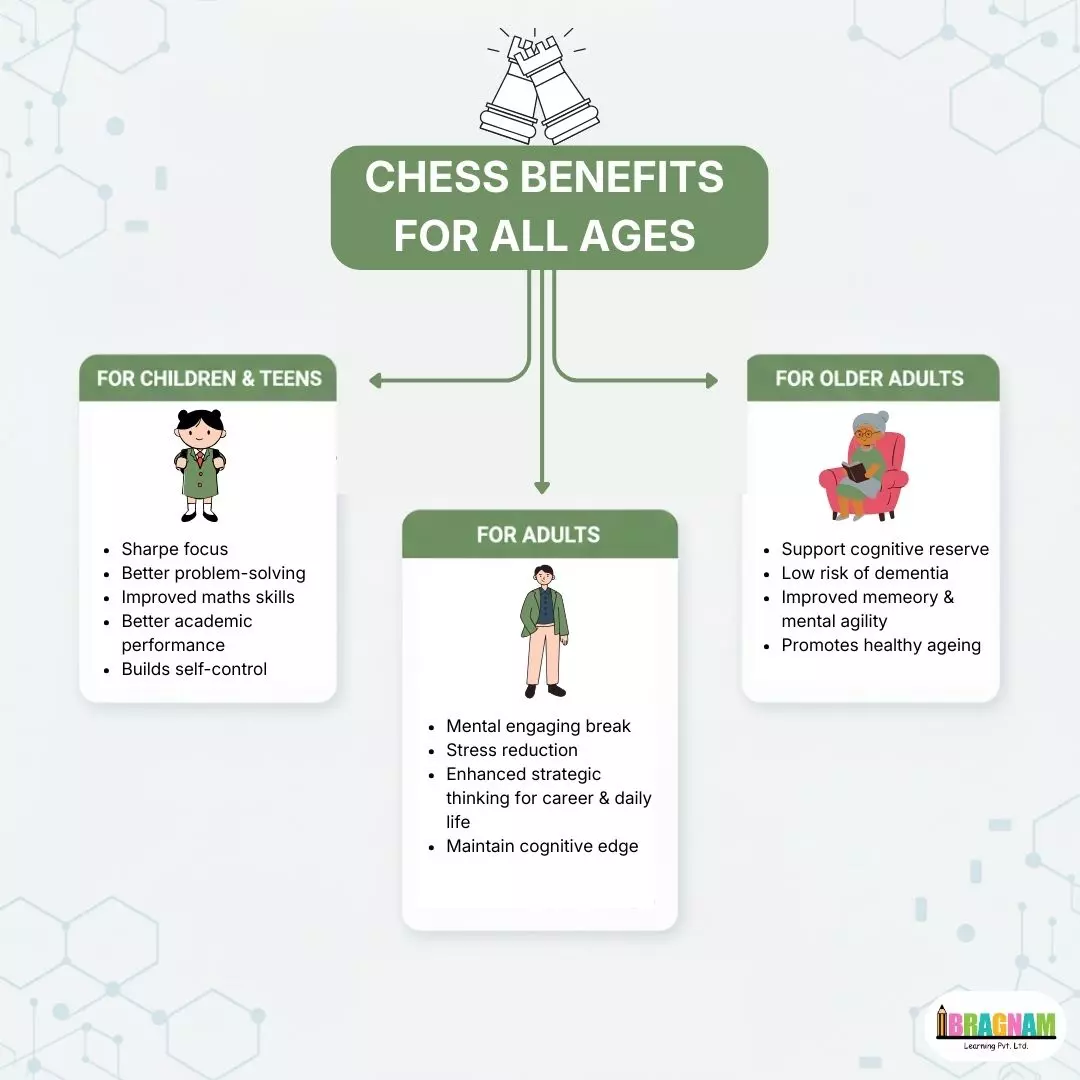
For children and teens

When children play chess, they are unknowingly practicing:

  • Concentration and self-control
  • Planning ahead and organizing thoughts
  • Math-related skills like pattern recognition and logical sequencing

Research on school and after-school chess programs shows:

  • Better problem-solving skills
  • Higher scores in mathematics and improved general cognitive skills
  • Stronger metacognitive abilities (thinking about their own thinking)

For adults

For adults stuck in a routine of work, screens, and stress, Checkmate Your Boredom: Why Chess is the Ultimate Brain Workout is a reminder that chess offers:

  • A mentally engaging break that is truly refreshing, not draining
  • A way to keep cognitive skills sharp through regular โ€œbrain gymโ€ sessions
  • A structured way to practice strategic thinking that is useful in business and daily decision-making

For older adults

Some observational studies link activities such as chess with:

  • Lower risk of dementia
  • Better coping with existing brain changes through stronger cognitive reserve

Experts emphasize that more research is needed, but there is broad agreement that mentally stimulating activities like chess are beneficial for healthy aging and cognitive resilience.

How Chess Beats Boredom Better Than Scrolling

When boredom hits, it is easy to default to social media or random videos. The problem:

  • Passive consumption tires the brain without building any skill.
  • It often leads to more stress, comparison, and mental fatigue.

Playing chess, on the other hand:

  • Converts idle time into meaningful mental training.
  • Gives a clear goal (checkmate) and constant feedback on every move.
  • Provides a satisfying sense of progress as you recognize more patterns, see deeper tactics, and track your rating or puzzle scores over time.

That is why Checkmate Your Boredom: Why Chess is the Ultimate Brain Workout is more than a catchy phrase: it is a practical lifestyle shift from mindless distraction to mindful development.

Simple Ways to Start Your Chess Brain Workout

You do not need to be a grandmaster to enjoy the brain benefits of chess. Consistency matters much more than strength.

Try these easy steps:

  1. Start with basic rules and simple checkmates (king and queen vs king, back-rank mates).
  2. Play short games (10โ€“15 minutes each side) instead of long, exhausting sessions.Solve 5โ€“10 tactical puzzles a dayโ€”this is like doing โ€œbrain push-ups.โ€
  3. Analyze your own games briefly: What went well? Where did you blunder?
  4. Mix fun and learning: play with friends, children, colleagues, or online buddies.

Even 2โ€“3 sessions a week can turn your free time into a long-term investment in your cognitive health.

FAQ: Chess as the Ultimate Brain Workout

1. How often should I play chess to get brain benefits?

Playing chess a few times a week, even in short sessions, is usually enough to start seeing improvements in focus, memory, and pattern recognition. Consistency is more important than marathon sessionsโ€”think of it like regular exercise for your brain rather than a once-a-year workout.

2. Is chess really better than puzzles or video games for the brain?

Crosswords, puzzles, and strategy video games can also be beneficial, but chess uniquely combines memory, logic, creativity, and emotional control in a structured environment. Unlike many fast-paced games designed for quick stimulation, chess encourages deep thinking, planning, and delayed gratification, which are crucial for long-term cognitive growth.

3. Can chess help children improve in school?

Yes, several studies and reviews show that children who receive chess instruction often perform better in mathematics and demonstrate stronger general cognitive skills compared to peers who do not play. Chess supports concentration, problem-solving, and metacognition, which in turn help with academic performance and classroom behavior.

4. Does chess really protect against dementia?

Some research suggests that mentally stimulating activities such as chess are associated with a lower risk of dementia and may help the brain cope better with age-related changes. However, experts caution that chess is not a โ€œcureโ€ or guaranteed prevention; it is best seen as one part of a healthy lifestyle that includes physical activity, social connection, and good nutrition.

5. I feel โ€œtoo oldโ€ or โ€œnot smart enoughโ€ to start chess. Is it still worth it?

Absolutely. People of all ages, from young children to older adults, can learn and enjoy chess, and the benefits are not limited to top-level players. Starting later may mean progress is slower, but the mental stimulation, social interaction, and sense of achievement are valuable no matter when you begin.

Conclusion: Your Next Move Matters

Every time boredom appears, you have a choice: drift into yet another forgettable scroll session, or set up a chessboard and give your brain a real challenge. Checkmate Your Boredom: Why Chess is the Ultimate Brain Workout is an invitation to choose the second optionโ€”to turn empty minutes into focused, meaningful mental training that compounds over time.

Whether you are a student, a working professional, or a retiree, chess offers a simple, low-cost, and endlessly rich way to build memory, focus, creativity, and resilience while genuinely enjoying yourself.

By |2026-01-07T10:20:49+05:305 January 2026|Blog|

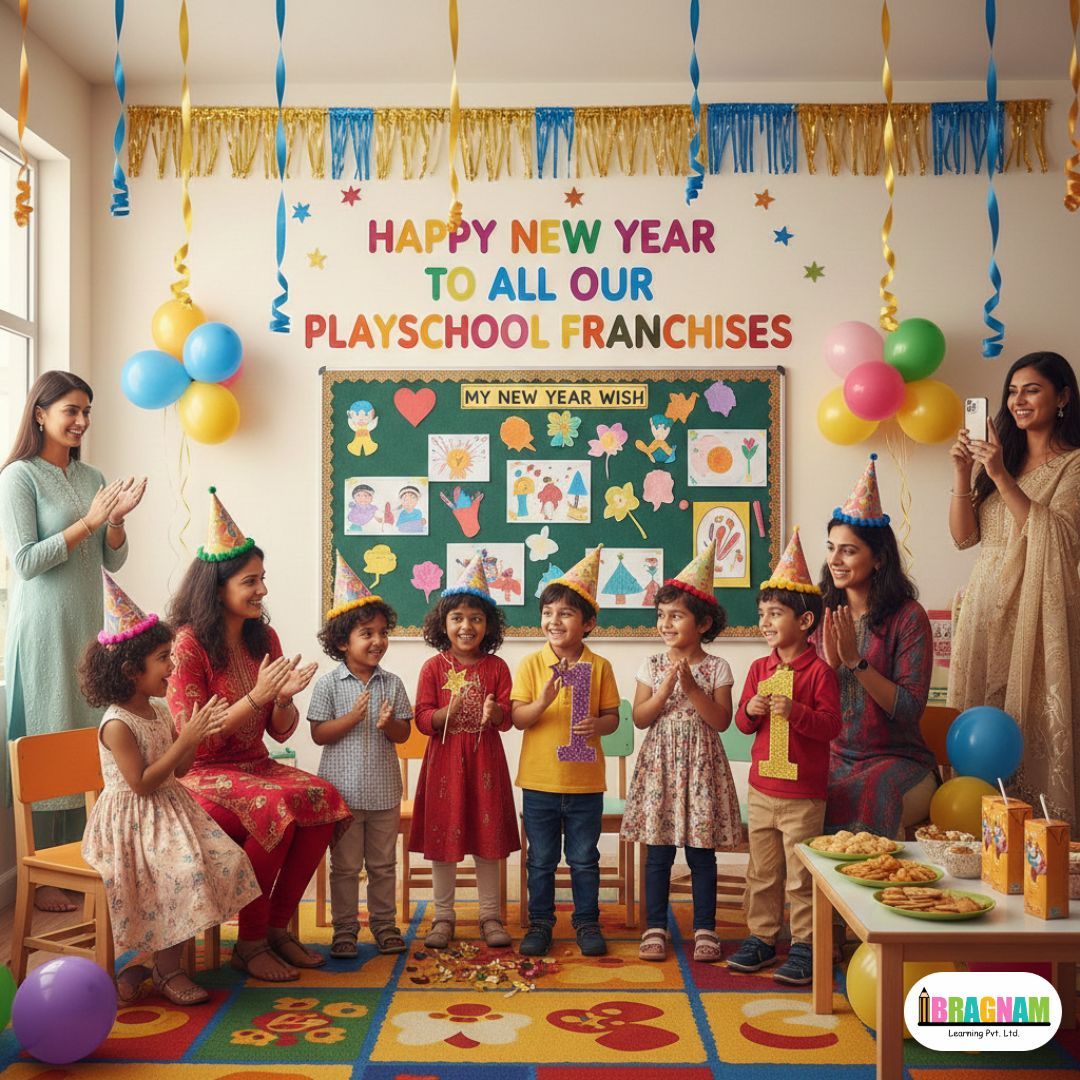
Happy New Year to All Our Playschool Franchises

HAPPY NEW YEAR

Welcoming a Bright New Year Together

Happy New Year to all our franchise partners, teachers, parents, and little learners. As we step into a fresh year, it is the perfect time to celebrate our shared journey in early childhood education and set warm, hopeful intentions for the months ahead. The season is not just about dates changing; it is about renewing our commitment to give every child a safe, joyful, and stimulating start to life.

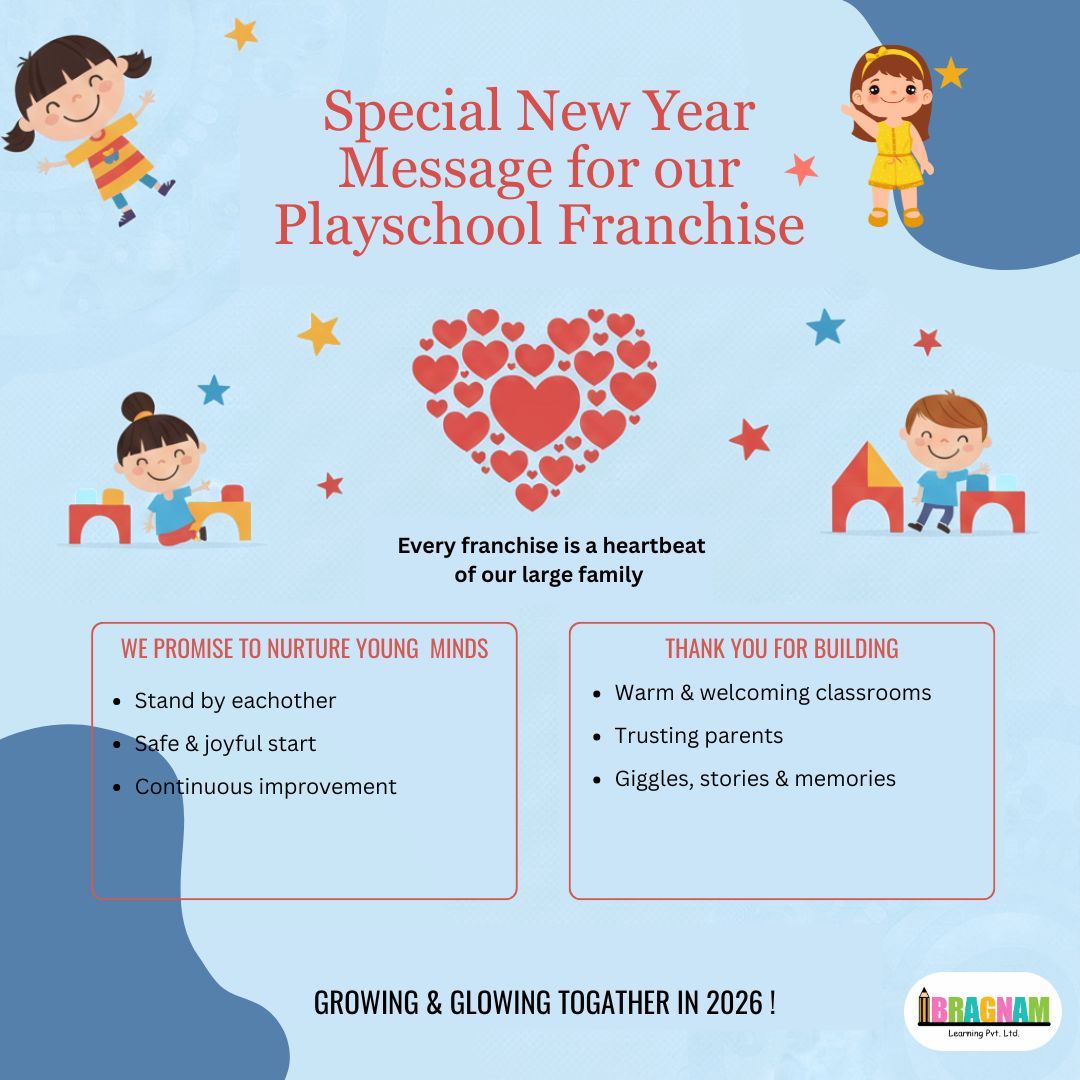
A Special New Year Message for Our Playschool Franchises

HAPPY NEW YEAR

https://www.bragnam.in/healthy-snack-ideas-for-a-new-years-party-kindergarten/Every franchise is a heartbeat of our larger family, and this New Year is a reminder that we are growing and glowing together. A Happy New Year message is more than a greeting; it is a gentle promise that we will stand by each other as we nurture young minds.

  • Thank you for building warm and welcoming classrooms filled with giggles, stories, and curiosity.
  • Thank you for supporting parents who trust us with their childโ€™s first school experience.
  • Thank you for believing in the power of early childhood education and continuous improvement.

As a franchise community, this year can be about:

  • Strengthening communication between centres, parents, and the head office.
  • Bringing more structured learning through play-based and activity-based programs.
  • Celebrating each childโ€™s milestones, big or small, with genuine joy and encouragement.

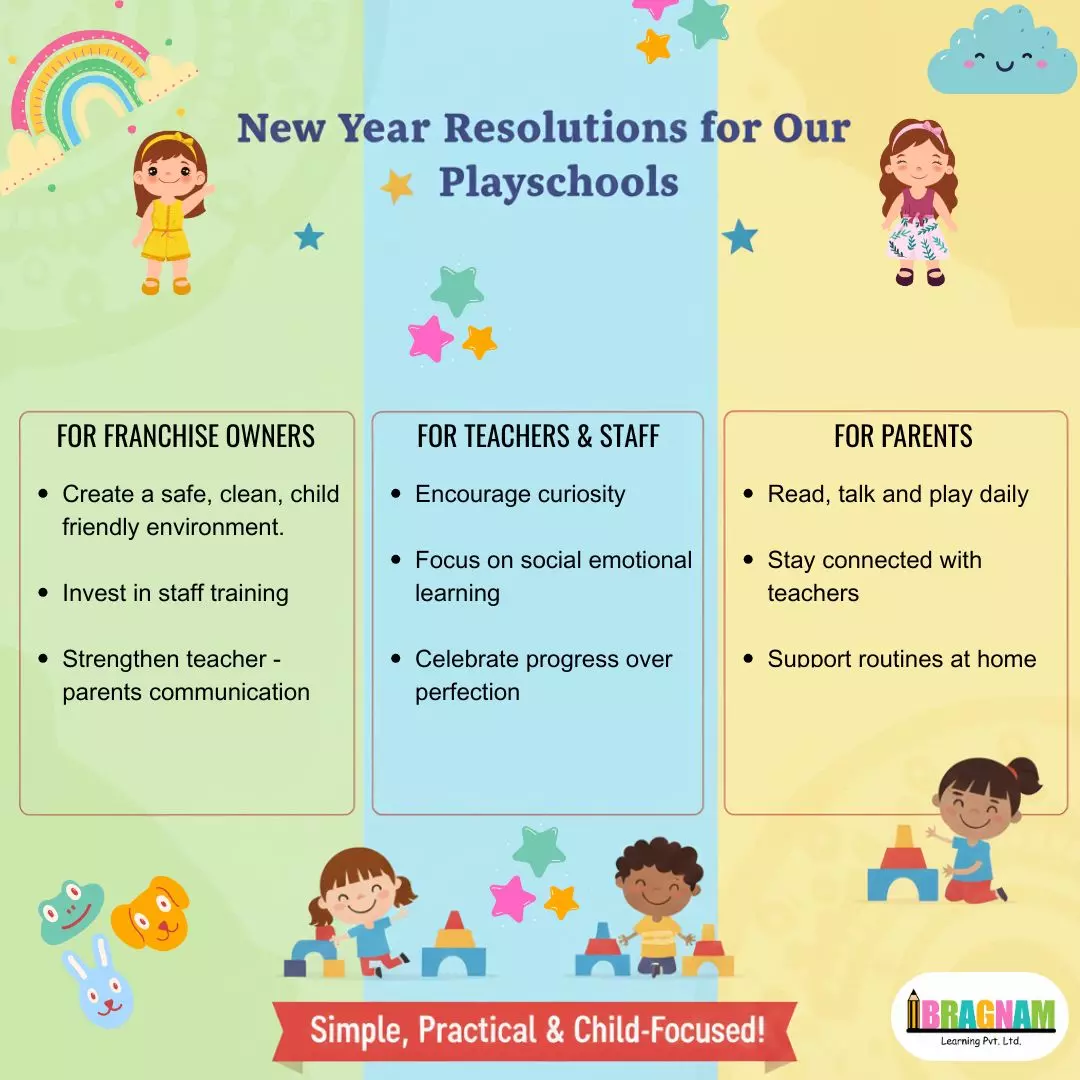
New Year Resolutions for Our Playschools

HAPPY NEW YEAR

New Year resolutions do not have to be complicated; in fact, the best ones are simple, practical, and child-focused. For a playschool franchise network, resolutions can guide the entire academic and operational year in a positive direction.

For Franchise Owners

  • Focus on creating a safe, clean, and child-friendly environment every single day.
  • Invest in regular staff training so that teachers stay updated on early childhood best practices.
  • Strengthen parent communication through monthly meetings, feedback forms, and digital updates.

For Teachers and Staff

  • Encourage curiosity instead of just correct answers; let children ask โ€œwhyโ€ and โ€œhowโ€ freely.
  • Focus on socialโ€“emotional learning: kindness, sharing, patience, and self-confidence.
  • Celebrate progress over perfection so that children feel proud of every step forward.

For Parents in Our Franchise Community

  • Read, talk, and play with your child daily, even if it is just for 15โ€“20 minutes.
  • Stay connected with your childโ€™s teacher to understand learning milestones and behaviour.
  • Support routines at homeโ€”sleep time, screen time, and study timeโ€”so children feel secure.

Fun New Year Ideas for Playschool Classrooms

The Happy New Year period is a wonderful opportunity to blend celebration with meaningful learning. Simple, age-appropriate activities can help children understand the idea of โ€œa new yearโ€ in a playful way.

Simple Classroom Activities

  • New Year Craft Corner
    • Children can make party hats, star wands, or โ€œMy New Year Wishโ€ cards using coloured paper and stickers.
  • Display their artwork on a New Year Wall so parents can see it during pick-up.

Gratitude Circle Time

  • Teachers can invite children to share one thing that made them happy last yearโ€”like a friend, a toy, or a favourite story.
  • This builds confidence and helps children express feelings in simple words.

Countdown & Celebration

  • Do a fun โ€œpretend countdownโ€ in class (from 10 to 1) and shout โ€œHappy New Yearโ€ with claps and music.
  • Give small star stickers or smiley badges to mark the start of a โ€œshiny new year of learning.

New Year Themes for the Month

  • โ€œNew Beginningsโ€: Activities around new habits like cleaning up toys or saying thank you.
  • โ€œDream Big, Little Oneโ€: Talk about what children loveโ€”drawing, dancing, runningโ€”and celebrate their talents.
  • โ€œBe Kind, Be Youโ€: Simple role-plays that show sharing, helping, and using kind words

Strengthening Our Franchise Community in the New Year

A strong playschool franchise network works like an extended familyโ€”connected, supportive, and aligned around the same values. The Happy New Year season is a good time to revisit systems, goals, and best practices.

Focus Areas for the New Year

  • Quality & Consistency
    • Maintain consistent teaching standards, safety protocols, and communication style across all centres.
  • Use common planners, curriculum themes, and celebration calendars to stay aligned.

Parent Engagement

  • Plan parent orientation sessions early in the year to set expectations and share the school philosophy.
  • Use digital tools (email, WhatsApp, or a parent app) for regular updates, photos, and notices.

Child-Centric Events

  • Organize New Year and seasonal events where children can perform rhymes, dances, or small skits.
  • Include โ€œlearning cornersโ€ during events to show parents what and how children learn in class

Heartfelt New Year Wishes for Our Playschool Family

You can use or adapt these warm Happy New Year wishes for WhatsApp groups, display boards, local social media pages, and parent communication.

  • โ€œHappy New Year to our wonderful playschool family. May this year bring more smiles, stories, and little victories in every classroom.โ€
  • โ€œHappy New Year to our franchise partners. Together, let us make this year full of meaningful learning, strong values, and joyful play for every child.โ€
  • โ€œWishing all our tiny learners a sparkling New Year filled with giggles, games, and new discoveries every day.โ€>
  • โ€œHappy New Year to our teachers and staff. Your patience, kindness, and dedication are the real magic behind every childโ€™s growth.โ€

FAQ โ€“ Happy New Year for Playschool Franchises

1. How can a playschool franchise celebrate New Year with young children?

Playschools can celebrate Happy New Year with simple, child-friendly activities like craft sessions, song-and-dance time, and a short pretend countdown in class. Snacks, decorations, and photo corners can add to the festive feeling without overwhelming toddlers.

2. What kind of New Year message should a playschool send to parents?

A good New Year message to parents should be warm, reassuring, and focused on their childโ€™s growth and happiness. It can thank parents for their trust, highlight key values like safety and learning, and briefly hint at exciting plans for the new year.

3. How can franchises use New Year communication to build their brand?

Franchises can share Happy New Year posts showcasing classroom celebrations, teacher appreciation, and parent testimonials to create a positive brand image. Consistent messaging across branches through social media, emails, and local events builds recognition and trust.

4. What New Year resolutions make sense for a playschool?

Practical resolutions include improving safety checks, enhancing staff training, strengthening parent communication, and adding more structured play-based learning activities. Playschools can also commit to celebrating each childโ€™s emotional well-being, not just academic milestones.

5. Why is New Year important in early childhood education?

New Year offers a natural moment to introduce children to ideas like time, routines, and fresh starts in simple ways. For educators and franchises, it serves as a checkpoint to review curriculum, classroom environment, and partnership with parents.

Conclusion โ€“ A New Year of Learning, Love, and Laughter

As all our playschool franchises welcome the Happy New Year, this is the ideal moment to renew our shared promise: every child deserves a joyful, safe, and inspiring start to learning. With committed franchise partners, caring teachers, and supportive parents, the coming year can become a beautiful chapter filled with tiny steps, big smiles, and lifelong memories.

By |2026-01-01T16:52:05+05:301 January 2026|Blog|

Healthy Snack ideas for a new year’s party kindergarten

Healthy Snack

Healthy snack ideas for a new year’s party kindergarten can be colourful, fun, and easy to eat, while still supporting childrenโ€™s growing bodies and brains. Healthy snacks for young children work best when they include fruits, vegetables, whole grains, and protein instead of sugary or highly processed party foods.

Why healthy snacks matter

New Year parties at kindergarten are full of excitement, so children need snacks that give steady energy rather than a quick sugar rush. Thoughtfully planned snacks also help children build healthy eating habits that can carry into home life.

  • Healthy snacks for kids should be built around fruits, vegetables, whole grains, and protein foods.
  • Limiting highly processed snacks high in added sugar, salt, and unhealthy fats supports better focus, mood, and learning.
  • Sipping water or plain milk instead of sugary drinks keeps children hydrated without too much sugar.

Planning a kindergarten New Year snack table

Healthy Snack

For a kindergarten New Year party, the best snack table is simple, colourful, and safe for little hands. Think of bite-sized portions, easy-to-hold options, and a mix of textures and colours.

  • Offer a mix of food groups: fruit, vegetables, whole grains, and protein (such as yogurt, cheese, or pulses).
  • Keep portions small and child-sized to avoid waste and overeating.
  • Choose mostly soft, easy-to-chew foods and avoid common choking risks like whole nuts, hard candies, or big raw carrot chunks.

Simple safety tips

  • Serve snacks at a table, with children sitting down rather than walking or running while eating to reduce choking risk.
  • Offer water as the main drink and keep juice limited and 100% fruit juice when used.

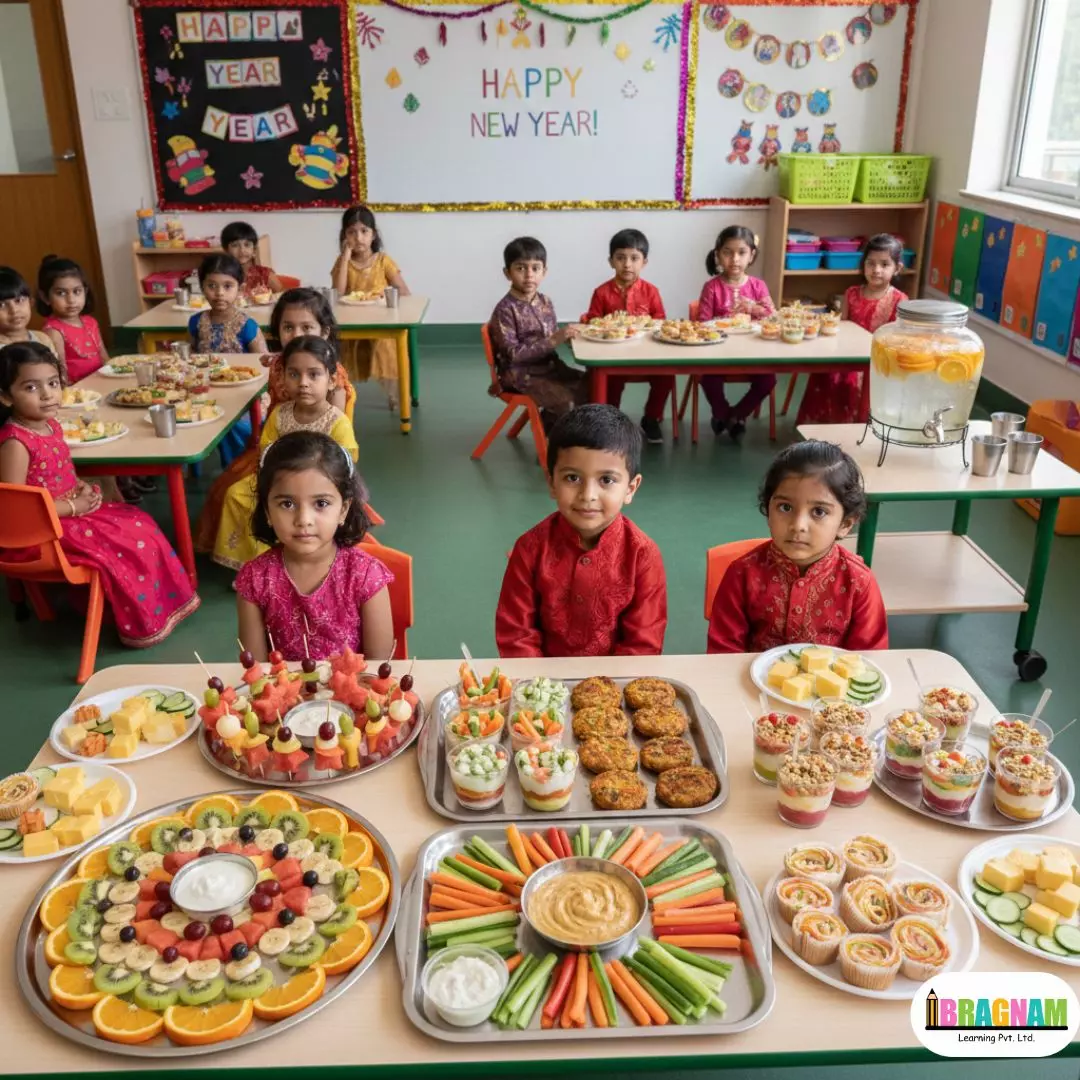
Colourful fruit-based snack ideas

Fresh fruit is naturally sweet and bright, making it perfect for a New Year celebration with young children. You can turn simple fruit into creative shapes and patterns to make the snack table look festive.

Fruit fireworks platter

Arrange cut fruits in circles or โ€œfireworkโ€ patterns on a big tray to match the New Year theme.

  • Use slices of oranges, kiwi, bananas, grapes cut lengthwise, and berries to create colourful โ€œburstsโ€.
  • Add small bowls of plain yogurt for dipping instead of sugary cream or chocolate dips.

New Year fruit skewers (with safe sticks)

Fruit skewers can feel special while still being healthy.

  • Thread soft fruits like banana slices, seedless grapes cut in half, watermelon stars, or melon balls onto blunt, child-safe skewers or ice-cream sticks.
  • Keep pieces soft and not too small to reduce choking risk, and always supervise children while eating skewers.

Frozen fruit pops

Frozen snacks can be a fun surprise, especially in warmer regions.

  • Blend yogurt with berries or mango and freeze in small moulds or paper cups with a stick.
  • These provide protein and calcium along with natural sweetness from fruit.

Veggie snacks kids actually enjoy

Vegetables can be made fun by offering dips, shapes, and bright colours. When children see crunchy veggies served like โ€œparty foodโ€, they are more likely to try them.

Mini veggie sticks with hummus

Hummus and veggie sticks are a popular healthy snack for young children.

  • Offer soft veggie sticks like cucumber, steamed carrot sticks, and colourful capsicum strips around a bowl of hummus or pea hummus.
  • Serve small spoons or portion cups so each child can have their own little dip to keep things clean and safe.

Rainbow veggie sandwiches

Sandwiches are easy to hold and can be filled with colourful vegetables.

  • Use whole grain or multigrain bread, spread with hung curd or a thin layer of paneer spread, and add grated carrot, beetroot, cucumber, and tomato slices.
  • Cut sandwiches into small squares or fun shapes using cookie cutters to make them appealing for kindergarteners.

Mini Indian-style veggie bites

Many Indian snacks can be made healthier by baking or pan-frying with less oil.

  • Offer small baked cutlets or patties made with vegetables like peas, carrots, potatoes, and paneer.
  • Serve with a mild yogurt dip instead of very spicy chutneys for young children.

Whole grain and protein-rich party bites

Including whole grains and proteins in snacks helps children feel full for longer and supports growth. These snacks balance out the natural sweetness from fruits and add variety.

Mini whole-wheat wraps or rolls

Wraps can be made fun and child-sized.

  • Use small whole-wheat rotis or tortillas, spread with paneer bhurji or mashed chickpeas, and add grated vegetables before rolling tightly and cutting into bite-sized pinwheels.
  • Secure with a child-safe toothpick removed before serving or simply arrange snugly so they do not open.

Simple yogurt and granola cups

Yogurt cups can feel like dessert while still being nourishing.

  • Layer plain or lightly sweetened yogurt with chopped fruit and a sprinkle of low-sugar granola or crushed whole-grain cereal.
  • Use small transparent cups so children can see the colourful layers and get excited to eat.

Cheese and cracker nibble plates

Cheese with whole-grain crackers makes an easy finger food plate.

  • Offer small cubes or thin slices of cheese with whole grain crackers and a side of cucumber or tomato slices.
  • Choose lower-salt options and keep portions small for little tummies.

Drinks and sweet treats for a New Year feel

New Year parties often include special drinks and sweets, but these can be made kinder to childrenโ€™s health. The idea is to keep the โ€œtreat feelโ€ without overloading on sugar.

Kid-friendly party drinks

  • Serve infused water with slices of orange, lemon, or cucumber in a clear dispenser for a festive look.
  • Offer small cups of diluted 100% fruit juice or plain milk instead of fizzy drinks or sugary beverages.

Lighter sweet snack ideas

  • Bake small fruit muffins with whole-wheat flour and reduced sugar, using banana or dates for sweetness.
  • Serve homemade fruit-and-yogurt pops or mini fruit custard cups made with more fruit and less sugar.

Tips for involving children in snack preparation

Involving kindergarten children in snack preparation turns the New Year party into a learning experience. Children are often more willing to taste foods they helped prepare.

  • Let children wash fruits, arrange fruit โ€œfireworksโ€, or place cucumber slices on sandwiches with adult supervision.
  • Use this time to talk about colours, shapes, counting, and simple ideas like โ€œfoods that help us grow strongโ€.

FAQs about healthy snack ideas for a new year’s party kindergarten

1. What makes a healthy snack idea for a New Yearโ€™s party in kindergarten?
A healthy snack idea for a New Yearโ€™s party in kindergarten includes foods from key groups like fruits, vegetables, whole grains, and protein, with limited added sugar and salt.

2. How many different snacks should be served at a kindergarten New Year party?
Offering three to five different healthy snack options is usually enough, such as one fruit option, one veggie option, one whole grain item, and a protein-rich snack.

3. Are sweet treats allowed in healthy snack ideas for a New Yearโ€™s party kindergarten?
Sweet treats can be included in a balanced way by choosing options like fruit-based desserts, yogurt pops, or lightly sweetened whole-grain muffins instead of candies or pastries.

4. What drinks are best with healthy snack ideas for a New Yearโ€™s party kindergarten?
Water should be the main drink, with small portions of plain milk or limited amounts of 100% fruit juice as occasional options, rather than sugary or fizzy drinks.

5. How can teachers share healthy snack guidelines with parents before the New Year party?
Teachers can send a simple note suggesting fruits, veggies, whole grains, and dairy-based snacks, and share trusted nutrition resources for parents to explore at home.

โ€‹Conclusion

Healthy snack ideas for a new year’s party kindergarten show children that celebrations can be fun, colourful, and nourishing at the same time. When schools and parents work together to offer fruits, vegetables, whole grains, and balanced treats, children enjoy the party while building strong lifelong eating habits.

โ€‹Invite families to join your next New Year celebration by sharing your snack guidelines early and encouraging them to contribute one simple, healthy dish. โ€œLooking for more healthy celebration ideas for your child? Explore our kindergarten programs and upcoming New Year events, or contact us today to plan a healthy, happy start to the year!โ€


By |2025-12-31T12:10:51+05:3031 December 2025|Blog|

Fun ways to teach kids about different cultures and New Year traditions for kindergarten

different cultures

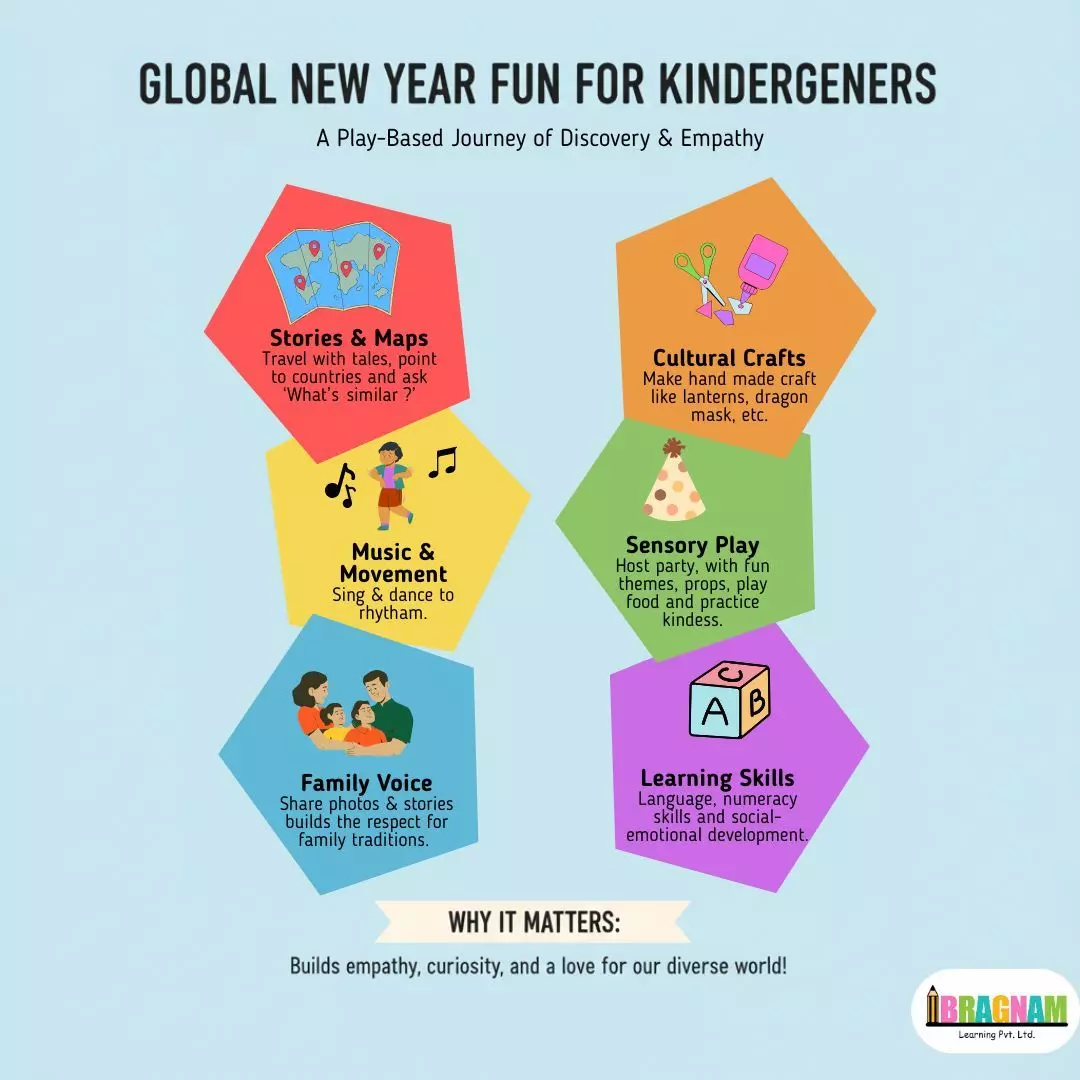
Teaching kindergarten children about different cultures and New Year traditions can be playful, hands-on, and magical when done through stories, songs, crafts, and simple class celebrations.

Why New Year traditions matter in kindergarten

New Year is a natural moment to talk about fresh starts, family, and celebrations, which young children already recognize from home. When teachers link this excitement with simple activities from different cultures, children begin to develop empathy and curiosity about others.

  • Learning about global holiday traditions builds early cultural awareness and socialโ€“emotional skills.
  • Repeated exposure to diverse celebrations helps children understand that there are many โ€œrightโ€ ways to celebrate.

Storytime: travel the world through books

different cultures

Stories are an easy way to introduce cultures without overwhelming young learners.

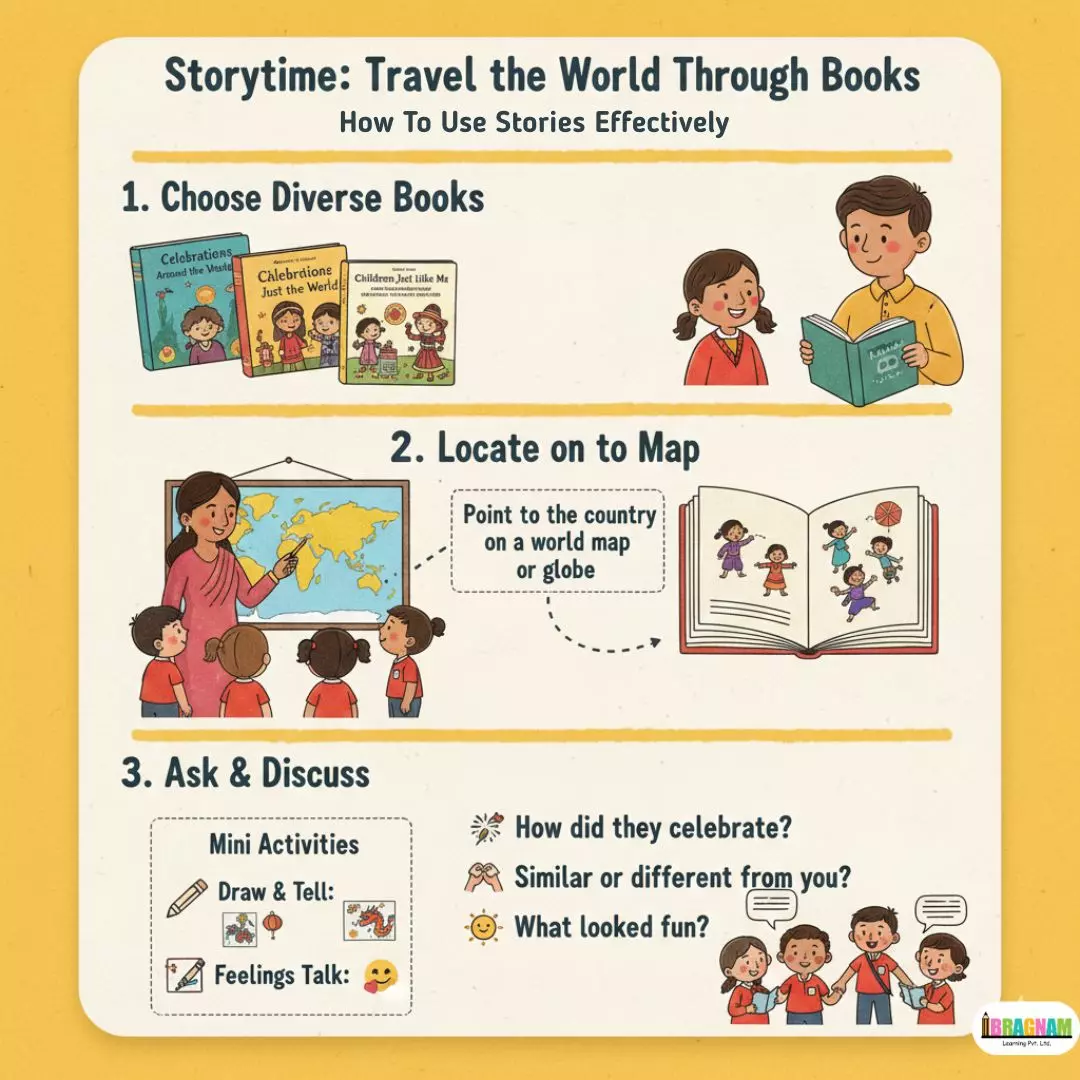
How to use stories effectively

  • Choose short picture books that show children celebrating New Year or festivals in different countries (for example, collections like โ€œCelebrations Around the Worldโ€ or โ€œChildren Just Like Meโ€).
  • Before reading, point to a world map or globe and show where the storyโ€™s children live, using very simple language.
  • After reading, ask a few questions:
    • How did the family celebrate?
    • What was similar or different from your family?
    • What looked fun in the story?

Story-based mini activities

  • Draw and tell: Ask children to draw their favorite part of the celebration in the story and dictate a sentence about it.
  • Feelings talk: Discuss how the children in the story might feel (excited, proud, happy, nervous) and link those feelings to the childโ€™s own experiences of festivals or New Year.

Hands-on crafts from around the world

different cultures

Young children learn best by doing, so simple crafts connected to New Year traditions make culture feel real and joyful.

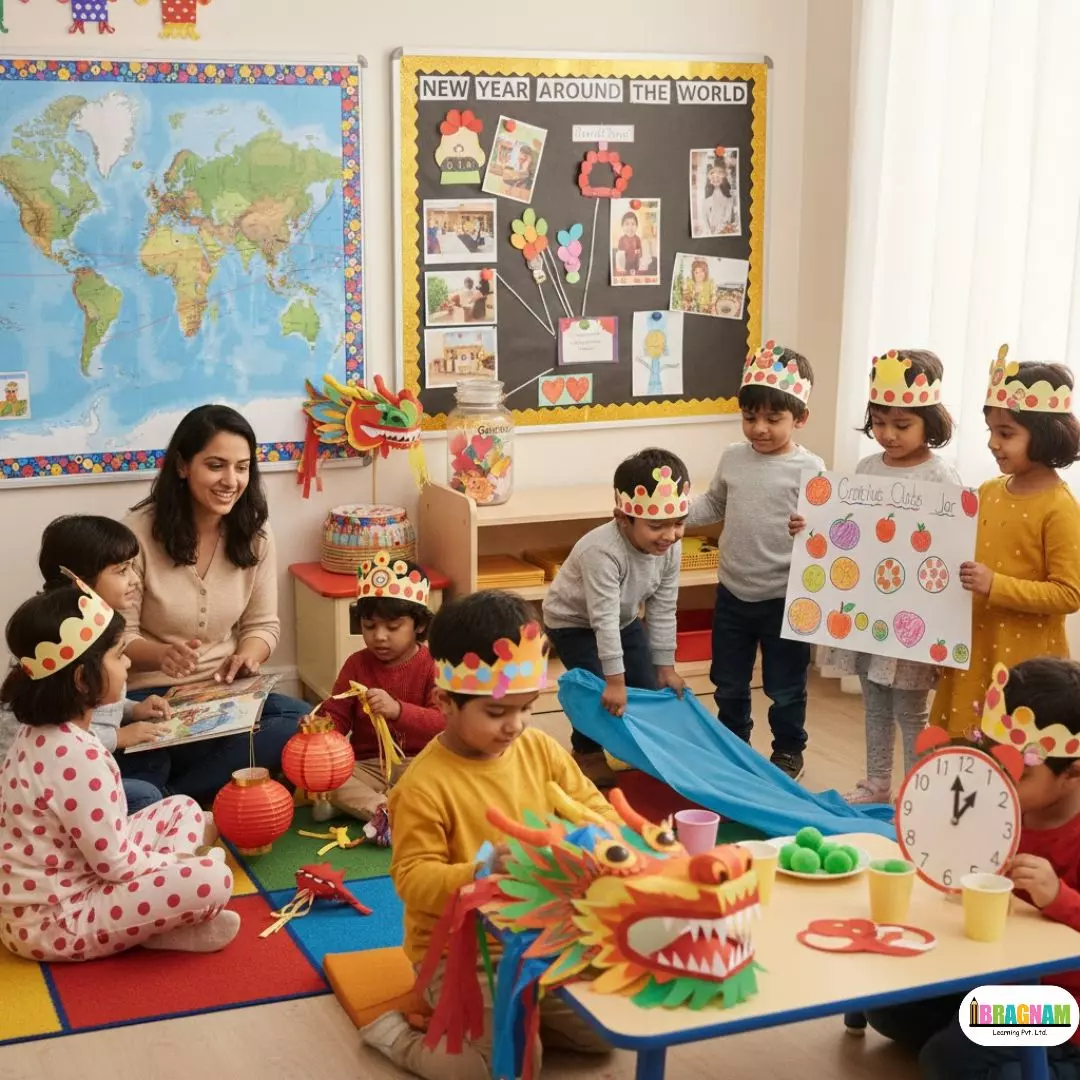
1. Paper lanterns and dragon masks (Lunar New Year)

Lunar New Year is celebrated in many Asian cultures with lanterns, dragons, and special foods.

  • Lantern craft:
    • Use coloured paper, safety scissors, and string to create hanging lanterns.
    • Talk about light as a symbol of hope and good luck in the new year.
  • โ€‹Dragon mask:
  • Use paper plates, coloured paper, and streamers to make dragon or lion faces.
  • Organize a mini โ€œdragon paradeโ€ around the classroom while playing music.

2. Grapes and clocks (Spain-inspired tradition)

In Spain, many families eat 12 grapes at midnight for good luck in each month of the coming year.

  • Use green pom-poms or paper โ€œgrapesโ€ to count to 12 together in a playful way.
  • Create a big paper clock and practice counting numbers 1โ€“12 as you โ€œring inโ€ pretend New Year.

3. Circles and polka dots (Philippines-inspired activity)

In the Philippines, round shapes and polka dots symbolize coins and prosperity.

  • Invite children to draw or collage round shapesโ€”fruits, bubbles, or coinsโ€”on a large class poster.
  • Have a โ€œcircle dress-up dayโ€ where children wear polka dots or add dot stickers to paper crowns.

4. Lucky colours and ocean waves (Brazil-inspired play)

In Brazil, many people welcome the New Year by wearing white and jumping over seven ocean waves for good luck.

  • Use a blue cloth or paper on the floor as โ€œwavesโ€ and let children gently jump over them while counting from 1 to 7.
  • Talk about colours that feel โ€œlucky,โ€ โ€œcalm,โ€ or โ€œhappy,โ€ and let children choose a colour to add to a class mural.

Music, movement, and sensory play

Music and movement help children remember information and connect it to positive emotions.

Simple musical ideas

  • Play short clips of traditional New Year or festival music from different countries and invite children to move freely and safely to the rhythm.
  • Use basic instruments (or homemade shakers) to keep a steady beat while you talk about how families might dance or sing together.

Sensory and role-play corners

Family involvement and classroom displays

  • Set up a pretend โ€œcelebration cornerโ€ with:
    • Play food from different cultures (plastic dumplings, fruits, breads).
    • Simple costumes like scarves, hats, or crowns.
  • Encourage children to โ€œhostโ€ a New Year party and practice polite greetings, sharing, and taking turns.

Families are powerful partners in teaching children about cultures and traditions.

Invite families to share

  • Ask families (with clear, respectful communication) if they would like to:
    • Send a photo of their New Year or festival celebrations.
    • Share a simple greeting, song, or tradition from their culture.
  • Create an inclusive rule that children can always say โ€œnoโ€ if they do not want to share personal traditions, keeping the environment safe and respectful.

Build a โ€œNew Year around the worldโ€ wall

  • Add:
    • A simple world map with photos or drawings showing different celebrations.
    • Childrenโ€™s crafts (lanterns, masks, circles, crowns).
    • One child-friendly sentence under each item to explain the tradition in simple words.

Integrating New Year traditions into learning

New Year traditions can easily connect to core kindergarten skills like counting, language, art, and socio-emotional learning.

  • Maths:
    • Count grapes, waves, lanterns, or dragon scales.
    • Sort items by colour, shape, or size.
  • Language:
    • Learn simple greetings like โ€œHappy New Yearโ€ in different languages.
  • Do vocabulary games with words like โ€œcelebrate,โ€ โ€œtradition,โ€ โ€œfamily,โ€ and โ€œhope.โ€

Socialโ€“emotional skills:

  • Create a class โ€œgratitude jarโ€ where children dictate or draw things they are thankful for from the last year.
  • Talk about simple โ€œgoalsโ€ such as helping friends, sharing toys, or trying a new activity.

Gentle tips for culturally respectful teaching

When teaching about different cultures and New Year traditions, the goal is to be respectful, accurate, and age-appropriate.

  • Keep explanations short and concrete; avoid stereotypes or jokes about cultures.
  • Emphasize that even within one country, families may celebrate in different ways.
  • Use real photos or child-friendly videos when possible to show authentic practices.

FAQ: Fun ways to teach kids about different cultures and New Year traditions for kindergarten

Q1. How do you introduce different New Year traditions without confusing kindergarten children?
Start with one or two simple traditions at a time, connect them to familiar ideas like family, food, or fireworks, and use visuals such as books, photos, and maps to give clear context.

Q2. What are some quick New Year craft ideas for teaching about cultures?
Easy options include paper lanterns for Lunar New Year, dragon masks for parades, circle collages inspired by Filipino New Year, and crown-making for global โ€œNew Year kings and queens.โ€

Q3. How can I involve parents in teaching New Year traditions from around the world?
Invite parents to send photos, greetings, or simple stories about how they celebrate, and display these contributions on a classroom โ€œfamily traditions wallโ€ with child-friendly captions.

Q4. Are New Year activities suitable for children who do not celebrate New Year on January 1st?
Yes, because you can focus on the idea of โ€œa fresh startโ€ and explore different New Years such as Lunar New Year or regional New Year festivals, showing there are many calendars and celebration dates.

Q5. How can New Year traditions support early learning goals?
New Year activities can integrate counting, sorting, language development, creativity, and socialโ€“emotional skills through crafts, stories, music, and class discussions about kindness and goals.

By |2025-12-30T12:13:42+05:3030 December 2025|Blog|

How to Talk to Young Children About New Beginnings

New Beginnings

Starting something new โ€” a school year, a move, or even a fresh classroom routine โ€” can be both exciting and a little scary for young children. As adults, we understand that change brings opportunities, but for children, new beginnings often come with questions and uncertainty. As educators and parents, our role is to gently guide them toward positivity, curiosity, and confidence as they step into new experiences.

Understanding Why New Beginnings Can Feel Overwhelming

New Beginnings

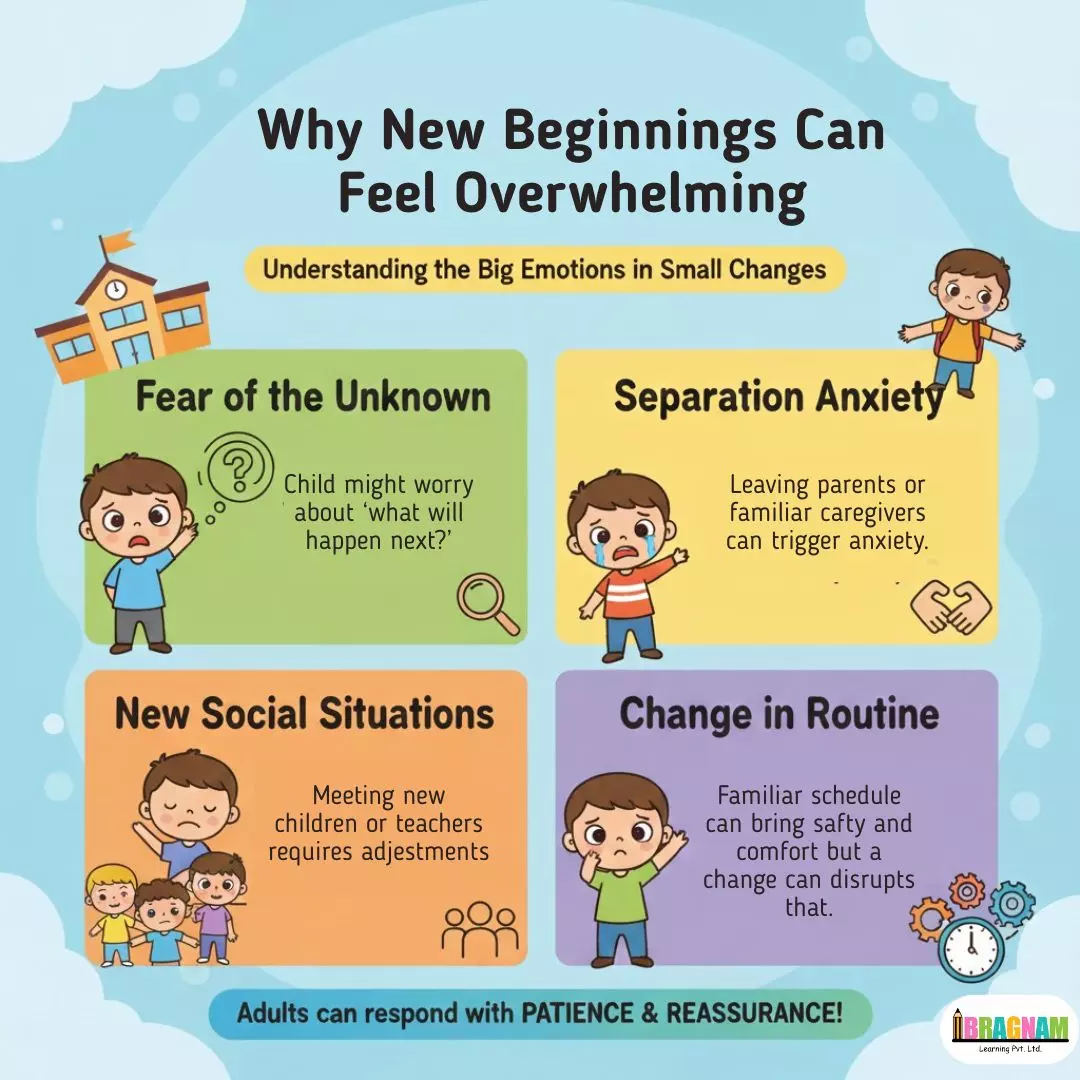
For a young child, even small changes โ€” such as a new classroom or teacher โ€” can feel big. Children thrive on routine and predictability, so when things shift, they may become anxious or withdrawn. Thatโ€™s completely natural.

Hereโ€™s why new beginnings can be challenging:

  • Fear of the unknown: Children might worry about what will happen next.
  • Separation anxiety: Leaving parents or familiar caregivers can trigger nervousness.
  • New social situations: Meeting new friends or teachers requires adjustment.
  • Change in routine: Familiar schedules bring comfort, and change disrupts that safety.

Understanding these emotions helps adults respond with patience and reassurance.

How to Talk to Young Children About New Beginnings

New Beginnings

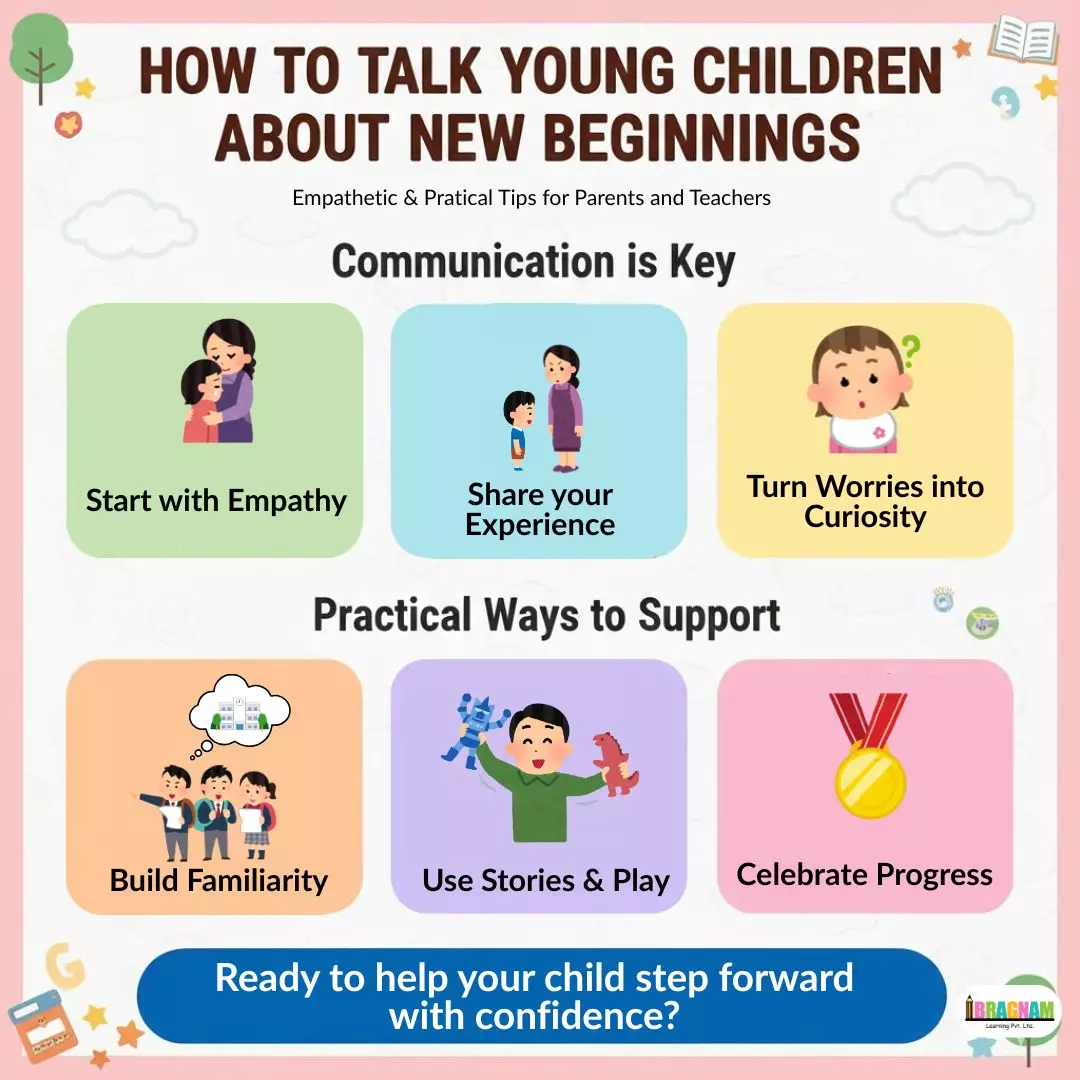
Communication is key, and young children thrive when adults talk to them with gentleness and clarity. Use moments of calm to explore their thoughts and feelings about new experiences.

1. Start with empathy

Begin by acknowledging their feelings. You can say things like:

  • โ€œItโ€™s okay to feel a little nervous about your new school.โ€
  • โ€œStarting something new can be exciting and a bit scary at first.โ€

This reassures children that what they feel is normal.

2. Share your own experiences

Tell them about a time when you started something new โ€” maybe your first day at a new job or when you moved to a new place โ€” and how it turned out well in the end. This helps them see that change is universal and manageable.

3. Keep explanations simple

Avoid overwhelming details. For example:

  • Instead of: โ€œYouโ€™ll meet so many new children and learn dozens of fun activities!โ€
  • Try: โ€œYouโ€™ll meet new friends, play games, and sing songs together.โ€

Simple language makes transitions easier to understand.

4. Turn worries into curiosity

Encourage children to explore what theyโ€™re excited about:

  • โ€œWhat do you think your new classroom will look like?โ€
  • โ€œWhat games do you want to play with your new friends?โ€

This helps reframe anxiety into anticipation.

5. Create comforting rituals

Routines provide stability. A special song, goodbye hug, or โ€œmorning mantraโ€ can reduce separation anxiety before school each day.

Practical Ways to Support Young Children During Change

Build familiarity before the change

  • Visit the new school or classroom together.
  • Meet teachers or caregivers beforehand.
  • Read books about first days and new experiences.

Use stories and play

Role-playing new situations (like pretending to pack for school or greeting a teacher) can help children process whatโ€™s coming in a playful, safe way.

Encourage small steps

Praise every effort: walking into the classroom bravely, saying hello to a new friend, or participating in a new activity.

Celebrate progress

Mark each milestone, however small โ€” โ€œYou were so brave today!โ€ or โ€œYou met a new friend!โ€ Positive reinforcement builds emotional resilience.

The Role of Teachers and Caregivers

Teachers play a critical role in easing transitions. They can:

  • Create a welcoming classroom atmosphere with familiar routines.
  • Display childrenโ€™s artwork or names on cubbies to build ownership.
  • Use calm tones and smiles to communicate safety.
  • Encourage peer bonding through group play or circle time sharing.

Parents and educators working together ensure consistency between home and school, making new beginnings smoother for the child.

How Parents Can Model Positivity About Change

Children watch how adults handle change. If you express excitement about new beginnings, your child is more likely to feel the same. Try:

  • Discussing new opportunities (โ€œYouโ€™ll make new friends!โ€)
  • Showing calmness on the first day instead of anxiety
  • Sharing uplifting stories about your own experiences with change

Encouraging Independence and Confidence

Building independence helps children face new beginnings more confidently. You can:

  • Let them choose their backpack, lunchbox, or outfit.
  • Encourage them to handle small tasks like packing their school bag.
  • Celebrate their efforts, not just their outcomes.

When to Seek Extra Support

If your child experiences ongoing distress, frequent crying, or sleep issues related to the new routine, it might be time to talk to teachers or a child counselor. Often, gentle reinforcement and consistent care are enough, but professional input can help if anxiety persists.

Conclusion

New beginnings are part of every childโ€™s growth journey. Whether itโ€™s starting kindergarten, moving classrooms, or adjusting to change, how we talk to children shapes how they respond. By combining empathy, positivity, and consistency, parents and educators can turn uncertainty into excitement โ€” helping every young learner step forward with confidence.

So, as your child prepares for their new adventure, remind them โ€” every beginning holds the promise of something wonderful!

Frequently Asked Questions (FAQs)

1. How do I calm my child before the first day of school?
Practice the morning routine a few days ahead, talk positively about school, and include a comfort item like a small toy or note from home.

2. What should I say if my child refuses to go to school?
Stay calm, acknowledge their feelings, and remind them theyโ€™ll see you soon after school. Consistency helps them adjust faster.

3. How can teachers ease classroom transitions for young children?
Use routines, songs, and visual cues to make transitions predictable. Classroom tours also help children feel oriented.

4. How can parents help if their child feels shy or anxious?
Encourage playdates, share stories about friendships, and model friendly behavior yourself.

5. Why is it important to talk about change early?
Discussing change early allows children to process emotions gradually, reducing anxiety and boosting confidence before it happens.

By |2025-12-30T09:49:03+05:3029 December 2025|Blog|

Tactics of Offers to Increase More Admission for Playschool

Offers

In todayโ€™s competitive education landscape, every playschool owner wants to see a steady stream of admissions. But how do you stand out and attract more families to enroll their children in your playschool? The answer lies in smart, well-planned offers and incentives. This article explores proven tactics and creative offers that can significantly boost your playschool admissions. Whether youโ€™re running a franchise or an independent playschool, these strategies will help you connect with parents and grow your admissions numbers.

Why Offers Matter for Playschool Admissions

offer

Parents are always looking for value, quality, and assurance when choosing a playschool for their child. Attractive offers not only grab attention but also build trust and encourage quick decision-making. Strategic discounts, referral programs, and special packages can turn interest into action and help your playschool stand out from the competition.

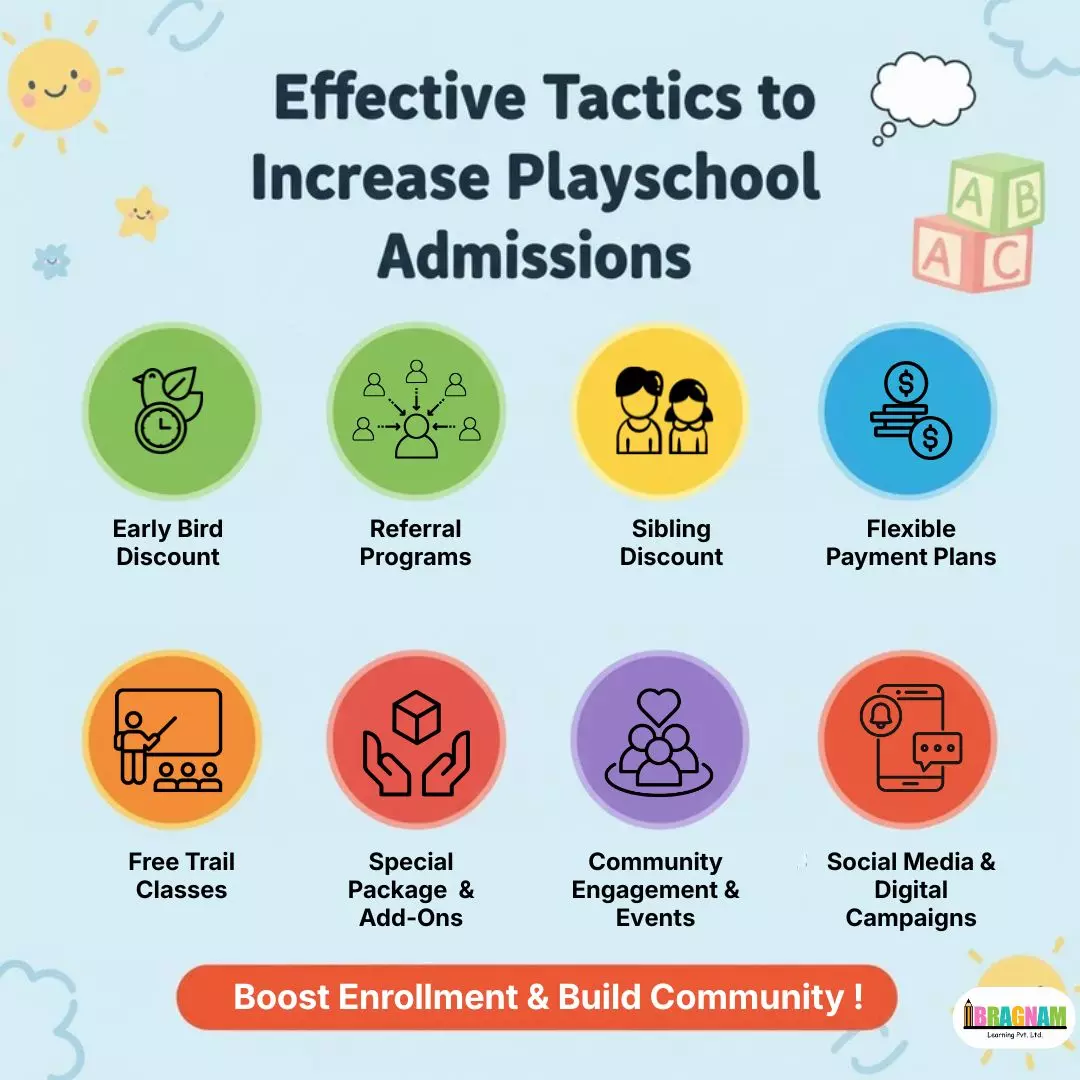
Effective Tactics to Increase Playschool Admissions

offers

1. Early Bird Discounts

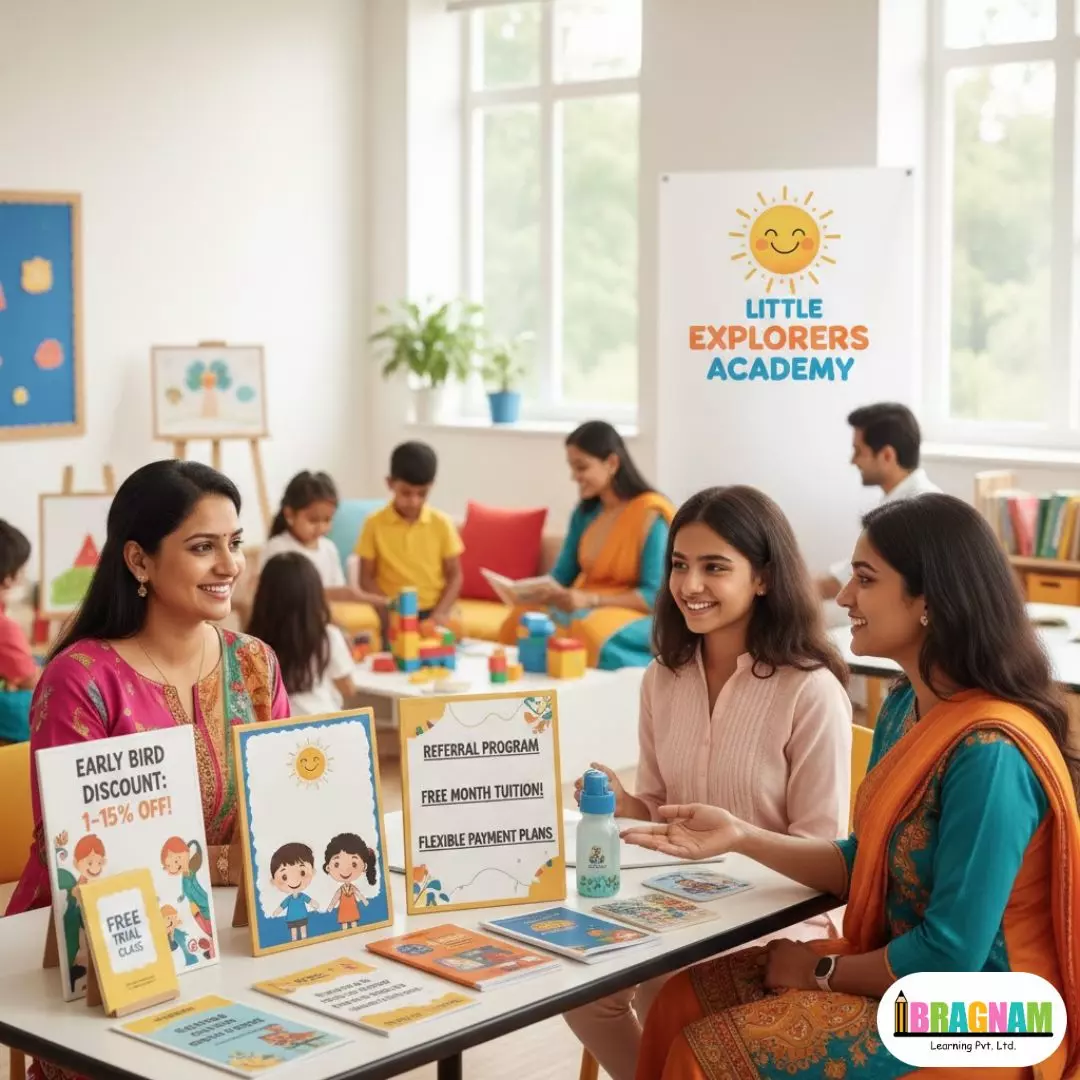
Offering early bird discounts is a proven way to create urgency and encourage parents to enroll their children sooner. For example, provide a 10-15% discount on the admission fee for those who enroll before a certain date. This not only boosts early admissions but also helps with financial planning for your playschool.

2. Referral Programs

A referral program can turn your current parents into brand ambassadors. Offer incentives such as a free month of tuition, gift vouchers, or even branded merchandise for every successful referral. Word-of-mouth is powerful, and happy parents are more likely to recommend your playschool to friends and family.

3. Sibling Discounts

Encourage families with more than one child to enroll both by offering a sibling discount. This could be a fixed percentage off for the second child or a special bundle package. Itโ€™s a win-win: parents save money, and your playschool increases admissions.

4. Flexible Payment Plans

Many parents prefer not to pay large sums upfront. Offering flexible payment plansโ€”such as monthly or quarterly installmentsโ€”can make your playschool more accessible and appealing. This removes financial barriers and increases the chances of conversion.

5. Free Trial Classes

Let parents experience your playschoolโ€™s environment and teaching style firsthand by offering free trial classes. This builds confidence and helps parents see the value of your program before committing to enrollment.

6. Special Packages and Add-Ons

Create attractive packages that include extras like free uniforms, welcome kits, or additional enrichment classes. These add-ons make your offer more compelling and can tip the scales in your favor.

7. Community Engagement and Events

Host open days, virtual tours, and parent workshops to engage the community. These events allow parents to see your facilities, meet staff, and understand your curriculum. Community involvement builds trust and leads to more admissions.

8. Social Media and Digital Campaigns

Use social media platforms to showcase your offers, share testimonials, and run targeted ads. Regularly update your website and social channels with new offers and admission news to keep your audience informed and engaged.

How to Present Offers to Parents

  • Use clear, attractive visuals in your marketing materials.
  • Highlight the benefits and savings for parents.
  • Make the enrollment process simple and hassle-free.
  • Provide prompt follow-up and personalized communication.

Maximizing Impact with Post-Admission Engagement

After a parent enrolls their child, continue the relationship by sending a welcome kit, personalized messages, and a referral offer. A positive post-admission experience can lead to more referrals and repeat business.

FAQ Section

1. What are the best offers to attract more playschool admissions?

Early bird discounts, referral programs, sibling discounts, flexible payment plans, free trial classes, and special packages are highly effective offers that attract more admissions.

2. How can referral programs help increase playschool admissions?

Referral programs incentivize current parents to recommend your playschool to friends and family, leading to organic growth and increased trust among new families.

3. Are flexible payment plans important for playschool admissions?

Yes, flexible payment plans make your playschool more accessible and reduce financial barriers for parents, leading to higher enrollment rates.

4. How can free trial classes boost admissions?

Free trial classes allow parents to experience your playschool firsthand, building confidence in your program and increasing the likelihood of enrollment.

5. What role does social media play in playschool admissions?

Social media helps you reach a wider audience, showcase your offers, share testimonials, and run targeted campaigns, all of which can drive more admissions.

Call to Action

Ready to boost your playschool admissions with smart offers and incentives? Start implementing these tactics today and watch your enrollment numbers grow. Share your success stories with us and letโ€™s build a brighter future for early childhood education together!

By |2025-12-27T12:13:18+05:3027 December 2025|Uncategorized|

Why You Should Upgrade Your Playschool

Introduction: A new era for playschools

Upgrade Your Playschool

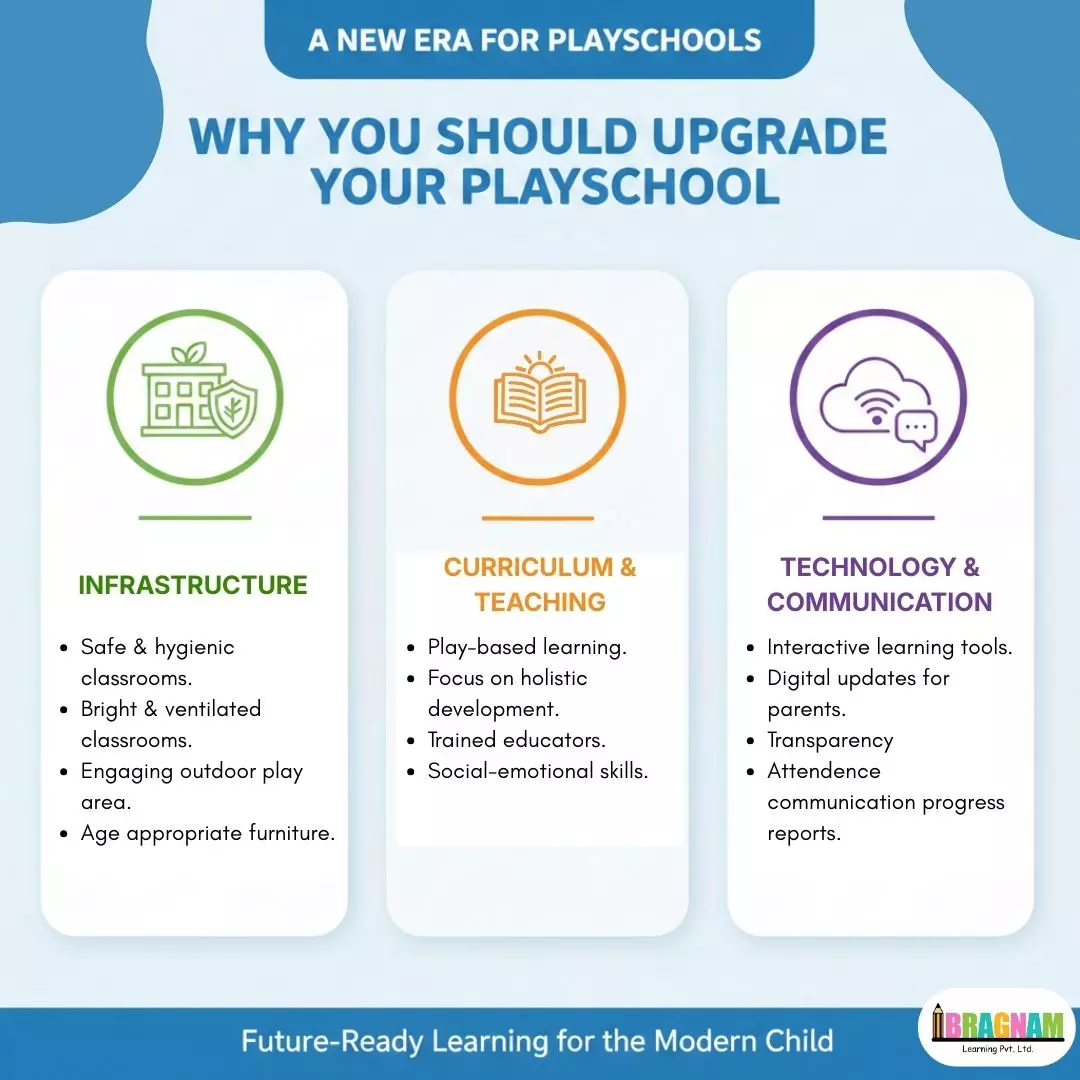
Why You Should Upgrade Your Playschool ? Todayโ€™s parents look for more than just a safe place to leave their child for a few hours , they want a structured, holistic early childhood program aligned with new education policies and global best practices. In India, policy focus on early childhood care and education, along with rising awareness of brain development in the early years, has made quality playschool infrastructure and curriculum a key decision factor for parents.

Upgrading your playschool ensures that:

  • Classrooms, play areas, and sanitation facilities support health, safety, and meaningful learning.
  • Your teaching methods match current early childhood education trends like play-based, experiential, and technology-assisted learning.
  • Parents see your brand as professional, reliable, and worth the fees they pay.

Throughout this blog, the primary keyword why you should upgrade your playschool will be used naturally to help you optimize your content for search engines and reach the right audience.

Why you should upgrade your playschool infrastructure

Upgrade Your Playschool

Most children spend a large part of their formative years in school environments, so the quality of infrastructure directly affects their comfort, safety, and learning outcomes. Parents increasingly prefer preschools with bright, ventilated classrooms, safe outdoor spaces, and age-appropriate furniture and materials.

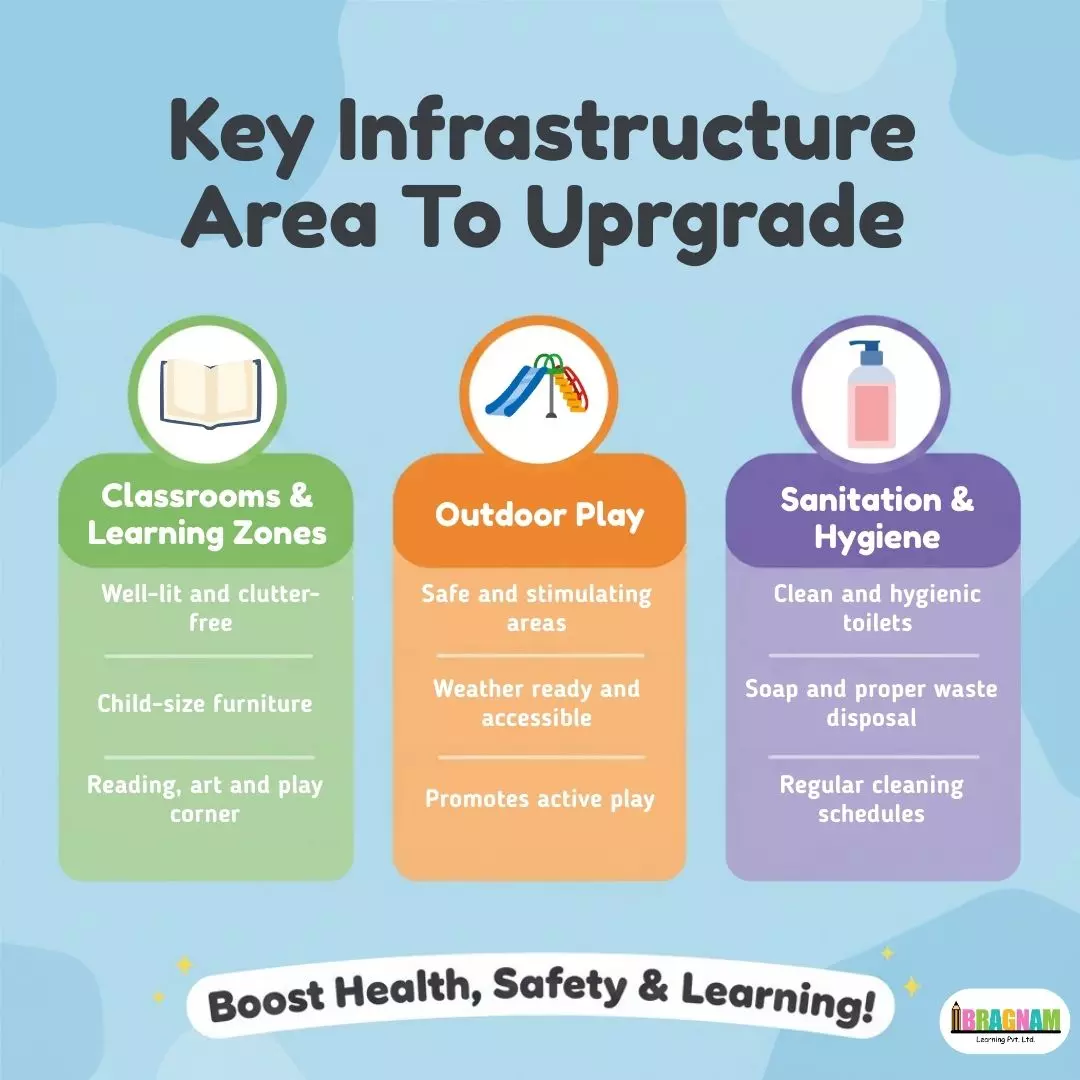
Key infrastructure areas to upgrade

  • Classrooms and learning zones Well-lit, clutter-free classrooms with child-sized furniture help children focus better and feel secure. Creating separate corners for reading, pretend play, art, and sensory activities supports different learning styles and encourages independence.
  • Outdoor play and schoolyard Safe, stimulating outdoor play areas boost physical health, social skills, and emotional well-being. Weather-ready, accessible schoolyards are now viewed as a public health need, not a luxury, because they promote active play and reduce health inequities.
  • Sanitation and hygiene Clean toilets, handwashing stations with soap, and proper waste disposal protect children from illness and reassure parents about your standards. Regular cleaning schedules and visible hygiene practices signal that you take health and safety seriously.

When you think about why you should upgrade your playschool, infrastructure is a logical starting point, because it is the first thing parents notice during a school visit.

Curriculum and teaching: The heart of your upgrade

While infrastructure attracts parents, curriculum and teaching quality convince them to enrol and stay. A modern playschool upgrade should include a review of what and how you teach, not just what your building looks like.

Aligning with new education policies

  • Early childhood education frameworks now emphasise play-based, experiential learning and holistic development rather than rote learning.
  • Parents are advised to choose preschools that offer curriculum aligned with these guidelines, with qualified and trained educators.

This directly strengthens the case for why you should upgrade your playschool curriculum โ€” staying outdated can make your school seem irrelevant or โ€œtoo basicโ€ in comparison to more progressive centres.

Teaching methods to modernise

  • Play-based, hands-on activities Storytelling, art and craft, music, movement, and nature walks all build language, cognitive skills, creativity, and confidence in young children.
  • Focus on socialโ€“emotional skills Quality preschool programs help children learn to share, cooperate, manage emotions, and build friendships. These skills are strongly linked to later academic success and mental well-being.
  • Structured routines with flexibility Routines help children feel secure and ready for formal schooling, while still leaving room for choice and exploration.

Upgrading teacher training, lesson plans, and classroom practices shows parents that your playschool understands child development and is committed to continuous improvement.

Technology, communication, and parent expectations

Another major reason why you should upgrade your playschool is the rapid change in parent expectations in the digital age. Todayโ€™s families expect transparency, regular updates, and smart use of technology in learning and communication.

Smart use of technology

  • Interactive tools like projectors or smartboards (when used thoughtfully) can make lessons more engaging and support visual and auditory learners.
  • Age-appropriate educational content and simple digital tools help children build early tech familiarity without replacing hands-on play.

Parent communication and trust

  • Parents appreciate digital communication channels for attendance updates, photos of activities, announcements, and progress reports.
  • Clear, consistent communication builds trust, improves parent satisfaction, and increases word-of-mouth referrals.
  • โ€‹If you are wondering why you should upgrade your playschool systems and processes, think of how streamlined communication and better visibility into a childโ€™s day can differentiate your brand.

How upgrading boosts admissions and reputation

An upgraded playschool does not only benefit children; it also strengthens your business. In a competitive market, small improvements in quality and parent experience can have a big impact on admissions.

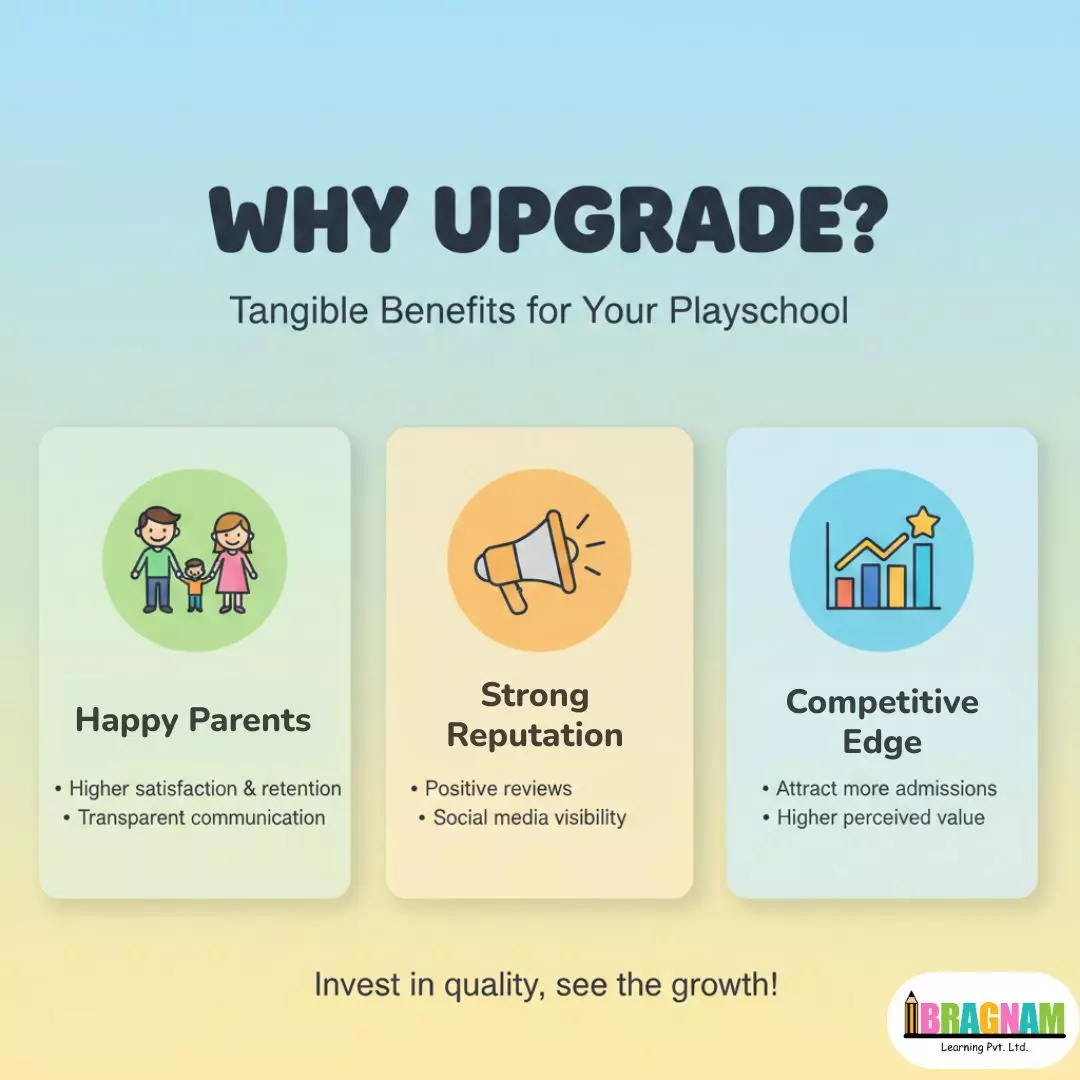
Tangible benefits of upgrading

  • Higher parent satisfaction and retention due to safer spaces, better teaching, and transparent communication.
  • Stronger reputation through positive reviews, referrals, and social media visibility.
  • Better differentiation from low-fee, low-quality centres that may cut corners on safety or learning standards.
  • โ€‹When you clearly communicate why you should upgrade your playschool โ€” and then actually implement those upgrades โ€” parents are more willing to pay appropriate fees and commit long-term.
Upgrade Your Playschool

FAQs: Why you should upgrade your playschool

1. Why should I upgrade my playschool now?

Parent awareness about early childhood education, safety, and hygiene has grown sharply in recent years. Upgrading now helps you meet these expectations, align with policy changes, and avoid losing admissions to better-equipped preschools.

2. What should I upgrade first in my playschool?

Start with safety, sanitation, and learning spaces โ€” classrooms, toilets, handwashing areas, and outdoor play zones. Once the basics are strong, move to curriculum enhancement, teacher training, and technology integration.

3. Does upgrading a playschool really improve learning outcomes?

Yes, well-designed infrastructure and age-appropriate teaching methods improve attendance, attention, and engagement, which support better learning outcomes. Play-based, holistic early childhood programs are linked to stronger cognitive, social, and emotional development.

4. How can I justify the cost of upgrading my playschool?

Upgrades are an investment that can lead to higher admissions, improved parent satisfaction, and stronger word-of-mouth. Many parents are willing to pay more for a playschool that offers safe infrastructure, a modern curriculum, and transparent communication.

5. How do I communicate my upgrades to parents?

Showcase your upgrades through school tours, photos and videos on social media, and detailed explanations during counselling. Highlight how each change directly benefits childrenโ€™s safety, comfort, and development to make the value clear.

Conclusion: Turn your playschool into a future-ready learning space

When you understand why you should upgrade your playschool, it becomes clear that upgrading is about more than just fresh paint or new toys; it is about reimagining the entire learning experience. From infrastructure and hygiene to curriculum, teacher training, technology, and communication, every improvement helps children learn better and gives parents the confidence that they have made the right choice.

If you are ready to take the next step, review your current playschool, list the areas that need improvement, and start implementing upgrades in phases โ€” but start now. Encourage parents, staff, and education partners to join this journey so that your playschool grows into a safe, joyful, and future-ready space for every child.

By |2025-12-25T15:20:07+05:3025 December 2025|Blog|

Impact of Curriculums from Franchise from Balvatika

curriculam

The impact of curriculums from franchise from balvatika is visible in better learning outcomes, smoother school readiness, and more trust from parents for playschools that adopt it. When a playschool partners with a trusted franchise like Balvatika, it gains a structured, NEPโ€‘aligned curriculum that supports both child development and business growth.

What Is Balvatika and Why Curriculum Matters

curriculam

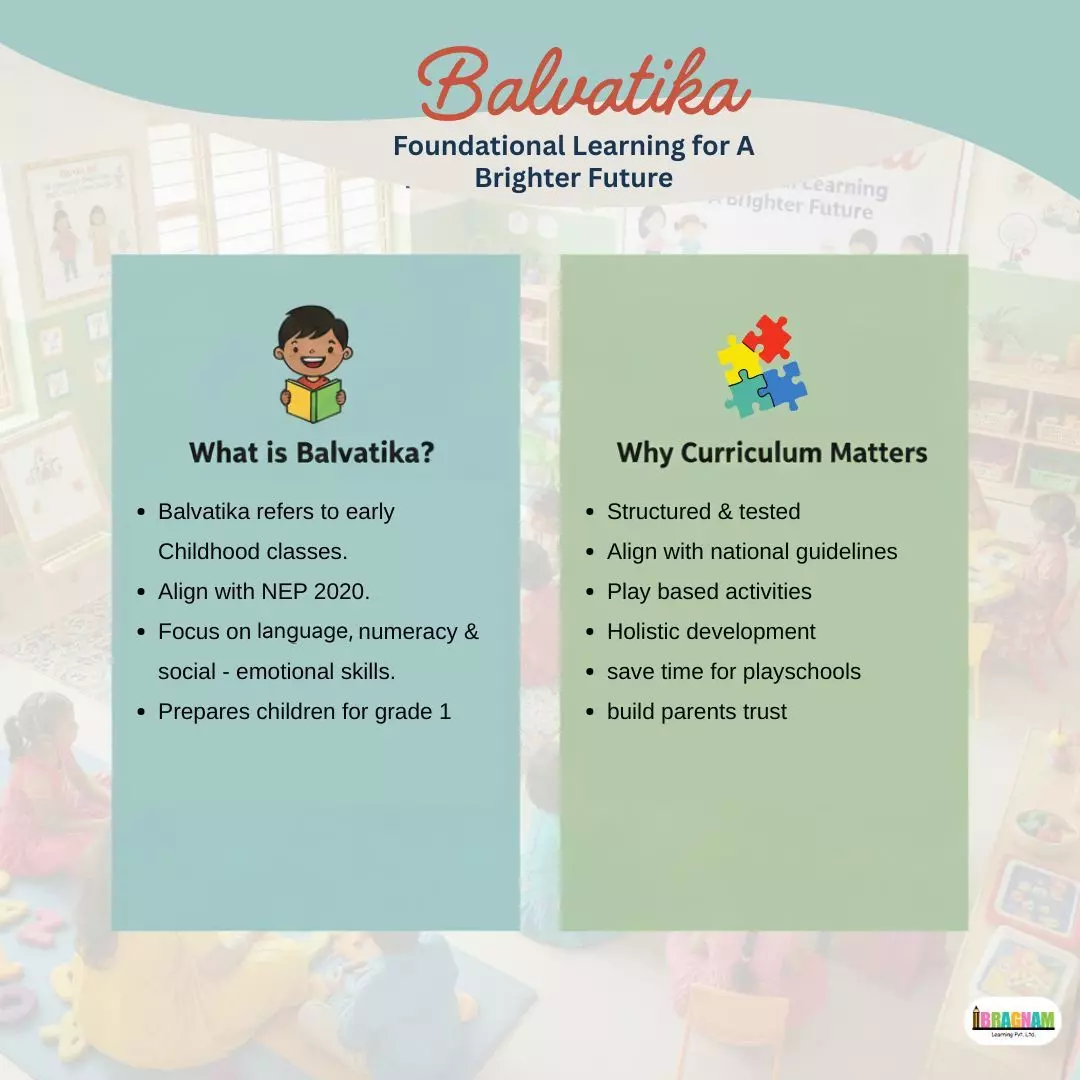
Balvatika refers to early childhood classes for children around 3โ€“6 years, strongly aligned with Indiaโ€™s National Education Policy (NEP) 2020 and the National Curriculum Framework for the Foundational Stage. The aim is to provide quality Early Childhood Care and Education (ECCE) with a strong foundation in language, numeracy, socialโ€“emotional skills, and school readiness.

In a franchise model, a preโ€‘designed curriculum is one of the biggest strengths because it is already tested, structured, and aligned with national guidelines. Playschools that choose Balvatikaโ€‘based curriculum support do not have to build everything from scratch; they can start with clear lesson plans, ageโ€‘wise progression, and activity ideas.

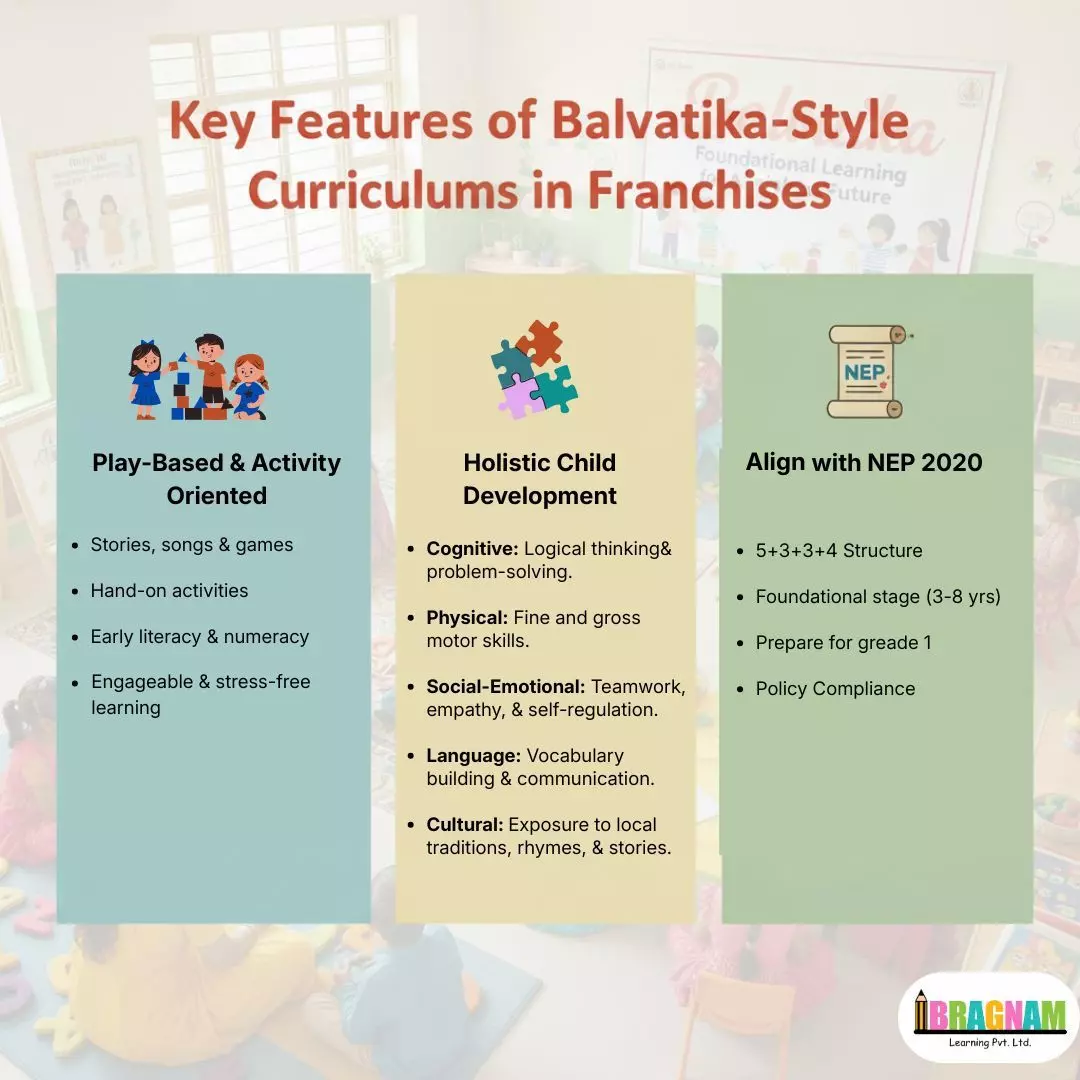
Key Features of Balvatikaโ€‘Style Curriculums in Franchises

curriculam

A strong curriculum from franchise from Balvatika usually focuses on play, holistic , and ageโ€‘appropriate learning. These elements make dayโ€‘toโ€‘day classroom experiences more meaningful for children and easier for teachers to implement.

Playโ€‘Based and Activityโ€‘Oriented Learning

  • Learning is centred around stories, songs, games, and handsโ€‘on activities rather than rote memorisation.
  • Children build early literacy and numeracy skills through playful tasks like sorting, counting, picture reading, and simple word recognition.
  • This approach keeps children engaged, reduces stress, and makes them look forward to school.

Holistic Child Development

  • The curriculum addresses multiple domains: cognitive, physical, social, emotional, and language development.
  • Activities encourage teamwork, sharing, empathy, selfโ€‘regulation, and confidence, which are essential for later life.
  • Children are also exposed to culture, stories, rhymes, and local traditions, which support identity and values.

Alignment with NEP 2020 and NCFโ€‘FS

  • NEP 2020 proposes a 5+3+3+4 structure with a dedicated Foundational Stage from Balvatika to Grade 2, targeting ages 3โ€“8.
  • The Balvatika programme is designed as a preparatory class before Grade 1, focusing on developing basic cognitive and linguistic skills through play.
  • A franchise curriculum aligned with NEP and NCFโ€‘FS helps playschools stay compliant with national expectations and attractive to parents who follow education policy developments.

Impact on Children, Parents, and Playschool Owners

The impact of curriculums from franchise from Balvatika can be seen at three levels: child outcomes, parent satisfaction, and franchise business performance.

Impact on Childrenโ€™s Learning and Readiness

  • Children develop strong early literacy and numeracy skills that prepare them for Grade 1, making the transition to formal schooling smoother.
  • Regular routines, rich language exposure, and guided play support brain development and longโ€‘term learning potential.
  • A structured yet flexible curriculum ensures no major learning gaps between age groups (Balvatikaโ€‘I, II, III).

Impact on Parentsโ€™ Trust and Satisfaction

  • Parents today actively look for preschools that follow recognised frameworks like NEP 2020 and NCFโ€‘FS, not just basic dayโ€‘care.
  • Being part of a franchise with a proven curriculum gives parents confidence that their child will receive quality education and consistent teaching methods.
  • Clear communication of themes, skills, and monthly plans makes it easier for parents to engage with their childโ€™s learning at home.

Impact on Playschool Owners and Franchise Growth

  • A wellโ€‘researched curriculum from a franchise reduces guesswork, saves time, and avoids โ€œtrial and errorโ€ academic planning.
  • Franchises with strong curriculum support often bring training, quality checks, and teaching resources, which improve classroom delivery.
  • The reputation of a preschool franchise is closely linked to its curriculum quality, helping franchisees attract more admissions and scale faster.

Why Choose Curriculums from Franchise from Balvatika for Your Playschool

Choosing a curriculum from franchise from Balvatika is not just about having a syllabus; it is about adopting a full framework that combines pedagogy, planning, and policy alignment. For new or growing playschools, this can be a gameโ€‘changer in a highly competitive market.>

Advantages for New and Existing Playschools

  • Faster Startโ€‘Up: Readyโ€‘made ageโ€‘wise plans, activity banks, and assessment ideas allow faster launch of classes.
  • Teacher Support: Structured training and clear guidelines make it easier for teachers with varied experience levels to deliver quality lessons.
  • Consistency Across Branches: Having a common Balvatikaโ€‘based curriculum ensures similar quality across all franchise centres, strengthening the brand.

Longโ€‘Term Educational Impact

  • Children who pass through a wellโ€‘implemented Balvatikaโ€‘style curriculum in the foundational years are better prepared for higher grades.
  • Early years investment, especially through playโ€‘based foundational education, is known to have longโ€‘term benefits for academic performance and socioโ€‘emotional growth.
  • Playschools that align with such frameworks position themselves as forwardโ€‘looking, policyโ€‘aligned, and childโ€‘centric institutions.

FAQs on Impact of Curriculums from Franchise from Balvatika

1. What does โ€œcurriculums from franchise from Balvatikaโ€ mean?
It refers to structured, preโ€‘designed early childhood curriculums developed and provided by a Balvatikaโ€‘based franchise to its playschool partners, usually aligned with NEP 2020 and NCFโ€‘FS.

2. How is a Balvatikaโ€‘style curriculum different from a normal preschool syllabus?
A Balvatikaโ€‘style curriculum focuses on playโ€‘based, activityโ€‘oriented foundational learning, covers ages 3โ€“6 systematically, and is closely linked to national policy guidelines for the Foundational Stage.

3. Does a franchise curriculum really improve admissions?
Yes, many parents prefer franchises because they trust the brand, teaching standards, and structured curriculum, which makes them more likely to enrol their children there.

4. Is a Balvatikaโ€‘aligned curriculum only for big schools?
No, even small and emerging playschools can adopt Balvatikaโ€‘aligned curriculums through franchise models to ensure quality and compliance with NEP 2020.

5. How does this curriculum help teachers?
Teachers get clear learning outcomes, daily/weekly plans, and training support, which reduces planning stress and helps them focus on engaging with children.

Conclusion: Make Your Playschool Futureโ€‘Ready with Curriculums from Franchise from Balvatika

The impact of curriculums from franchise from Balvatika goes far beyond lesson plans; it shapes how children experience learning, how parents perceive your playschool, and how confidently you can grow your centre. By combining NEPโ€‘aligned foundational education, playโ€‘based pedagogy, and franchise support, Balvatikaโ€‘style curriculums help your playschool stand out as both childโ€‘centric and professionally managed.

If you want your playschool to be recognised for quality foundational education, now is the right time to explore a curriculum from franchise from Balvatika and integrate it into your centre.

๐Ÿ‘‰ Ready to upgrade your playschool with a Balvatikaโ€‘aligned franchise curriculum? Reach out today to explore franchise opportunities and curriculum support tailored for your city.

By |2025-12-24T14:03:14+05:3024 December 2025|Blog|

Christmas Day Celebration in Kindergarten

christmas day

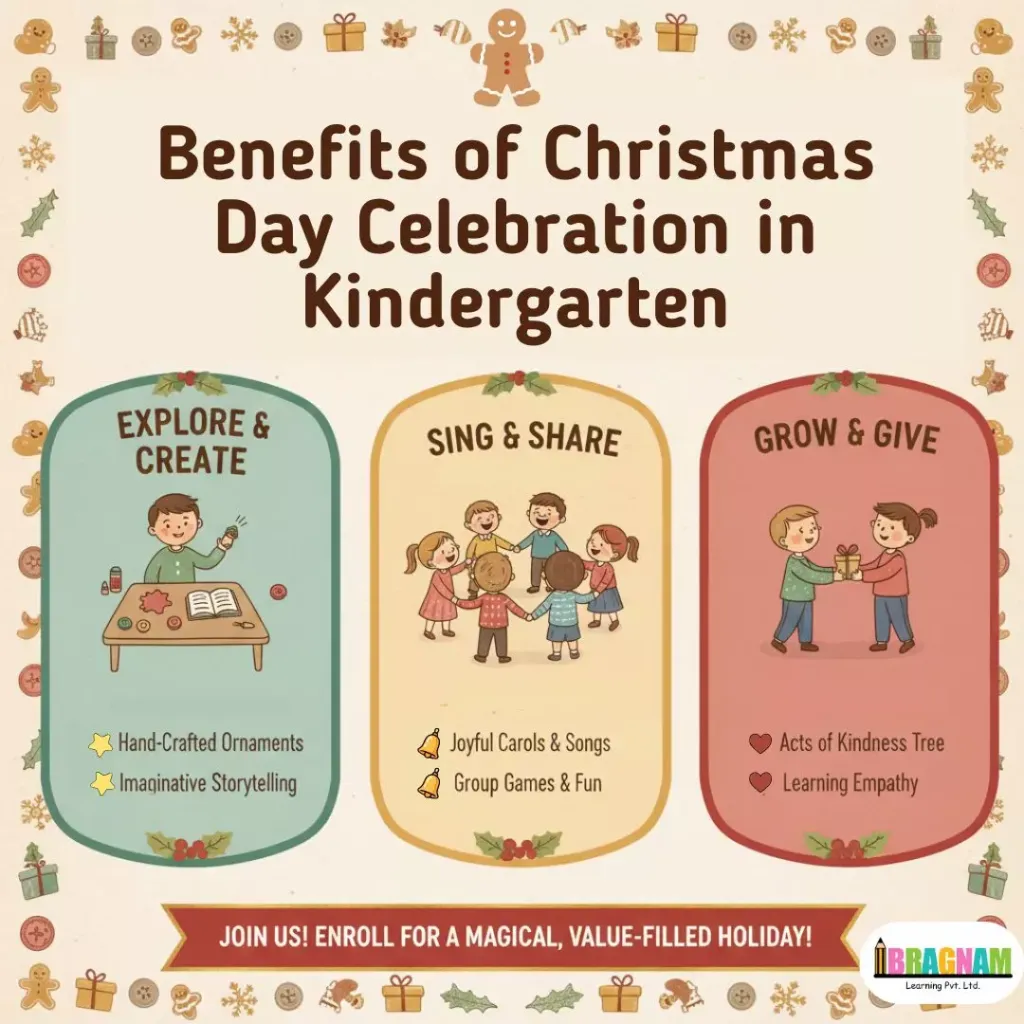
Christmas day celebration in kindergarten is one of the most magical experiences of the school year, turning the classroom into a space filled with joy, colour, and meaningful learning. For young children, it is not just about Santa and gifts; it is a powerful way to build values like kindness, sharing, and togetherness through fun activities and play.

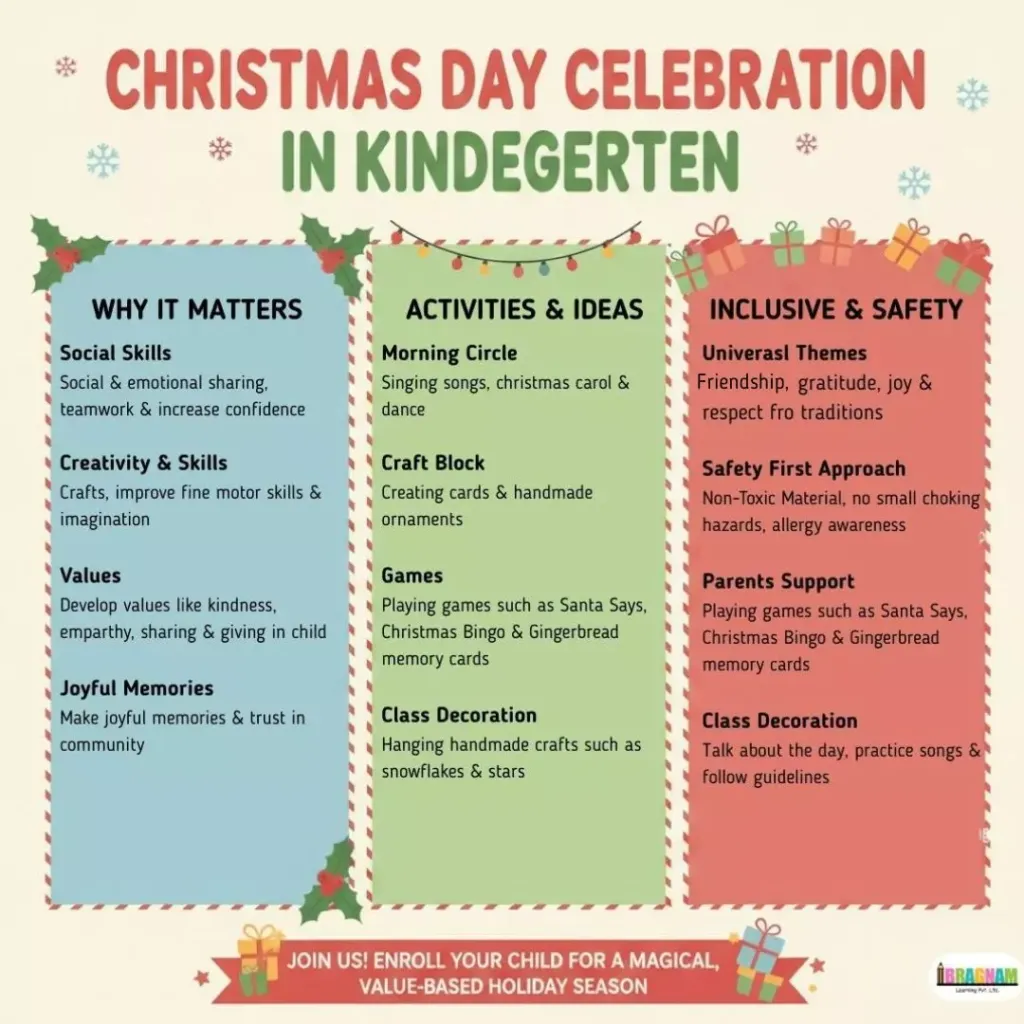
Why Christmas Day Celebration in Kindergarten Matters

Christmas day celebration in kindergarten supports childrenโ€™s social, emotional, and cognitive development in a playful, child-friendly way. When little ones sing carols, create crafts, and participate in group games, they learn to express emotions, cooperate with peers, and build confidence.

Some key benefits include:

  • Developing creativity through festive art and craft activities.
  • Strengthening fine motor skills with cutting, sticking, colouring, and decorating.
  • Building social skills like sharing, turn-taking, and teamwork during group celebrations.
  • Encouraging empathy and kindness through โ€œgift-givingโ€ and helping others.
  • Making joyful memories that help children feel connected to their school community.
christmas day

Planning a Joyful Christmas Day Celebration in Kindergarten

A well-planned Christmas day celebration in kindergarten keeps children engaged while ensuring activities are age-appropriate, safe, and inclusive. Teachers can plan the day so that it includes a mix of crafts, music, games, and quiet moments.

Simple planning tips:

  • Create a flexible schedule that balances active play with calm activities.
  • Keep instructions short and visual, using demonstrations rather than long explanations.
  • Organize materials in trays or stations so children can move and explore independently.
  • Include activities that every child, regardless of background, can enjoy and understand.

Suggested Day Flow

  • Morning circle with welcome song and talk about Christmas feelings.
  • Craft block (cards, ornaments, or wreaths).
  • Snack time with a simple โ€œred and greenโ€ themed plate.
  • Story time or puppet show with a Christmas story.
  • Group games and a small gift or surprise towards the end.

Fun Christmas Day Activities for Kindergarten Classrooms

Christmas day celebration in kindergarten becomes truly memorable when children get to โ€œdoโ€ things with their hands, voices, and imagination. A variety of activities ensures that every child finds something they love.

Christmas Crafts Corner

Hands-on crafts are at the heart of Christmas day celebration in kindergarten and they support creativity and fine motor skills. Choose simple crafts that little hands can manage with minimal help.

Ideas for the craft corner:

  • Paper plate wreaths: Children paint or colour paper plates green, then stick pom-poms, stars, and ribbons to create wreaths, supporting shape recognition and bilateral coordination.
  • Cotton ball snowmen: Using cotton, buttons, and paper cut-outs, kids build snowmen while learning about basic shapes and textures.
  • Finger-painted Christmas cards: Children use finger paints to design cards for parents or helpers, strengthening sensory exploration and emotional expression.
  • Button ornaments: Kids sort and glue colourful buttons onto cardboard ornament shapes, building focus, patience, and categorization skills.

Storytelling and Puppet Time

Storytelling brings warmth and reflection into the Christmas day celebration in kindergarten. It helps build vocabulary, listening skills, and imagination.

You can:

  • Use Christmas story puppets (paper or felt) so children can act out scenes and practise language and social communication.
  • Read age-appropriate picture books with simple Christmas themes and then ask children to share what made them feel happy or kind.
  • Set up a small puppet theatre where children can retell the story in their own words, supporting confidence and expressive language.

Music, Carols, and Movement

Music and movement naturally energize Christmas day celebration in kindergarten and help children feel united as a group. Singing also supports rhythm, memory, and early literacy.

Try:

  • Holiday song circles where children sit or stand in a circle, clap, and sing simple Christmas songs with repeated words.
  • Action songs that include jumps, claps, or simple dance steps, improving gross motor skills and coordination.
  • Using simple instruments like shakers or bells so children can keep the beat and experience group music-making.

Classroom Decoration by Little Hands

Letting children decorate their classroom makes Christmas day celebration in kindergarten more meaningful because they feel proud of their environment. Involving them in these tasks also builds responsibility and teamwork.

Ideas include:

  • Classroom tree decorating where children hang safe, lightweight ornaments they made themselves, promoting communication and turn-taking.
  • Creating a โ€œKindness Treeโ€ where children add paper ornaments noting kind actions they did during the week.
  • Hanging paper snowflakes, stars, or garlands that children created during craft time.

Games and Group Play

Fun games make Christmas day celebration in kindergarten lively while still supporting learning. Games can be tailored to focus on listening, memory, or movement.

Some options:

  • โ€œSanta Saysโ€ (like Simon Says) to practise listening and following directions.
  • Christmas bingo with pictures instead of numbers to build visual recognition.
  • Gingerbread memory cards where children flip and match pairs, strengthening concentration and visual memory.

Teaching Values Through Christmas Day

christmas celebration

Celebration in Kindergarten

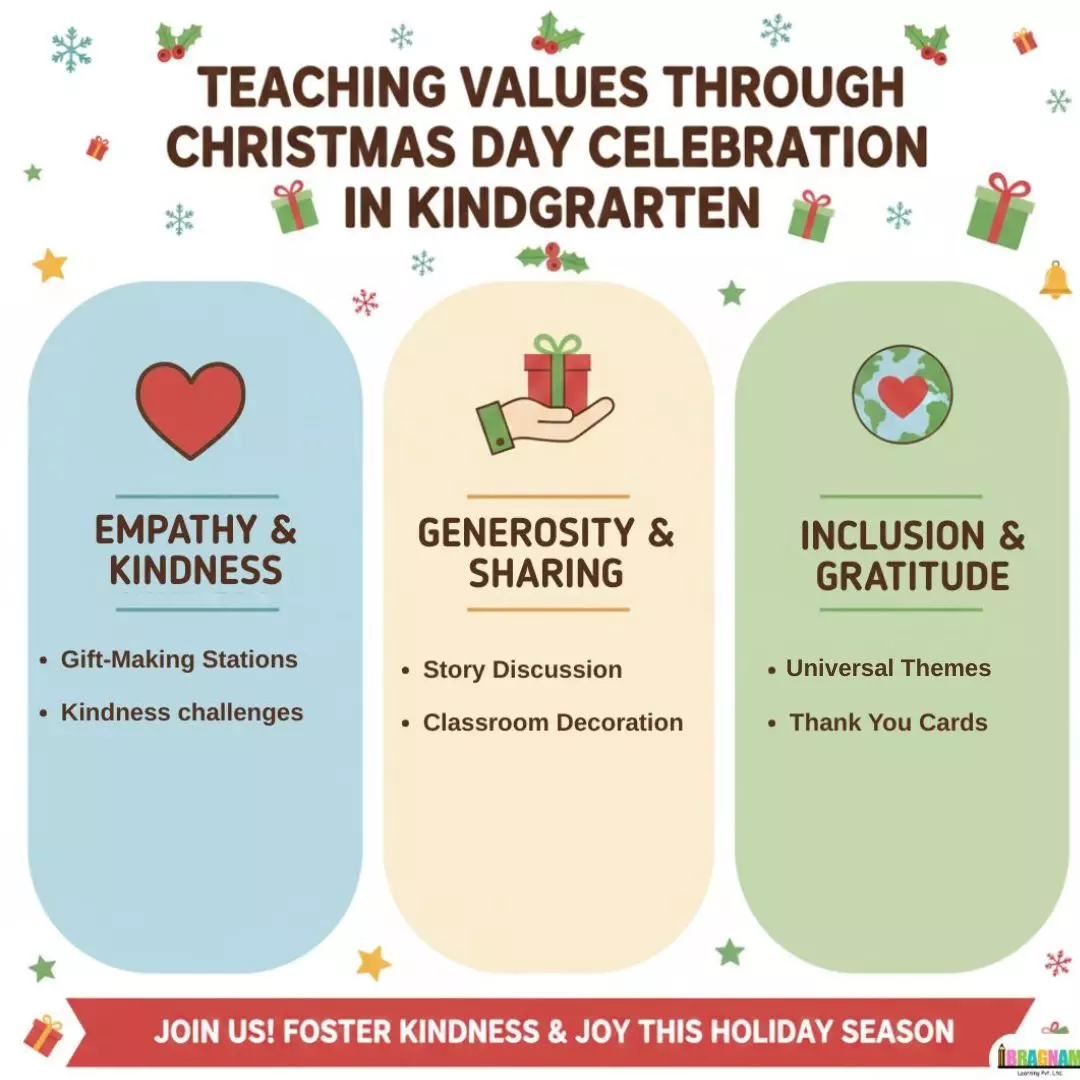
Beyond fun, Christmas day celebration in kindergarten is an excellent time to teach values like kindness, gratitude, and inclusion. When children participate in simple giving and sharing activities, they start to understand that celebrations are about caring for others.

Value-building ideas:

  • Gift-making stations where children create small cards or crafts for support staff, parents, or classmates, encouraging empathy and appreciation.
  • โ€œKindness challengesโ€ where children are encouraged to perform simple kind acts such as helping a friend or sharing toys, then share them in circle time.
  • Story discussions about characters who show generosity or friendship during Christmas, helping children connect values to real actions.

Making Christmas Day Celebration in Kindergarten Inclusive

An inclusive Christmas day celebration in kindergarten makes every child feel welcome, regardless of background. Many preschools and kindergartens frame Christmas within a broader theme of festivals, kindness, or winter so that all families feel respected.

To keep celebrations inclusive:

  • Focus on universal themes such as giving, gratitude, friendship, and joy.
  • Emphasize stories and activities that highlight caring for others rather than only receiving gifts.
  • Provide options in activities so children can participate at their own comfort level, with no pressure to follow any specific tradition.

Safety and Practical Tips for Teachers

During Christmas day celebration in kindergarten, safety and comfort are just as important as excitement. A few practical steps help the day run smoothly.

Keep in mind:

  • Use non-toxic art materials and avoid very small items that could be choking hazards.
  • Plan short, manageable activities to match young attention spans and prevent overstimulation.
  • Maintain clear routines for snack, washroom breaks, and clean-up to keep children calm and secure.
  • Be mindful of food allergies or dietary restrictions during any festive snacks.

How Parents Can Support Christmas Day Celebration in Kindergarten

Parental involvement can make Christmas day celebration in kindergarten even more meaningful. When families and teachers work together, children feel consistent support at home and school.

Parents can:

  • Talk about the upcoming celebration, helping children understand what to expect and how to behave kindly.
  • Help children practise simple Christmas songs or rhymes at home, building confidence for performances.
  • Support school guidelines on dress code, safe accessories, and simple gifts so that activities remain manageable for teachers.

FAQ: Christmas Day Celebration in Kindergarten

1. Why is Christmas day celebration in kindergarten important for young children?
Christmas day celebration in kindergarten helps children build social skills, express emotions, and feel part of a caring community while having fun. It also introduces them to simple cultural traditions through stories, songs, and crafts in an age-appropriate way.

2. What are some simple activities for Christmas day celebration in kindergarten?
Simple activities include paper snowflake cutting, cotton ball snowmen, Christmas card making, and classroom tree decorating. These hands-on tasks develop fine motor skills and creativity while keeping children happily engaged.

3. How can teachers keep Christmas day celebration in kindergarten educational?
Teachers can link activities to early learning goals such as counting ornaments, sorting colours, and practising letters in Christmas words. Storytelling, puppet shows, and song circles also build vocabulary, listening, and early literacy skills.

4. How do we make Christmas day celebration in kindergarten inclusive for all children?
Focusing on themes like kindness, sharing, and gratitude makes celebrations meaningful for every child. Schools can also explain that Christmas is one of many festivals and encourage children to respect and enjoy each otherโ€™s traditions.

5. What role can parents play in Christmas day celebration in kindergarten?
Parents can support by sending simple materials, following school guidelines, and encouraging children to participate with confidence. They can also talk at home about kindness, generosity, and gratitude to reinforce the values highlighted in the classroom celebration.

Conclusion: Making Christmas Day Celebration in Kindergarten Truly Special

Christmas day celebration in kindergarten becomes unforgettable when it blends fun, learning, and values in a way that feels natural to young children. With thoughtful planning, child-friendly activities, and a focus on kindness, teachers and parents can create a warm festive atmosphere where every child feels joyful, included, and proud of what they have created and shared.

A clear, friendly callโ€‘toโ€‘action:
Invite families to ask about your kindergartenโ€™s Christmas day celebration in kindergarten, explore your upcoming festive calendar, and enrol their child so they can experience a joyful, value-based learning environment this holiday season.

โ€‹


By |2025-12-22T13:18:14+05:3022 December 2025|Blog|
Go to Top