
- Introduction: Why National Science Day Matters More Than Ever
- History of National Science Day
- What is the Raman Effect?
- Importance of National Science Day
- National Science Day Themes
- How Schools and Playschools Can Celebrate National Science Day
- Fun and Simple Science Experiments for National Science Day
- Role of Teachers on National Science Day
- Why National Science Day is Important for Early Education
- How Parents Can Participate in National Science Day
- Conclusion: Celebrating Curiosity on National Science Day
Introduction: Why National Science Day Matters More Than Ever
National Science Day is more than just a date on the calendar — it is a celebration of curiosity, innovation, and discovery. Observed every year on 28th February in India, National Science Day honors the groundbreaking discovery of the Raman Effect by Indian physicist C. V. Raman.
In today’s rapidly evolving world, science shapes everything — from the smartphones we use to the medicines that keep us healthy. It reminds us of the power of questioning, experimenting, and exploring the unknown. It inspires students, educators, researchers, and institutions to nurture scientific thinking from an early age.
In this blog, we’ll explore the history, significance, themes, activities, and ways schools and playschools can celebrate National Science Day in meaningful and engaging ways.

History of National Science Day
4
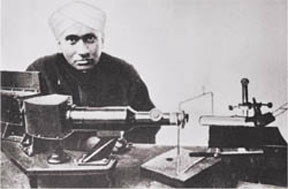
It is celebrated to commemorate the discovery of the Raman Effect on 28 February 1928 by C. V. Raman. For this discovery, he was awarded the Nobel Prize in Physics in 1930, making him the first Asian to receive a Nobel Prize in science.
The Government of India declared 28 February as National Science Day in 1986. Since then, it has been celebrated across schools, colleges, universities, and research institutions throughout the country.
The day promotes:
- Scientific awareness
- Innovation and research
- Appreciation for Indian scientists
- Development of scientific temper
What is the Raman Effect?
In simple terms, the Raman Effect explains how light changes when it passes through a transparent material.
Instead of getting absorbed completely, some light scatters and changes its wavelength. This discovery revolutionized physics and opened new paths in spectroscopy.
You don’t need to be a scientist to appreciate this — it shows how observing everyday phenomena can lead to world-changing discoveries.
Importance of National Science Day
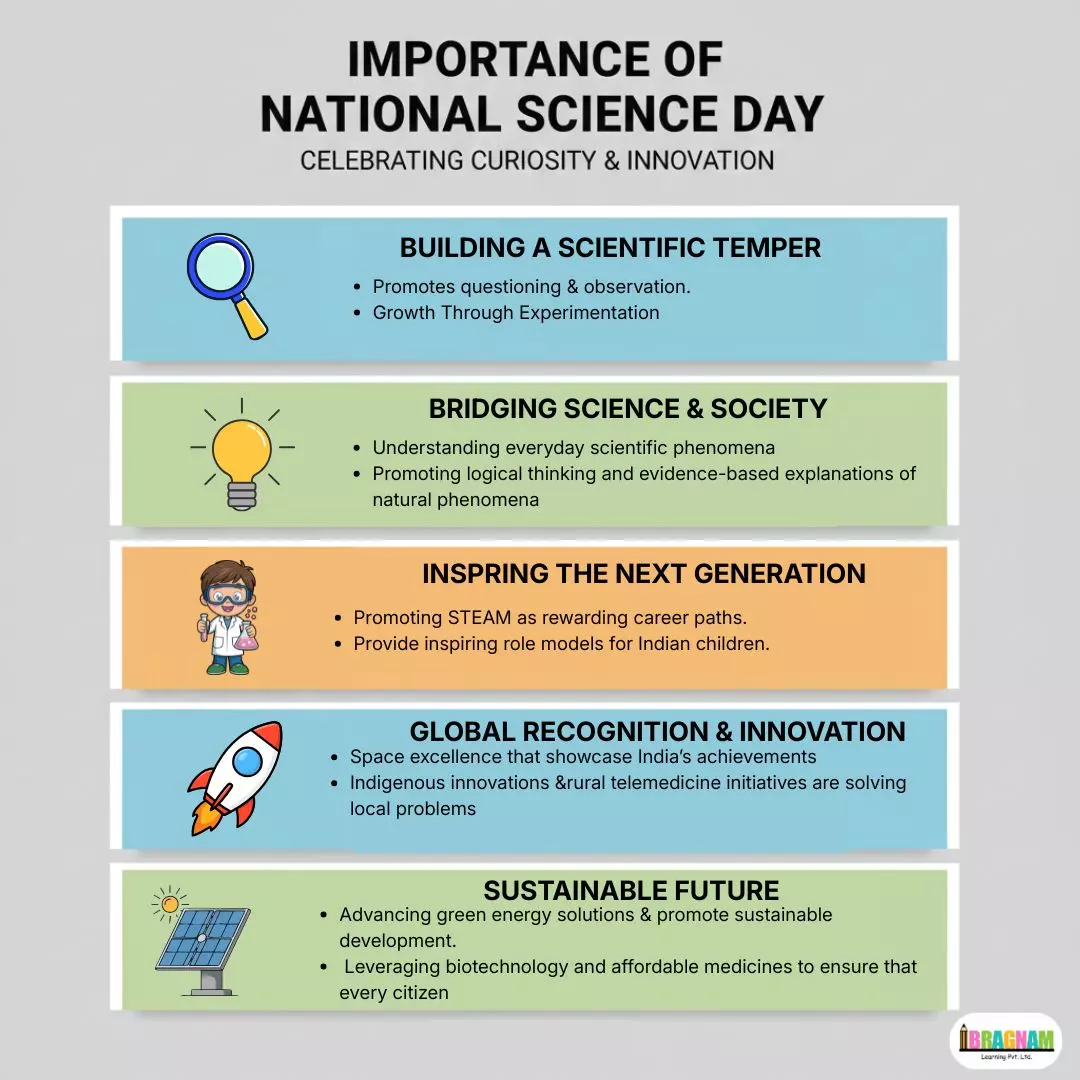
1. Encourages Scientific Temper
National Science Day promotes logical thinking and problem-solving skills. It encourages students to ask:
- Why does this happen?
- How does it work?
- What if we try something different?
2. Inspires Young Innovators
Children exposed to science activities early in life are more likely to develop:
- Curiosity
- Creativity
- Analytical skills
- Confidence in experimentation
3. Recognizes Contributions of Indian Scientists
India has produced remarkable scientists in various fields. National Science Day highlights their contributions and motivates future generations.
4. Promotes STEM Education
Science, Technology, Engineering, and Mathematics (STEM) are the backbone of innovation. National Science Day strengthens interest in these areas.
National Science Day Themes
Every year, National Science Day is celebrated with a specific theme announced by the Government of India. These themes usually focus on:
- Sustainable development
- Women in science
- Indigenous technologies
- Innovation and entrepreneurship
- Climate change and environmental awareness
Themes help institutions align their activities with national priorities.
How Schools and Playschools Can Celebrate National Science Day
Celebrating National Science Day does not require complex lab equipment. Even simple activities can spark curiosity.
For Preschool & Kindergarten
- 🔬 Color mixing experiments
- 🌱 Planting seeds to observe growth
- 🧲 Magnet exploration
- 💧 Floating and sinking activity
- 🌈 Rainbow creation with prism or water
For Primary School Students
- Science quizzes
- Model-making competitions
- Poster presentations
- Science exhibitions
- Simple volcano experiment
For Franchise Schools & Educational Institutions
- Organize a Science Fair
- Invite a local scientist for a talk
- Conduct innovation competitions
- Showcase student projects
- Host a “Young Scientist Award” ceremony
Fun and Simple Science Experiments for National Science Day
Here are 5 easy experiments:
- Baking Soda Volcano
Mix baking soda and vinegar to observe a chemical reaction. - Walking Water Experiment
Demonstrates capillary action using colored water and tissue paper. - Balloon Rocket
Shows action and reaction principles. - Dancing Raisins
Carbon dioxide bubbles make raisins move in soda water. - Shadow Experiment
Learn about light sources and shadow formation.
Role of Teachers on National Science Day
Teachers play a crucial role in making National Science Day meaningful.
They can:
- Encourage inquiry-based learning
- Allow children to experiment freely
- Appreciate small discoveries
- Connect science with real-life examples
Science should feel exciting — not intimidating.
Why National Science Day is Important for Early Education
At the preschool level, science is not about formulas. It is about:
- Observing nature
- Asking questions
- Exploring textures
- Understanding cause and effect
When children are encouraged to explore, they develop lifelong learning habits.
It reminds us that curiosity starts early.
How Parents Can Participate in National Science Day
Parents can celebrate National Science Day at home by:
- Doing small experiments together
- Visiting science museums
- Watching educational science videos
- Encouraging children to ask “why”
- Reading books about scientists
When home and school work together, children benefit the most.
Conclusion: Celebrating Curiosity on National Science Day
From preschool classrooms to advanced research labs, National Science Day inspires everyone to think differently, question boldly, and explore confidently.
As we celebrate National Science Day, let us nurture young minds, encourage experimentation, and build a future driven by knowledge and innovation.
Let’s make science fun, accessible, and inspiring — not just on National Science Day, but every single day



Leave A Comment