
Have you ever wondered why we sometimes get an extra day in February? That special year, known as a leap year, gives us February 29 — a date that appears only once every four years. While it may seem like a small calendar adjustment, the leap year plays a crucial role in keeping our calendar aligned with Earth’s orbit around the Sun.
In this detailed guide, we’ll explore what a leap year is, why it exists, how it works, and some fascinating facts surrounding it. Whether you’re a parent explaining it to your child or just curious about calendars, this blog will make the concept simple and engaging.

What Is a Leap Year?
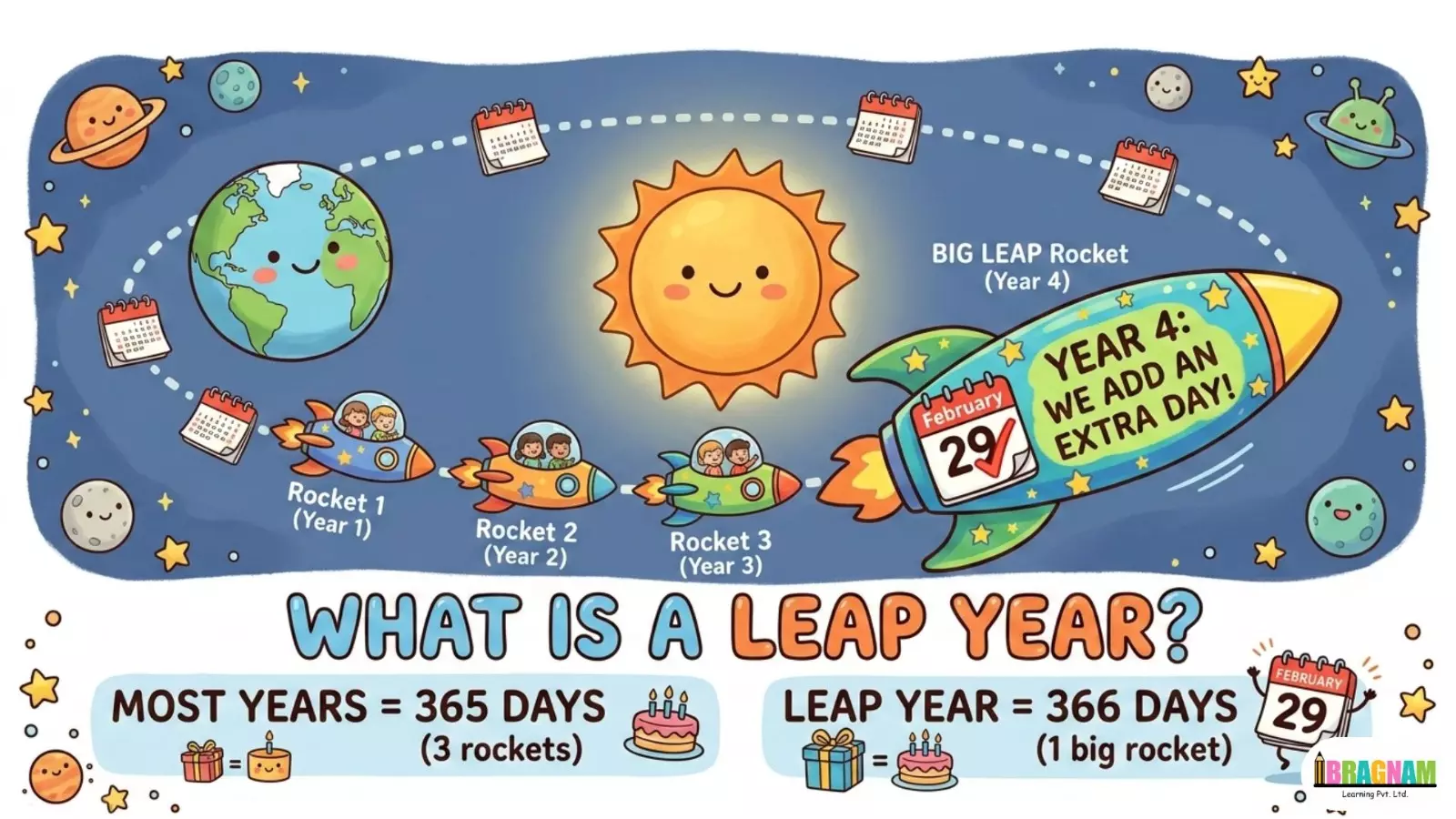
A leap year is a year that contains 366 days instead of 365 days. The extra day is added to the month of February, making it 29 days long instead of the usual 28.
But why do we need this extra day?
The reason lies in how long it takes Earth to complete one orbit around the Sun.
- Earth takes approximately 365.2422 days to orbit the Sun.
- Our standard calendar year has only 365 days.
- That extra 0.2422 day adds up over time.
Without a leap year adjustment, our calendar would slowly drift away from the seasons.
Why Do We Have a Leap Year?
🌍 The Science Behind Leap Year
The leap year exists because of astronomy.
Since Earth doesn’t take exactly 365 days to orbit the Sun, we accumulate nearly one extra day every four years:
0.2422 × 4 ≈ 0.9688 (almost one full day)
To fix this difference, we add one extra day every four years — creating a leap year.
This system keeps:
- Seasons aligned with months
- Equinoxes and solstices consistent
- Agricultural cycles stable
- Global time systems accurate
Without leap years, after hundreds of years, winter could shift into what we call summer!
The Leap Year Rule Explained Simply
The leap year rule is slightly more detailed than just “every 4 years.”
Here’s how it works:
- A year is a leap year if it is divisible by 4.
- However, if the year is divisible by 100, it is NOT a leap year.
- But if the year is divisible by 400, it IS a leap year.
Examples:
- 2020 → Leap year ✅
- 2024 → Leap year ✅
- 1900 → Not a leap year ❌
- 2000 → Leap year ✅
This rule ensures the calendar stays extremely accurate over centuries.
Who Introduced the Leap Year?
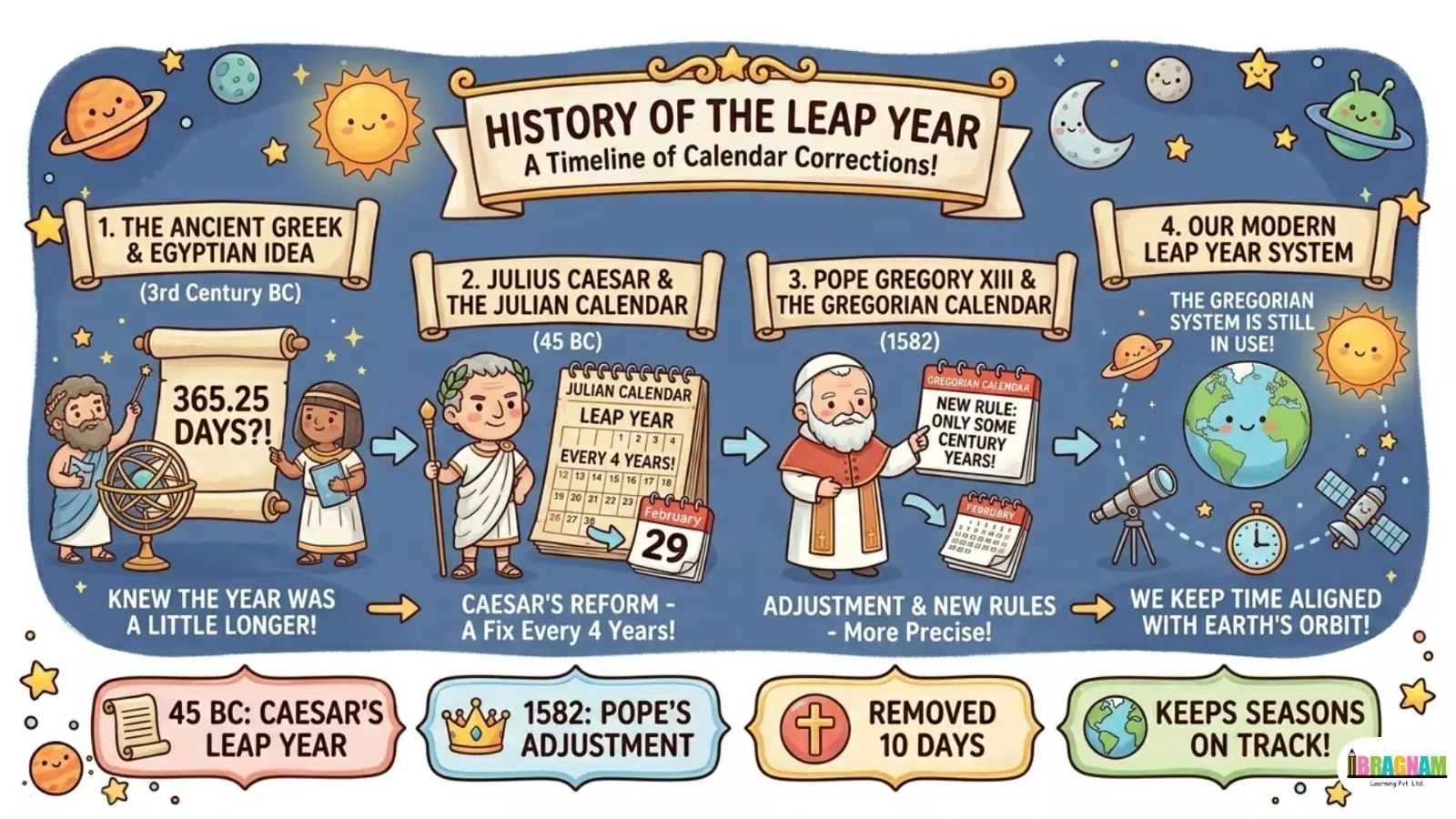
The concept of leap year dates back to ancient times.
It was first introduced by:
📜 Julius Caesar
In 45 BCE, Julius Caesar introduced the Julian Calendar, which included a leap year every four years.
Later, the system was refined under:
⛪ Pope Gregory XIII
In 1582, he introduced the Gregorian Calendar, which is the calendar we use today. This version corrected small errors in the Julian system and added the 100 and 400-year rules.
Interesting Leap Year Facts
A leap year is more than just an extra day. Here are some fascinating facts:
- People born on February 29 are called “Leaplings” or “Leapers.”
- There are only about 5 million leap day birthdays worldwide.
- In some cultures, February 29 is considered lucky.
- In Ireland and the UK, tradition once allowed women to propose marriage on leap day.
- Companies sometimes adjust salaries and interest calculations during leap years.
Why Leap Year Is Important
The leap year ensures:
1️⃣ Seasonal Accuracy
Without leap years, festivals like Holi, Christmas, or Diwali would slowly shift across seasons (in solar-based calendars).
2️⃣ Agricultural Planning
Farmers rely on seasonal consistency for planting and harvesting.
3️⃣ Scientific & Astronomical Accuracy
Space missions, climate studies, and global timekeeping depend on accurate calendars.
4️⃣ Long-Term Calendar Stability
Over centuries, the leap year prevents calendar drift.
In short, the leap year keeps our world organized.
Leap Year and Children: A Fun Learning Opportunity
For parents and educators, a leap year is a fantastic chance to teach:
- Basic astronomy
- Calendar math
- Time calculation
- Historical facts
Fun activities for kids:
- Create a February 29 craft
- Calculate your age in leap years
- Learn about Earth’s orbit
- Make a leap year quiz
It’s a simple yet powerful educational concept.
Leap Year in Modern Times
Today, nearly all countries follow the Gregorian calendar system introduced by Pope Gregory XIII.
However, some cultures and religions use lunar calendars, which follow different rules.
Still, the leap year remains globally recognized as a key adjustment to our civil calendar.




Leave A Comment