The Role of Play in Cognitive Development | Bragnam Learning
By |2025-11-13T14:48:42+05:3013 November 2025|Blog|

The Role of Play in Cognitive Development

cognitive development


Introduction

Play is more than just fun and games for young children; it is a critical engine driving their cognitive development. At Bragnam Learning, we understand the powerful role that play holds in shaping children’s thinking, problem-solving, attention, creativity, and learning abilities. This blog explores how play nurtures cognitive growth and why it should be an essential part of every playschool’s curriculum.

Why Play Matters for Cognitive Development

Cognitive development refers to the growth of a child’s ability to think, understand, communicate, remember, and solve problems. Play offers the perfect environment for these skills to flourish naturally and joyfully.

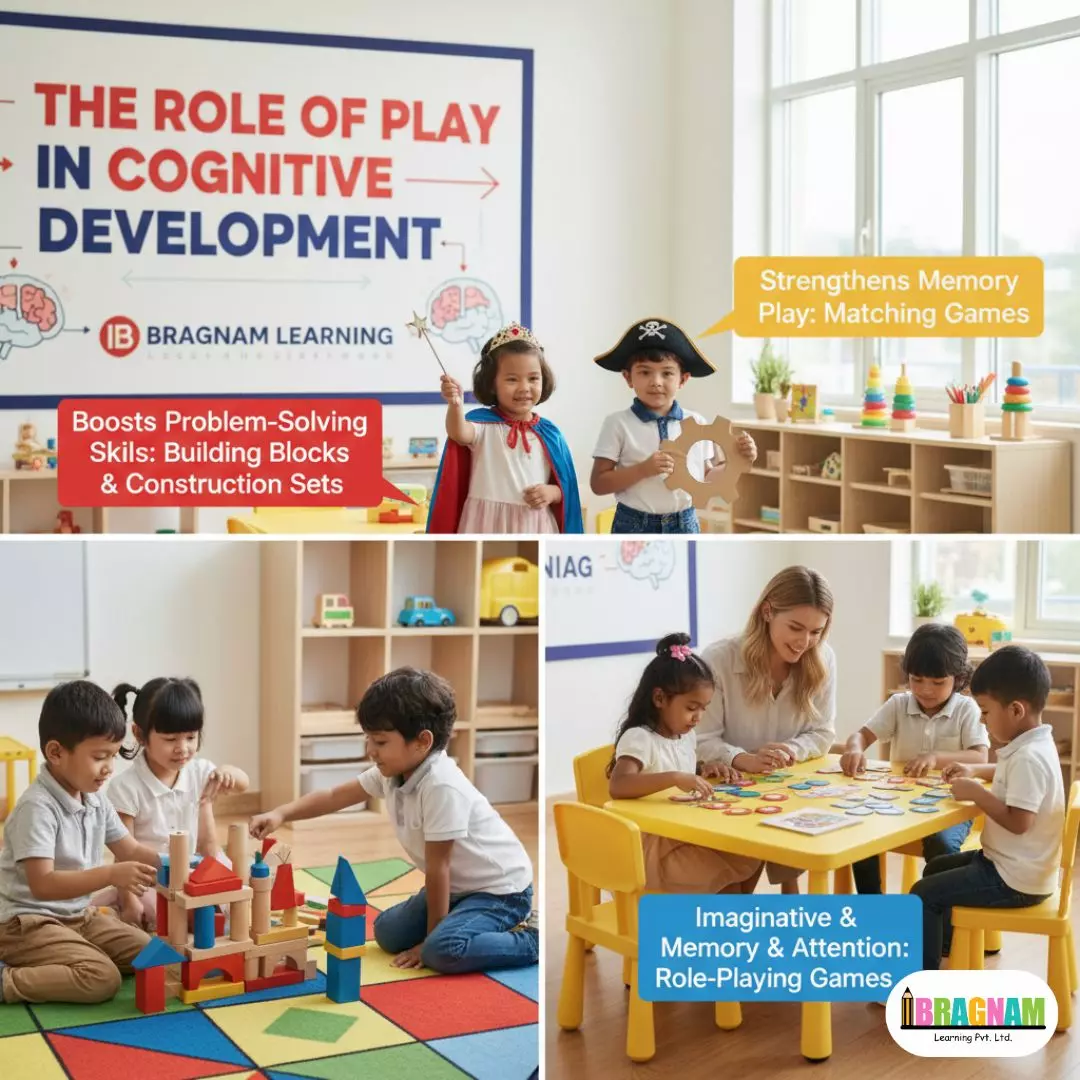
  • Enhances Critical Thinking: Through play, children face challenges that require mental flexibility and decision-making.

  • Boosts Problem-Solving Skills: Puzzles, building blocks, and imaginative scenarios teach children to formulate strategies and experiment with solutions.

  • Fosters Creativity: Imaginative play encourages children to think beyond the obvious and invent new ideas.

  • Strengthens Memory and Attention: Games that require focus and recall help develop working memory and sustained attention span.

  • Develops Executive Functions: Activities like role-playing and strategic games help develop planning, organizing, and self-regulation abilities.

How Play Promotes Cognitive Growth

Imaginative and Pretend Play

Pretend play allows children to use their imagination to explore social roles, experiment with different perspectives, and solve complex problems within a safe, flexible framework. This type of play enhances critical thinking and creativity.

Problem-Solving and Exploration

Whether building with blocks or navigating obstacle courses, play encourages active exploration and experimentation. Children learn cause-and-effect relationships and develop spatial awareness, all while having fun.

Social Interaction During Play

Collaborative games and group play foster communication skills, cooperation, and perspective-taking, which are crucial components of cognitive and emotional development.

Physical Play and Brain Development

Outdoor and physical play positively impact brain regions like the hippocampus, improving memory and attention capabilities. Fine and gross motor skills developed through play also support cognitive processes.

Practical Play Activities for Cognitive Development

Here are some play activities that promote cognitive growth:

  1. Building Blocks and Construction Sets: Encourage spatial thinking and problem-solving.

  2. Role-Playing Games: Boost creativity, language, and social understanding.

  3. Memory and Matching Games: Enhance focus and working memory.

  4. Puzzle Solving: Develop reasoning and critical thinking.

  5. Outdoor Exploration: Stimulate curiosity and observational skills.

Conclusion

Play is essential for nurturing cognitive skills in early childhood. It provides children with the freedom to explore, imagine, and solve problems, equipping them with critical thinking and lifelong learning abilities. At Bragnam Learning, we are committed to integrating meaningful play experiences into our playschool curriculum, ensuring every child thrives cognitively while having fun.

FAQ

Q1: How does play improve a child’s brain function?
Play stimulates various brain areas by encouraging problem-solving, creativity, and memory, resulting in stronger neural connections and better cognitive abilities.

Q2: What types of play are best for cognitive development?
Imaginative play, problem-solving games, physical play, and social interactive play all contribute uniquely to developing different cognitive skills.

Q3: How often should children engage in play for optimal cognitive benefits?
Daily playtime, both structured and unstructured, is ideal to support continuous cognitive growth.

Q4: Can digital play support cognitive development?
When used appropriately, educational games and apps can complement traditional play but should not replace physical and social play experiences.

Q5: How can teachers and parents encourage play that supports learning?
By providing diverse, age-appropriate materials, encouraging exploration, and participating in play, adults can create enriching environments that foster cognitive development.
Children’s Day: Meaning, Activities, and Celebration Tips for Playschools

By |2025-11-11T13:48:58+05:3011 November 2025|Blog|

Children’s Day: Honoring Young Hearts and Bright Futures

Children’s Day

Introduction: Celebrating the Joy of Childhood

Children’s Day, observed every year on November 14 in India, is more than a celebration—it’s a heartfelt tribute to the energy, innocence, and potential of young minds. Rooted in the birth anniversary of Pandit Jawaharlal Nehru, our first Prime Minister, Children’s Day reminds us that the way we nurture children today shapes the future we want to see. Schools, parents, and communities come together to craft memorable experiences that not only bring joy but also foster values, education, and creativity.

Why Do We Celebrate Children’s Day?

The Legacy of “Chacha Nehru”

Pandit Jawaharlal Nehru was fondly known as “Chacha Nehru” due to his deep affection for children. He believed that children represented hope for a brighter tomorrow, famously saying, “Today’s children will make the India of tomorrow.” Commemorating his birthday on November 14 serves as a gentle reminder of the importance of nurturing young minds through love, learning, and play.

Promoting Education and Well-being

Children’s Day is dedicated to raising awareness about children’s rights, welfare, and education. On this day, schools organize events that not only entertain but also impart important lessons about kindness, respect, safety, and the value of every child’s unique abilities.

Fun Ideas to Celebrate Children’s Day in Playschools and Homes

Indoor Activities

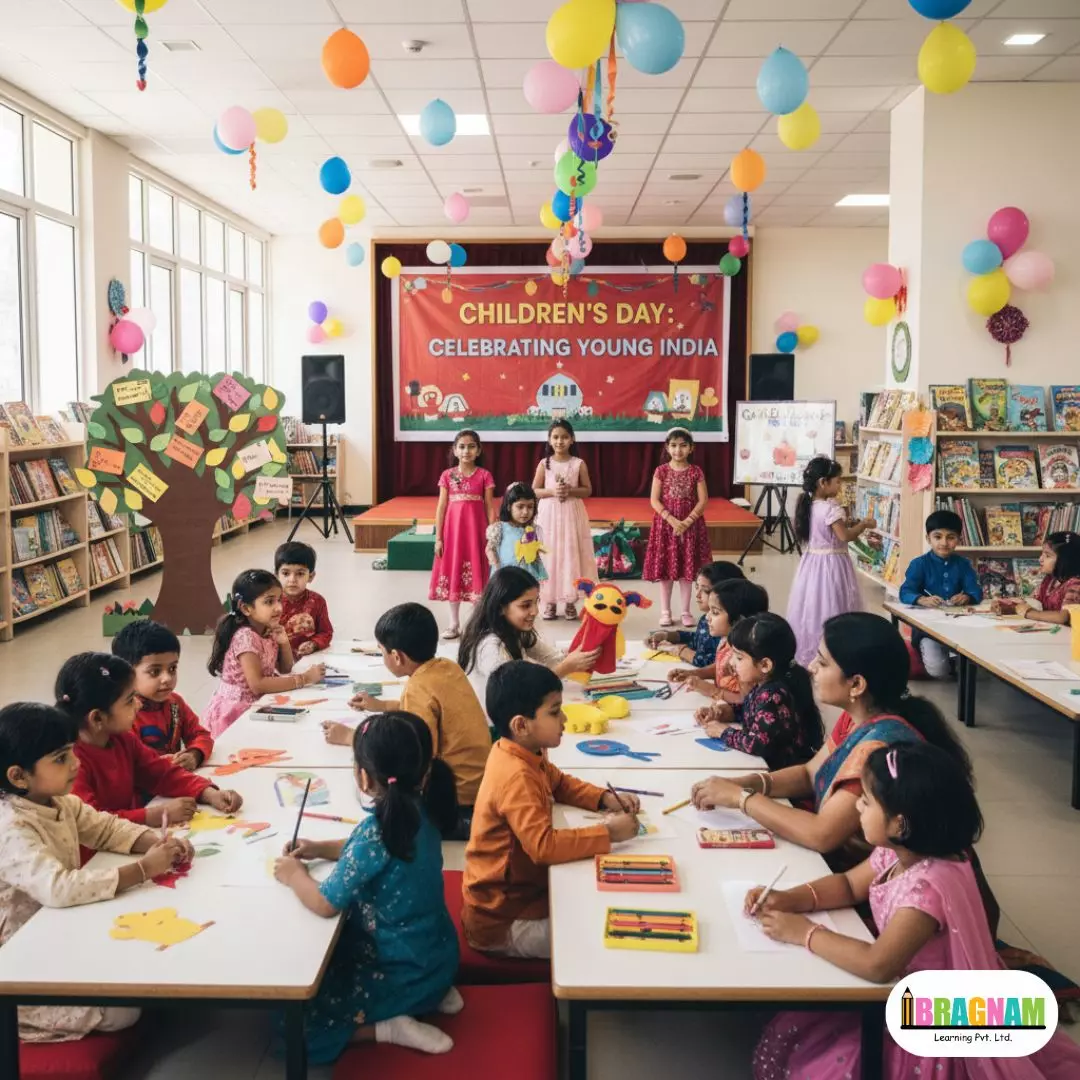
  • Storytelling Sessions: Share fairy tales, folk stories, or inspirational childhood anecdotes. Use puppets, costumes, or role-play to make the experience interactive.​

  • Art and Craft Workshops: Set up creative corners for making greeting cards, paper flowers, animal masks, or drawing their “dream world.” Display their artwork in an exhibition for parents to admire.​

  • Movie Time: Organize movie screenings of child-friendly films to create a mini-cinema experience—complete with popcorn and cushions.​

  • Theme-Based Costume Parties: Let kids dress up as superheroes, favorite animals, or future professionals, fostering imagination and confidence.​

Outdoor Activities

  • Games and Sports: Enjoy sack races, relay races, musical chairs, and treasure hunts to promote teamwork and healthy competition.​

  • Music and Dance Party: Play lively and age-appropriate music for a memorable dance session or a freeze-dance contest.​

  • Talent Show: Let children shine by singing, dancing, reciting poems, or performing magic tricks and jokes.​

Social Awareness and Kindness

  • Kindness Tree: Each child writes a good deed they did or plan to do and hangs it on a “kindness tree,” promoting empathy and positive behavior.​

  • Community Service Drive: Older children can participate in donation campaigns, distributing sweets or books to underprivileged peers, teaching social responsibility.​

Creative Classroom and Home Decorations

  • Use balloons, handmade posters, and banners to make the environment festive.​

  • Arrange special snacks or potlucks featuring children’s favorite treats.​

  • Decorate reading corners and set up book fairs with colorful comics and activity books to encourage reading.​

The Significance of Play and Creativity

Celebrating Children’s Day with arts, sports, and imaginative play boosts cognitive and emotional development. Participation in creative activities equips children with vital skills: problem-solving, communication, teamwork, and resilience. It’s equally important to balance fun with learning to create experiences that shape their personalities and build enduring memories.​

How Playschools Can Make the Most of Children’s Day

  • Organize a parent-and-child workshop on a chosen theme for collaborative learning.

  • Set up talent showcases to celebrate every child’s unique strengths.

  • Encourage self-expression through themed art exhibitions or music sessions.

  • Display children’s work in newsletters or social media to boost their confidence.

Conclusion: A Brighter Tomorrow Starts Today

Children’s Day is more than festivities—it’s about building the foundation for healthy, creative, and compassionate individuals who will shape our future. By celebrating their curiosity, creativity, and spirit, we empower children to dream big and thrive. This November 14th, let’s make every child feel special and valued, inside and outside the classroom.

Frequently Asked Questions (FAQ) – Children’s Day

1. Why is Children’s Day celebrated on November 14 in India?

Children’s Day marks the birth anniversary of Pandit Jawaharlal Nehru, India’s first Prime Minister, honoring his love and vision for children.​

2. What are the best activities for Children’s Day in playschools?

Activities such as storytelling, art and craft, costume competitions, outdoor games, and talent shows create fun-filled learning experiences.​

3. How does Children’s Day benefit child development?

Children’s Day helps foster creativity, teamwork, empathy, and confidence while strengthening the bond between educators, parents, and children.​

4. Can Children’s Day celebrations be educational?

Absolutely! Integrating values through stories, mock parliaments, book fairs, and kindness activities ensures that the celebration is both enjoyable and enriching.​

5. What should be included in a Children’s Day event plan for schools?

Include a mix of indoor/outdoor games, creative workshops, music/dance, talent showcases, and community service for a well-rounded experience.

Arts and Crafts for Kids: Creative Projects and Benefits for Child Development | Balvatika Preschool

By |2025-11-10T13:55:45+05:3010 November 2025|Blog|

Arts and Crafts: Showcasing Creative Projects and Their Benefits for Child Development

arts and crafts for kids

Introduction

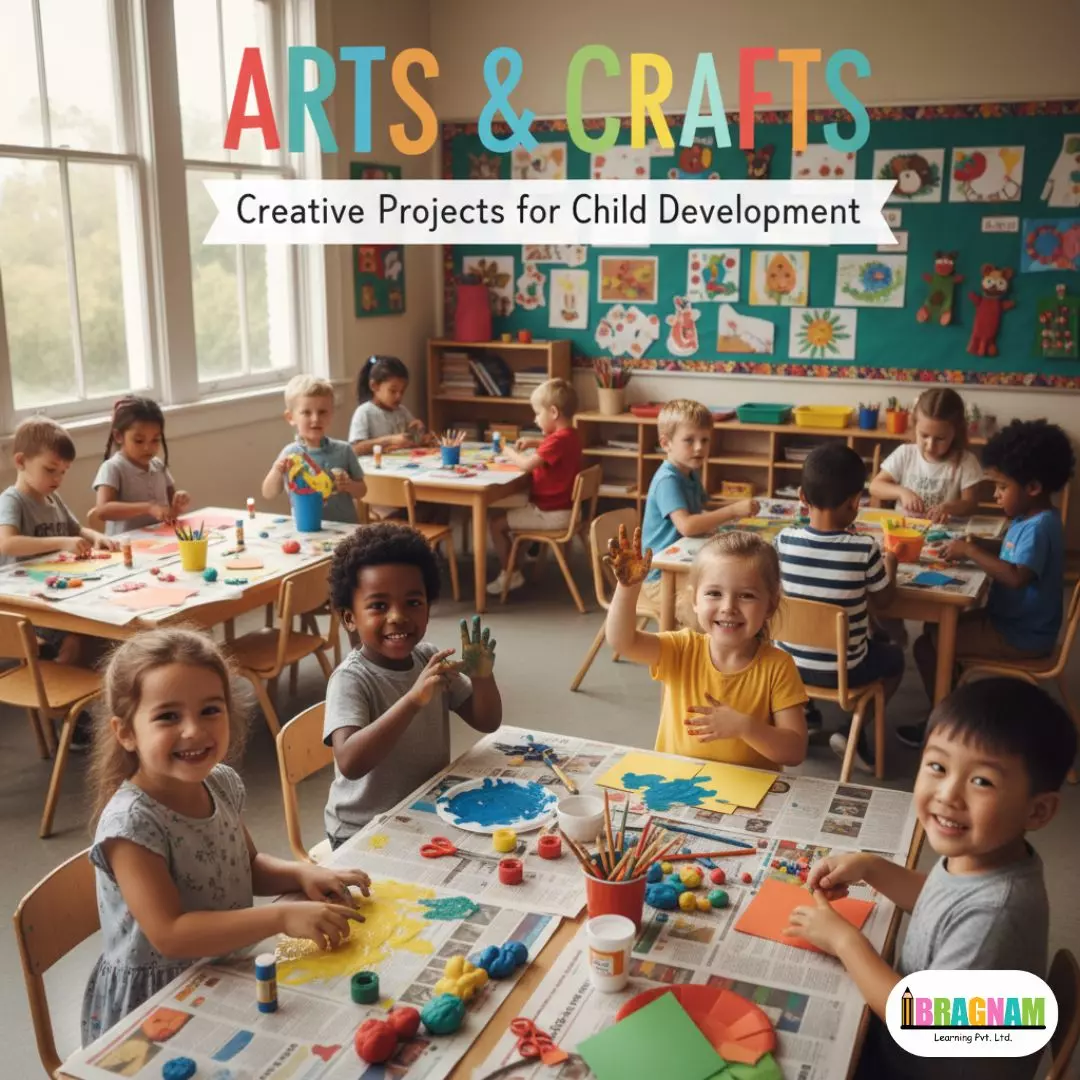
Arts and crafts are more than just fun classroom activities — they are essential tools that nurture imagination, emotional expression, and developmental growth in young children. Whether it’s painting, paper folding, or clay modeling, arts and crafts give children the freedom to explore, experiment, and express themselves in unique ways.

At Balvatika Preschool, we believe that creativity forms the foundation of learning. Every glue stick, crayon, and paintbrush helps shape not only art skills but also vital cognitive and social abilities.

In this blog, we’ll explore how arts and crafts projects boost child development, inspire creativity, and contribute to early learning success.

The Importance of Arts and Crafts in Early Childhood

1. Enhancing Fine Motor Skills

When children use scissors, hold crayons, or mold clay, they strengthen the small muscles in their hands and fingers. These fine motor skills are crucial for later tasks such as writing, tying shoelaces, and buttoning clothes.

Simple craft activities like cutting, gluing, and coloring significantly improve coordination and dexterity.

2. Encouraging Creativity and Imagination

Arts and crafts encourage kids to think beyond boundaries. When a child paints the sky pink or draws a green sun, it’s not a mistake—it’s creative freedom. These experiences build confidence and imagination, which later enhance problem-solving and innovation skills.

3. Boosting Cognitive Development

Through creative projects, children learn about colors, shapes, patterns, and sizes. They begin to understand sequencing (step-by-step processes) and develop planning and organization skills.

For example:

  • Mixing colors helps them understand cause and effect.

  • Following craft instructions improves memory and comprehension.

4. Supporting Emotional Expression

Arts and crafts offer children a safe outlet to express feelings. Whether happy, sad, or excited, their emotions often reflect in their artwork. Teachers and parents can use this to understand a child’s emotional state and offer appropriate support.

5. Building Social and Communication Skills

Group activities such as collage-making or team murals teach children cooperation, sharing, and patience. As they discuss ideas or exchange materials, they naturally improve communication and teamwork skills—vital for social development.

Creative Arts and Crafts Ideas for Preschoolers

At Balvatika Preschool, we integrate creativity into daily routines. Here are some fun and developmental arts and crafts ideas you can try at home or in class:

🎨 1. Finger Painting Fun

Let children explore textures and colors using their fingers. It enhances sensory awareness and fine motor control.

✂️ 2. Paper Plate Animals

With simple materials like plates, glue, and paper cutouts, kids can make lions, elephants, or birds—boosting imagination and hand-eye coordination.

🌿 3. Nature Collage

Collect leaves, flowers, and twigs to create art. It helps children connect with nature while being creative.

🧩 4. Recycled Crafts

Use old boxes, bottles, and cartons to create robots or castles. This teaches environmental awareness along with creativity.

🖍️ 5. Clay Modeling

Perfect for tactile learning—clay allows children to shape ideas into reality, improving both focus and creativity.

🌟 Top Benefits of Arts and Crafts for Child Development

Development AreaBenefits
CognitiveEnhances memory, sequencing, and problem-solving
PhysicalDevelops motor skills and coordination
EmotionalPromotes expression and confidence
SocialEncourages teamwork and sharing
CreativeBuilds imagination and innovation

How Teachers and Parents Can Encourage Arts and Crafts

  • Create a craft corner at home or school with safe materials.

  • Display children’s artwork to boost their confidence.

  • Involve kids in festivals and theme-based art like Diwali lamps or Christmas decorations.

  • Appreciate effort, not perfection. Praise creativity rather than neatness.

  • Rotate art activities weekly to maintain excitement and curiosity.

Conclusion

Arts and crafts are not just about making pretty things—they are about building minds, emotions, and skills. Every paint stroke and paper fold shapes a child’s personality and helps them grow holistically.

At Balvatika Preschool, we integrate art into our learning programs to ensure that every child develops confidence, curiosity, and creativity. Through hands-on experiences, children not only learn art but also life skills that last forever.

Enroll your child in Balvatika Preschool today and let them explore a colorful world of imagination and growth!

FAQs on Arts and Crafts for Child Development

1. Why are arts and crafts important in early childhood education?

They help children express emotions, develop creativity, improve motor skills, and build confidence—all essential for early development.

2. What skills do arts and crafts improve in children?

Arts and crafts enhance fine motor skills, hand-eye coordination, problem-solving, social interaction, and emotional intelligence.

3. How often should preschools include art activities?

Ideally, daily! Even short, simple art sessions keep children engaged and foster continuous creative growth.

4. Can arts and crafts improve academic learning?

Yes! Craft activities enhance focus, memory, and logical thinking, which positively affect literacy and numeracy skills.

5. How can parents encourage art at home?

Provide accessible art materials, create a small craft area, and allow free exploration without focusing on perfection.

Montessori vs. Traditional Education: Key Differences & Advantages

By |2025-11-10T12:48:08+05:3010 November 2025|Blog|

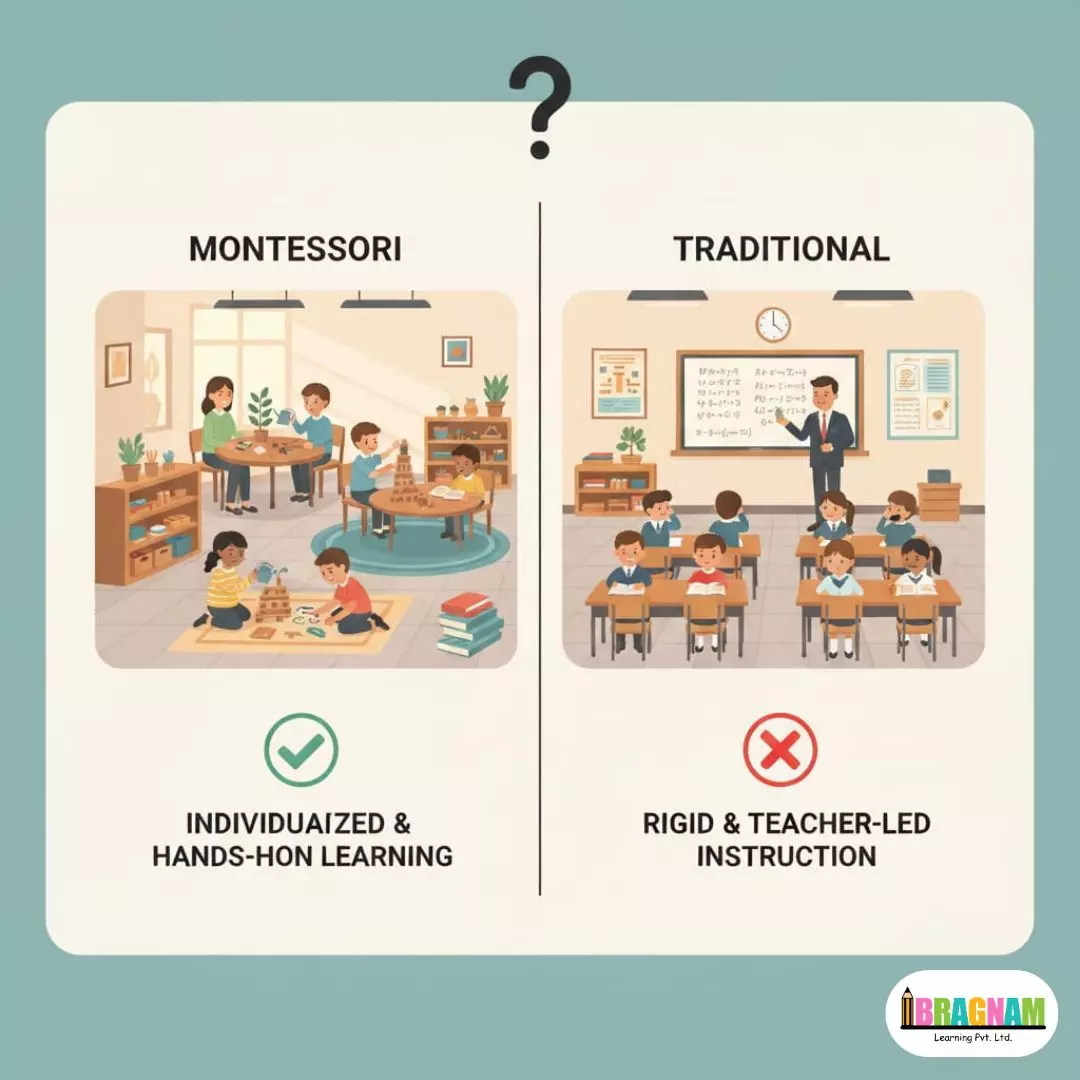
Montessori vs. Traditional Education: Compare and Contrast the Two Approaches, Highlighting the Advantages of Montessori

Montessori vs. Traditional Education

Introduction

Choosing the right educational approach for young children is a pivotal decision for parents and educators. The ongoing debate between Montessori and traditional education often arises when planning a child’s future. Both systems have their strengths and challenges, but Montessori is increasingly gaining favor for its child-centered and adaptive teaching methodologies. This article thoroughly explores both Montessori and traditional education, directly comparing their philosophies, methodologies, classroom environments, and outcomes, while highlighting why Montessori offers unique advantages for today’s learners.

Understanding Montessori and Traditional Education

What is Montessori Education?

Montessori education, established by Dr. Maria Montessori, centers on fostering natural development, self-paced learning, and child-led discovery. Classrooms are designed as nurturing spaces where children are active participants, encouraged to explore, investigate, and master lessons individually, guided by teachers who act as facilitators rather than direct instructors. Montessori focuses on:

  • Individualized learning plans suitable for unique developmental stages.

  • Mixed-age classrooms for holistic social and leadership growth.

  • Hands-on, sensory-rich activities emphasizing practical life skills and self-directed exploration.

  • Emotional and social development through collaborative environments.

What is Traditional Education?

Traditional education typically features a fixed curriculum, teacher-led instruction, and uniform lesson delivery. Students progress through predefined schedules, with emphasis on memorization and standardized assessments. Key characteristics include:

  • One-size-fits-all approach.

  • Age-specific, single-grade classrooms.

  • Rote memorization, focus on exams, and theoretical learning.

  • Competitive environment geared toward grades and external validation.

Key Differences Between Montessori and Traditional Education

Learning Style and Curriculum

  • Montessori: Learning is self-paced, tailored to individual needs, and driven by the child’s interests. The curriculum adapts as children progress, allowing for deep, enjoyable understanding.

  • Traditional: Lessons are uniform, taught at the same pace for all. Curriculum is predetermined, with little flexibility for personal needs or interests.​

Role of the Teacher

  • Montessori: Teachers act as guides or facilitators, encouraging autonomy and independence.

  • Traditional: Teachers are the primary authorities, directing learning and maintaining class discipline.​

Classroom Setup

  • Montessori: Mixed-age groupings foster peer learning, leadership, and empathy. The environment encourages individual and small group work.

  • Traditional: Children are grouped by age/grade, moving through content collectively, with limited peer interaction across ages.​

Assessment and Feedback

  • Montessori: Focuses on qualitative observations and portfolio-based assessments. Emphasis is on personal progress and self-reflection.

  • Traditional: Relies on quantitative testing, exams, and grades. Feedback is often standardized and externally motivated.​

Advantages of Montessori Education

Individualized Learning

Montessori offers a “follow the child” approach, allowing each child to progress at their own pace, receive personal attention, and explore according to their readiness. This stimulates confidence, creativity, and love for learning.​

Holistic Development

The approach addresses cognitive, emotional, social, and physical growth—ensuring learners develop problem-solving abilities, independence, and adaptability for lifelong learning.​

Active, Engaged Learners

Students use hands-on materials, learn through discovery, and engage in practical life tasks that build self-esteem and real-world skills—leading to better academic and social outcomes compared to passive learning environments.​

Strong Social Skills and Empathy

Montessori’s mixed-age, collaborative setup nurtures empathy, leadership, and community participation, as children interact across ages and support each other’s learning.​

Lifelong Curiosity and Love for Learning

Self-paced, interest-driven activities cultivate curiosity, resilience, and intrinsic motivation, preparing children for future academic and real-world challenges.

Advantages and Limitations of Traditional Education

Structure and Efficiency

Traditional systems are structured and efficient for information transmission, offering predictable routines and assessment schedules. However, they may struggle to accommodate diverse learning needs, often leading to disengagement for non-standard learners.​

Preparation for Testing

The emphasis on exams can enhance focus on theoretical standards, but may stifle creativity and real-world application of knowledge.​

Socialization within Limits

While single-grade classrooms facilitate age-equivalent socialization, they may limit leadership growth and peer mentorship opportunities seen in Montessori.​

Limited Real-World Relevance

Traditional settings often prioritize memorization over exploration, making students less prepared for practical life and adaptive problem solving.​

FeaturesMontessori EducationTraditional Education
Learning ApproachChild-centered, individualized, hands-onTeacher-led, one-size-fits-all, theoretical
Curriculum FlexibilityAdapts to child’s interests and paceFixed and predetermined
Teacher’s RoleFacilitator and guideAuthority and instructor
AssessmentObservational, portfolio-basedExams, grades, standardized testing
Social EnvironmentMixed-age, peer learning, collaborationAge-specific, competitive, limited peer interaction
Focus of DevelopmentHolistic (cognitive, social, emotional, physical)Academic-heavy, less on social-emotional skills
AdaptabilityHighly adaptable, embraces diversityLess adaptable, structured learning path
MotivationIntrinsic, discovery, curiosity-drivenExtrinsic, grades and validation-driven

Montessori in Practice: Real-World Benefits

  • Enhanced independence, confidence, and adaptability for academic and life situations.​

  • Stronger social and emotional skills backed by research on classroom outcomes.​

  • Integration of academics with purposeful, meaningful work beyond rote memorization.​

  • Support for lifelong learning habits recognized internationally.​

FAQ

Q1: What makes Montessori education different from traditional methods?
Montessori uses child-led, individualized learning approaches, while traditional systems rely on teacher-led, uniform lesson delivery and standardized assessments.​

Q2: Are Montessori students better prepared for real-world challenges?
Yes, Montessori fosters critical thinking, adaptability, and problem-solving through practical life skills and self-directed exploration.​

Q3: Can Montessori education help children struggling in traditional settings?
Montessori’s adaptable curriculum and personalized attention often benefit students who find rigid systems challenging.​

Q4: Which approach supports better social skills development?
Montessori’s mixed-age, collaborative environment enhances empathy, leadership, and community feeling, while traditional systems may promote competition.​

Q5: Is Montessori a good fit for all children?
Most children benefit from Montessori’s holistic and flexible approach, but some may prefer structure and familiarity provided by traditional methods.

Conclusion

Montessori and traditional education each offer distinct frameworks for nurturing children. While traditional schooling provides routine and structure, its inflexibility can hinder engagement and holistic growth for some learners. Montessori, in contrast, excels in nurturing curiosity, independence, and social-emotional skills through adaptive, child-centered practices. As lifelong learning and real-world readiness become essential, Montessori stands out as a forward-thinking choice for early childhood education. Consider the unique needs and personality of your child when making education decisions, and explore opportunities to integrate Montessori principles for a brighter future.

Montessori Activities for Different Age Groups: Ideas for Toddlers, Preschoolers & Elementary

By |2025-11-07T11:49:34+05:307 November 2025|Blog|

Montessori Activities for Different Age Groups: Activity Ideas for Toddlers, Preschoolers, and Early Elementary-Aged Children

Montessori Activities for Different Age Groups

Introduction: The Montessori Journey for Every Age

When it comes to nurturing curiosity and independence in children, the Montessori method shines as a gold standard for early education. Montessori activities for different age groups are designed to foster hands-on learning, self-direction, and joyful discovery, setting the foundation for successful learning both inside and outside the classroom. Whether you’re a parent, teacher, or franchise owner looking to enrich your environment, understanding which Montessori activities suit toddlers, preschoolers, and early elementary-aged children is crucial for optimal development. In this guide, discover tailored Montessori activity ideas that are easy to set up, engaging, and developmentally appropriate for each age group.

Why Choose Montessori Activities?

  • Promote independence and confidence in children

  • Support hands-on, sensorial learning experiences

  • Foster real-world skills through play and exploration

  • Adaptable to both home and classroom settings

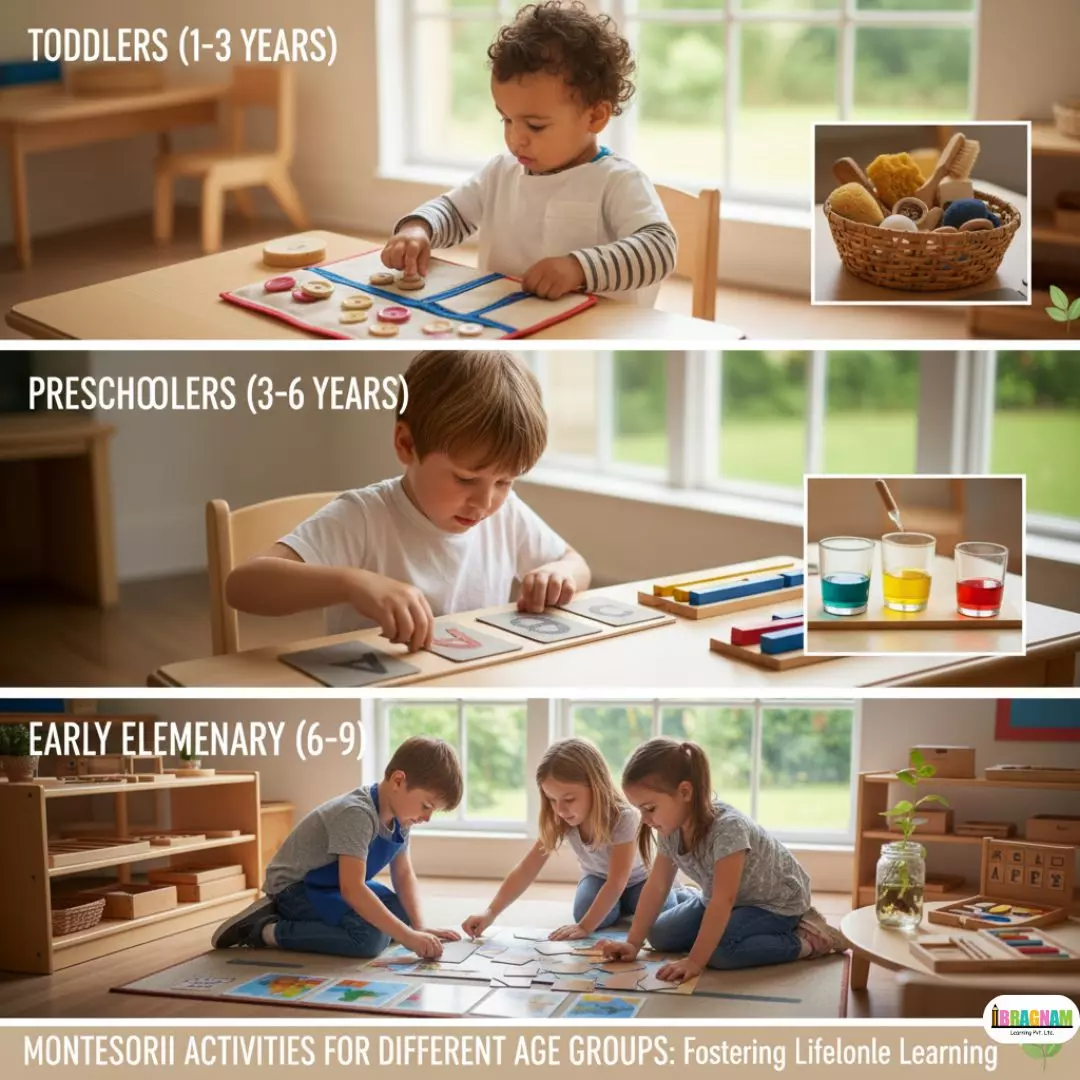
Montessori Activities for Toddlers (Ages 1–3)

What Toddlers Need

At this stage, children are developing gross and fine motor skills, exploring with their senses, and learning to interact with the world around them.

Top Montessori Activity Ideas for Toddlers

1. Object Permanence Box

Helps children understand that objects exist even when out of sight.

  • Simple box with a hole and a tray

  • Child drops a ball through the hole, watches it reappear

2. Stacking and Sorting

Promotes coordination and problem-solving.

  • Wooden stacking rings or large sorting trays

  • Encourage sorting by color, size, or shape

3. Practical Life: Water Pouring

Builds hand strength and concentration.

  • Two small pitchers and a tray

  • Child practices pouring water from one to the other

4. Buttoning and Zipping Boards

Develops fine motor skills essential for dressing

  • Cloth boards with large buttons and zippers

  • Supervised practice

5. Treasure Baskets

Stimulates sensory exploration.

  • Fill a basket with safe household objects (wooden spoons, sponges)

Montessori Activities for Preschoolers (Ages 3–6)

What Preschoolers Need

This age group is hungry for practical experiences, language development, math concepts, and creative expression.

Key Montessori Activity Ideas for Preschoolers

1. Sandpaper Letters

Supports early literacy and tactile learning.

  • Tracing rough-textured letters with fingertips

  • Reinforces letter recognition and sounds

2. Color Mixing with Water

Expands science knowledge in a hands-on way.

  • Transparent cups, primary-color water

  • Allow children to mix and observe new colors

3. Counting Beads and Number Rods

Introduces early math and quantity concepts.

  • Bead stairs or colored rods for counting routines

  • Simple addition/subtraction

4. Nature Sorting Walk

Connects learning with the outdoors

  • Collect leaves, rocks, or flowers, then sort by type or color

5. Practical Life: Table Washing

Teaches responsibility and order.

  • Child-sized cleaning tools

  • Encourage careful, systematic cleaning tasks

Montessori Activities for Early Elementary-Aged Children (Ages 6–9)

What Early Elementary Learners Need

Children in this bracket are ready for more abstract thinking, collaborative work, and research projects.

Top Montessori Activity Ideas for Early Elementary

1. Timeline of Life

Fosters historical and scientific understanding.

  • Create a timeline with drawings or printouts

  • Discuss different eras and animal life

2. Geometry Cabinet and Shape Cards

Explores geometry concepts through hands-on manipulation.

  • Wooden geometric shapes, matching cards, labels

3. Maps and World Puzzles

Builds geography awareness.

  • Large map puzzles or globes

  • Challenge kids to match countries, continents, flags

4. Botany Experiments

Encourages scientific observation and curiosity.

  • Grow beans in a jar, observe root and shoot development

  • Keep a plant journal

5. Creative Writing Prompts

Fuels literacy and imagination.

  • Provide story starters

  • Children illustrate and write their own tales

Benefits of Montessori Activities Across Age Groups

  • Encourage self-paced exploration and mastery

  • Support holistic development—physical, cognitive, emotional

  • Easily adaptable for home, school, or franchise settings

  • Foster a lifelong love of learning

FAQ: Montessori Activities for Different Age Groups

1. What Are Some Simple Montessori Activities for Home?

Try treasure baskets for toddlers, color mixing with water for preschoolers, and geography puzzles for elementary-aged children—each activity needs minimal setup and materials, but delivers big learning outcomes.

2. How Often Should I Rotate Montessori Activities?

Refresh trays and activities every 1–2 weeks to maintain novelty and challenge—observe your child’s interests and adapt accordingly.

3. Are Montessori Activities Suitable for Children With Special Needs?

Absolutely! Montessori methods can be tailored to various learning styles and needs, fostering inclusion and independence.

4. Can I Use Everyday Materials for Montessori Activities?

Yes, household items such as pouring pitchers, sponges, and sorting containers work perfectly for setting up Montessori-inspired lessons.

Conclusion: Spark Lifelong Learning With Montessori Activities

No matter your child’s age, Montessori activities for different age groups offer a practical, enjoyable way to support development and independence while nurturing innate curiosity. By introducing well-chosen Montessori methods at each stage, parents and educators can foster essential life skills, build confidence, and cultivate a joy for lifelong learning. Try implementing these age-appropriate activities today and watch young learners thrive—whether at home or in the classroom.

Ready to bring the Montessori method to your school or home? Explore more resources, join our community, and contact us for personalized support in implementing effective Montessori activities for every age group!

Seasonal Activities: Holiday Themed Crafts, Games & Events for Playschool Franchises by Bragnam

By |2025-11-06T11:30:59+05:306 November 2025|Blog|

Seasonal Activities: Holiday Themed Crafts, Games, and Events

holiday themed crafts

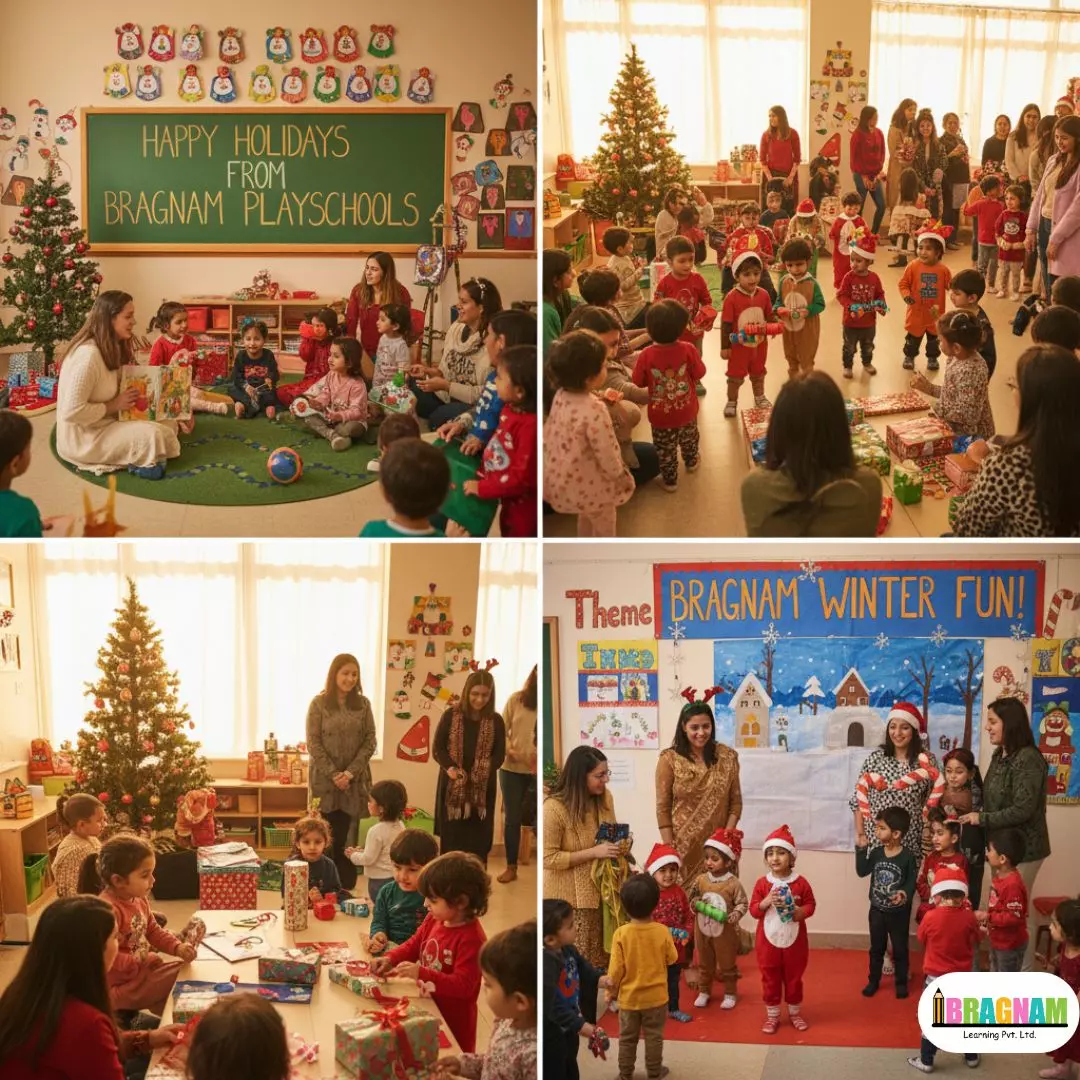
As the holiday season approaches, it’s the perfect time for preschool franchises to create magical, engaging, and educational experiences for little learners. Seasonal activities centered around holiday themes not only captivate young minds but also foster creativity, social skills, and joyful memories. At Bragnam, we believe in empowering our playschool franchises with a variety of fun and accessible ideas that make this season truly special.

Whether it’s crafts that build fine motor skills, games that spark laughter, or festive events that bring communities together, holiday-themed activities are a wonderful way to enrich the preschool experience. Here’s a comprehensive guide from Bragnam packed with ideas you can easily implement across all franchises.

Holiday Themed Crafts to Spark Creativity

Crafts encourage children’s imagination, strengthen hand-eye coordination, and give them a sense of pride in creating something special. Here are some classic and easy holiday crafts perfect for preschoolers:

Christmas Crafts

  • Salt Dough Ornaments
    Mix flour, salt, and water to create dough for crafting ornaments. Use cookie cutters to shape stars, trees, or other festive symbols, bake until hard, then decorate with paint and glitter. These ornaments are keepsakes kids love to gift or hang at home.

  • Paper Plate Christmas Trees
    Cut a paper plate into a triangle and let children paint it green. Decorate with pom-poms, stickers, or buttons for a colorful tree that’s easy to make and delightful to display.

  • Handprint Reindeer Cards
    Use brown paint for handprints on paper as reindeer faces. Add googly eyes, red pom-pom noses, and draw antlers. This craft combines creativity and keepsake charm for parents.

  • Pom-Pom Wreaths
    Create wreaths using cardboard rings and glue pom-poms in holiday colors around the base. It’s a fun, tactile experience encouraging focus and patience.

  • Cotton Ball Snowmen
    Glue cotton balls on paper snowman outlines for a fluffy, sensory-friendly craft. Add paper details for faces and scarves to complete the look.

Natural and Sensory Crafts

  • Pinecone Ornaments
    Collect pinecones and decorate with green paint, glitter, or beads for nature-inspired holiday décor.

  • Fake Snow Sensory Play
    Mix cornflour and baking soda with water to create moldable fake snow — ideal for sensory exploration and building mini snowmen indoors.

Festive Games to Encourage Movement and Social Skills

Holiday games are a great way to bring energy, teamwork, and laughter to your classrooms and events. Consider these easy-to-organize games:

  • Holiday Bingo
    Create bingo cards featuring holiday icons such as candy canes, snowflakes, and bells. Use festive markers like mini bells to engage kids.

  • Santa Says (Freeze Game)
    A seasonal twist on “Simon Says” where children freeze in poses like snowmen whenever “Santa says freeze,” combining fun with listening skills.

  • Candy Cane Hunt
    Hide candy canes around the classroom or playground for a scavenger hunt that excites and motivates children to explore.

  • Snowball Toss
    Have kids throw white pom-poms (“snowballs”) to knock down decorated tin cans painted as holiday characters. Points and prizes add to the fun.

  • Christmas Carol Charades
    Kids act out popular Christmas carols silently while peers guess. This encourages creativity and teamwork.

Holiday Events to Build Community and Celebrate Together

Hosting seasonal events can create memorable experiences for families and strengthen franchise community ties:

  • Santa Meet & Greet with Piñata Treats
    Arrange visits from Santa Claus paired with fun activities like piñata smashing to delight children and parents alike.

  • Winter Music and Dance Day
    Plan a day of winter-themed songs and dances where kids imitate falling snowflakes, gusty winds, or animals preparing for winter.

  • Holiday Craft Fair
    Organize a craft fair showcasing children’s holiday creations. Invite parents to view and purchase items for charity or franchise fundraising.

  • Festive Storytelling Circle
    Create cozy reading sessions with holiday tales, fostering literacy and seasonal joy.

  • Winter Sensory Exploration Stations
    Set up interactive stations with pine scents, fake snow, and textures like cotton balls or pinecones, stimulating children’s senses and curiosity.

FAQ: Holiday Themed Activities for Preschoolers

1. What are the benefits of holiday crafts for preschoolers?
Holiday crafts build fine motor skills, foster creativity and self-expression, and enhance sensory development through hands-on activities.

2. How can games be adapted for different age groups?
Adjust complexity by simplifying rules or providing more guidance for younger children while encouraging older preschoolers to lead or help peers.

3. Are natural materials good for holiday crafts?
Yes! Materials like pinecones and twigs connect children to nature and promote eco-friendly creativity.

4. How to involve parents in holiday activities?
Invite parents to holiday events, encourage participation in craft fairs, and provide take-home craft kits to extend learning beyond preschool.

5. How do holiday events benefit playschool franchises?
They enhance community engagement, build franchise visibility, and create positive experiences that attract and retain families.

Conclusion: Celebrate the Season with Bragnam

The holiday season is an ideal opportunity to infuse joy, creativity, and togetherness into your preschool franchise. By embracing these festive crafts, games, and events curated by Bragnam, franchises can deliver enriching experiences that delight children and families alike. Celebrate the spirit of the season with thoughtful activities that foster growth, community, and lasting memories.

Ready to bring holiday magic to your franchise? Start planning your seasonal activities today and watch your little learners shine!

Literacy and Language Development Tips for Playschool | Reading & Storytelling Activities for Preschool

By |2025-11-05T11:24:48+05:305 November 2025|Blog|

Literacy and Language: Tips on Reading, Storytelling & Language Development for All Our Playschool Franchises

literacy and language development

Introduction

Early literacy and language development are the foundation of every child’s learning journey. At playschool age, children absorb words, sounds, expressions, and stories faster than at any other stage of life. When teachers introduce reading, storytelling, and conversation habits early, children become confident communicators and curious learners.

This blog has been specially written for all Balvatika Playschool franchises and other early-learning centers to help parents and teachers build strong language development in children. From classroom activities to reading ideas and fun storytelling tricks, you’ll find simple, practical tips that work wonderfully in a preschool environment.

Why Literacy and Language Development Matters in Playschool

Language is not just about speaking—it is about expressing, thinking, understanding, and learning. Early literacy helps children:

  • Build confidence in communication

  • Improve vocabulary and pronunciation

  • Understand stories, events, and instructions

  • Become prepared for school-level academics

  • Strengthen imagination, creativity, and memory

Research shows that children who develop early reading and storytelling habits perform better in school and display strong social and emotional skills.

Tips for Improving Reading Habits in Preschool Children

1. Create a Reading-Friendly Environment

  • Add a colourful reading corner in the classroom

  • Include picture books, flashcards, storybooks, and alphabet charts

  • Display letters and words around the room

Children are naturally drawn to books when they are visible, colourful, and fun.

2. Keep Books at Kids’ Eye Level

Little ones cannot ask for what they cannot see. Place bookshelves low and within reach so children can pick and explore their favourite books independently.

3. Begin with Picture and Touch-and-Feel Books

Children love colours and textures. Start with:

  • Board books

  • Picture books

  • Pop-up books

  • Sensory books

These hold attention longer and build interest in reading.

4. Read Loudly and Slowly

Teachers should read:

  • With expressions

  • In different voices

  • At a slow pace

  • With pauses

This improves listening skills, word recognition and imagination.

Fun Storytelling Activities for Playschool

Storytelling is one of the best tools for literacy and language development. It helps children learn new words, understand emotions, and improve memory.

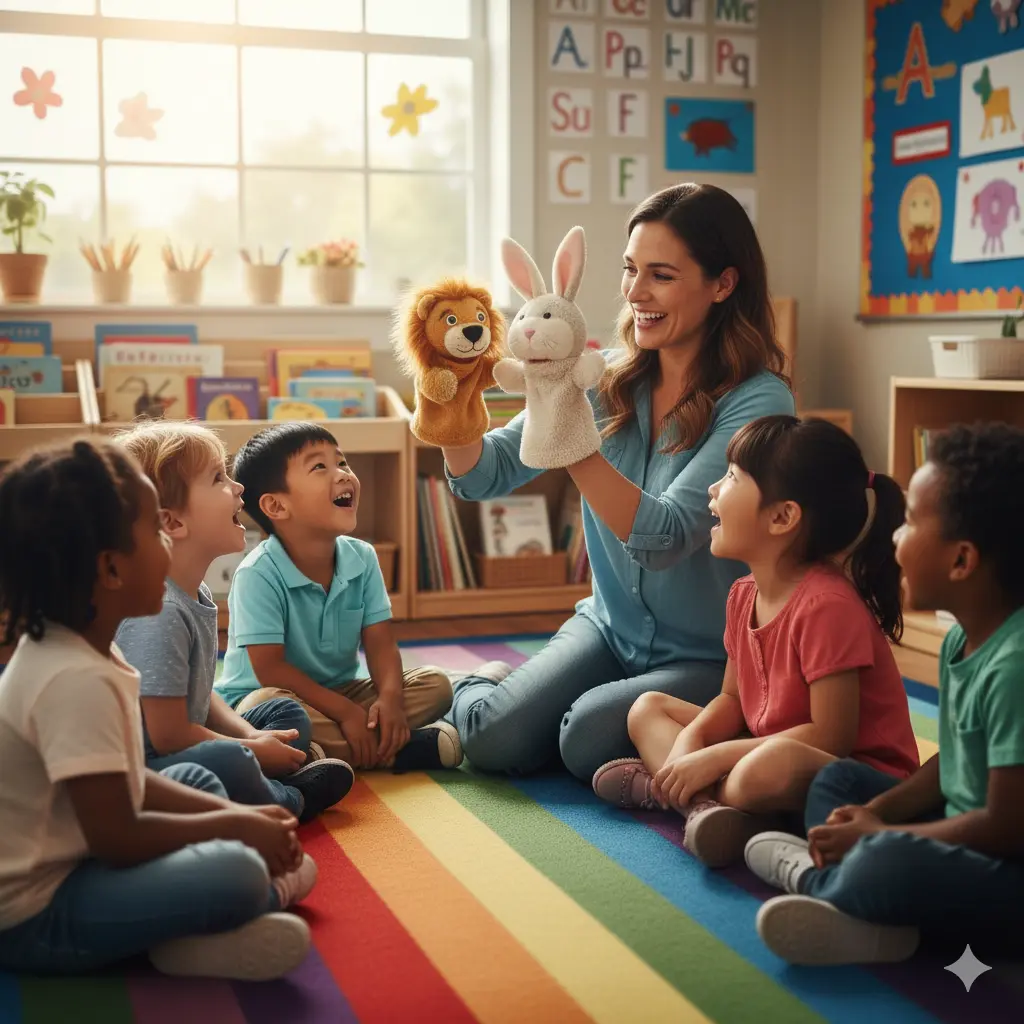
1. Puppet Storytelling

Use hand puppets, finger puppets or soft toys during storytelling. Children remember characters and sounds faster this way.

. Show-and-Tell Activity

A weekly activity where each child brings an object and speaks a sentence about it:

  • “This is my red car”

  • “I got this doll on my birthday”
    Helps build confidence, vocabulary and sentence formation.

3. Story with drama and action

Let children act like the story characters—

  • roaring like a lion

  • hopping like a rabbit

  • flying like a bird

This builds creativity and keeps them engaged.

4. Story Cards / Story Sequencing

Give children cards with pictures and ask them to place them in order.
This improves memory, logical thinking, and understanding of story flow.

How Teachers Can Build Language Skills Daily

Small daily habits create big learning outcomes. Teachers in all playschool franchises can follow these routine-based methods:

Use conversation during daily tasks

  • “Please keep the toy on the table”

  • “Let’s go to the playground”

  • “Can you count the crayons?”

Ask questions and encourage answers

  • What is this?

  • Who is your friend?

  • What colour is the apple?

Celebrate every small speaking effort
Never laugh at mistakes. Appreciation motivates children to speak more confidently.

Use rhymes and songs
Rhymes improve pronunciation, rhythm and vocabulary.

Daily “Word of the Day”
Teach one new simple word like: big, happy, run, ball, red.
Let children repeat it, draw it and use it in a sentence.

Tips for Parents to Support Language Development at Home

Preschools and parents must work together. Here are simple activities for home:

  • Read a bedtime story daily

  • Encourage children to speak full sentences

  • Reduce mobile screen time

  • Ask open-ended questions: “What did you do in school today?”

  • Teach children to greet: Good Morning, Thank You, Welcome

When children hear correct language at home, they learn faster.

Benefits of Early Literacy & Language Skills

  • Better listening skills

  • Faster learning in school

  • Better memory power

  • Improved social confidence

  • Strong imagination & creativity

  • Smooth transition to higher classes

Children who speak confidently also build better friendships and express themselves without fear.

Conclusion

Literacy and language development is not a one-day activity. It grows every day through reading, talking, storytelling, singing and playful conversations. All our playschool franchises should make reading corners, storytelling sessions and interactive language activities a regular part of classroom learning. When children speak confidently, they learn confidently.

Together, let’s build a generation of smart thinkers, happy readers and confident speakers.

FAQs

Q1. What is literacy and language development in playschool?
It refers to building early reading, speaking, listening and communication skills using stories, books, rhymes and conversations.

Q2. How can teachers improve language skills in preschool children?
By encouraging daily conversations, storytelling, rhymes, picture books, word games and open-ended questions.

Q3. Which books are best for toddlers and preschoolers?
Picture books, touch-and-feel books, board books, pop-up books and animal storybooks are best.

Q4. Why is storytelling important in preschool?
Storytelling improves imagination, vocabulary, emotional understanding and memory power.

Q5. How can parents help at home?
Read a bedtime story daily, reduce screens, encourage full sentences, and ask questions about school and day-to-day activities.

Healthy Habits for Young Children: Promote Balanced Eating, Exercise & Sleep

By |2025-11-17T14:01:59+05:304 November 2025|Blog|

Healthy Habits for Young Children: Promote Healthy Eating, Exercise, and Sleep

healthy habits for young children

Introduction

Establishing healthy habits for young children is essential for their overall well-being and growth. When kids develop routines around eating nutritious foods, engaging in physical activity, and getting quality sleep, they’re set up for lifelong success—physically, mentally, and emotionally. This article will explore easy strategies for parents and caregivers to encourage healthy eating, exercise, and sleep routines for children.​


Why Healthy Habits Matter for Young Children

Instilling healthy habits in childhood has long-term benefits. Good nutrition fuels growth and brain development, physical activity supports strong muscles and bones, and quality sleep boosts immunity and learning abilities. These pillars help maintain a healthy weight and prevent illnesses.​

Key points:

  • Healthy eating boosts immunity and supports healthy growth.​

  • Regular exercise promotes physical and emotional well-being.​

  • Restful sleep improves cognitive and physical health.​


Healthy Eating Habits for Kids

Make Nutritious Choices Fun

Children are naturally drawn to bright colors and fun activities, so make healthy eating enjoyable. Offer a variety of fruits and vegetables, whole grains, lean proteins, and low-fat dairy.​

  • Try “rainbow plates”—serve fruits and veggies in various colors.

  • Involve kids in meal prep; let them choose ingredients and help cook.

  • Make food interactive: build veggie faces on sandwiches or salads.

Smart Snacking Tips

Keep nutritious snacks handy for when hunger strikes:​

  • Fresh fruit (apples, bananas, berries)

  • Low-fat cheese with whole-grain crackers

  • Raw veggies with low-fat dip

  • Yogurt or applesauce

Managing Sweets & Portions

  • Treat sweet foods as occasional snacks, not daily staples.

  • Offer water and low-fat milk instead of sugary drinks.

  • Portion control: keep servings age-appropriate (e.g., meat = size of a deck of cards).​

How to Help Picky Eaters

  • Introduce new foods one at a time, paired with favorites.

  • Avoid pressuring kids; offer choices.

  • Encourage at least one bite (“try it” rule).

  • Stay patient—taste preferences evolve over time.​

Key Nutrition Tips

  • Read nutrition labels together and teach kids about healthy ingredients.​

  • Avoid foods high in added sugars, trans fats, and sodium.​


Encouraging Physical Activity

Children need at least 60 minutes of moderate-to-vigorous physical activity daily. Physical activity boosts academic performance, social skills, and emotional health.​

Easy ways to get moving:

  • Walk, run, or cycle with family after meals.

  • Organize playdates focused on outdoor games (tag, football, skipping).

  • Enroll kids in dance or sports classes.

  • Use music for short exercise sessions—make movement fun.

Limit screen time:
Aim for a balanced routine—no more than 1 hour of screen time for younger children per day (excluding homework).​


Building Good Sleep Habits

Sleep is the foundation for children’s growth—physically, emotionally, and mentally.​

Tips for restful sleep:

  • Set regular bed and wake times (even on weekends).

  • Create calming pre-bed routines (stories, quiet music, no screens).

  • Keep bedrooms cool, dark, and quiet.

  • Limit sugary foods and drinks near bedtime.

  • Encourage physical activity during the day for easier sleep at night.​

Recommended hours of sleep by age:

Age GroupRecommended Hours Nightly
3-5 Years10–13 hours ​
6–12 Years9–12 hours ​

Top 10 Everyday Healthy Habits for Children

  1. Eat breakfast daily.​

  2. Drink plenty of water instead of sugary drinks.

  3. Brush teeth twice a day.

  4. Wash hands before meals and after outdoor play.

  5. Bathe daily.

  6. Read something new every day.

  7. Play outside for an hour.

  8. Get enough sleep every night.

  9. Limit processed/fast food intake.

  10. Help with household chores to build responsibility.


Frequently Asked Questions (FAQs)

1. How can parents encourage healthy eating in children?

Parents can offer a variety of nutritious foods, involve kids in cooking, and model healthy eating themselves.​

2. How much physical activity do young children need daily?

At least 60 minutes of moderate-to-vigorous activity is recommended for most children.​

3. What are signs of poor sleep in children?

Irritability, trouble waking in the morning, mood swings, and problems with concentration may indicate poor sleep.​

4. What are healthy snacks for kids?

Fresh fruits, low-fat dairy, whole-grain crackers, raw veggies with dip, and yogurt are smart snack choices.​

5. How do healthy habits benefit children long-term?

Healthy habits support proper growth, immune function, academic success, and emotional resilience.​

Conclusion

Fostering healthy habits in your young children doesn’t have to be complicated—all it takes is a bit of creativity, consistency, and encouragement. By focusing on balanced meals, daily movement, and sleep routines, you’re giving your kids a powerful foundation for lifelong health and happiness. Start today and watch your children thrive!

Guru Purab Celebration at Bragnam: Special Message for All Playschool Franchises

By |2025-11-03T16:53:31+05:303 November 2025|Blog|

Celebrating Guru Purab: Bragnam’s Message to All Playschool Franchises

Guru purab

Introduction

Guru Purab is more than just a festival—it’s a celebration of wisdom, selfless service, and the spirit of learning, which beautifully aligns with the values we foster at Bragnam across our playschool franchises. As a company dedicated to early childhood education, we see Guru Purab as an opportunity to instill timeless values in our little learners and honor the contributions of teachers who act as modern-day Gurus. In this special blog, we explore the significance of Guru Purab, how Bragnam encourages its celebration, and how our playschool partners can integrate its teachings into daily learning.

What is Guru Purab?

Guru Purab, also known as Guru Nanak Jayanti, marks the birth anniversary of Guru Nanak Dev Ji, the founder of Sikhism. Celebrated with enthusiasm across India and among Sikh communities worldwide, this day is commemorated with prayers, processions, and acts of kindness. Guru Nanak’s teachings of equality, love, and selfless service remain universally relevant and especially impactful for young minds.

Why Do We Celebrate Guru Purab in Playschools?

  • Fostering values: Children learn about respect, compassion, and inclusivity.

  • Cultural awareness: Celebrating Guru Purab promotes India’s rich cultural diversity within our curriculum.

  • Community building: Engaging activities foster unity and collaboration among students, parents, and staff.

Celebratory Ideas for Guru Purab at Bragnam Playschools

1. Storytelling Sessions

  • Introduce Guru Nanak Dev Ji’s life and his key teachings through age-appropriate stories and visuals.

  • Encourage interactive Q&A to reinforce understanding.

2. Art & Craft Activities

  • Children can make creative paper lanterns, ‘Ek Onkar’ symbols, or greeting cards for family and teachers.

  • Host a drawing competition, encouraging themes like peace, kindness, and sharing.

3. Special Assemblies

  • Begin the day with a short prayer or meditation, fostering a peaceful environment.

  • Invite grandparents or community members to share stories or sing devotional songs.

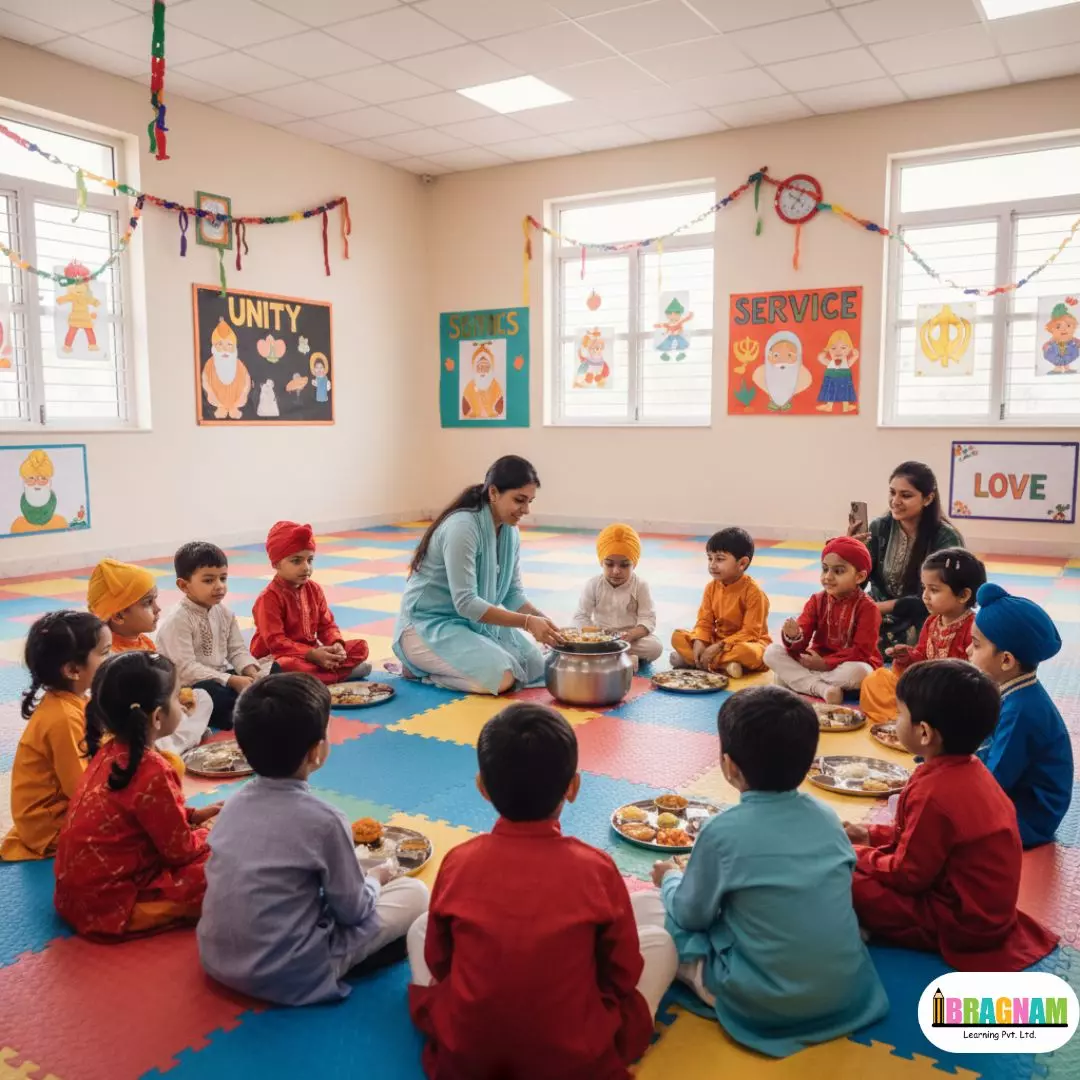
4. Langar-Inspired Snack Time

  • Organize a ‘shared meal’ where every child brings something small to share, teaching the value of community service and equality.

5. Acts of Kindness Challenge

  • Create a kindness wall where every child and staff member writes or draws one good deed they did in celebration of Guru Purab.

How Bragnam Supports Playschool Franchises for Guru Purab

  • Resource Kits: Ready-to-use lesson plans, activity guides, and creative materials distributed to all franchise partners.

  • Online Workshops: Interactive webinars for teachers on the significance of Guru Purab and classroom activity ideas.

  • Parental Engagement: Customizable e-mailers and newsletters to keep parents informed and involved in the celebration.

Integrating Guru Purab Values into Daily Learning

Guru Nanak’s teachings are not limited to one day. Here’s how Bragnam incorporates these messages year-round:

  • Inclusivity in Classrooms: Encouraging acceptance and support for all children, regardless of background.

  • Service-Oriented Projects: Student participation in simple community service projects, such as helping clean classrooms or collecting donations for those in need.

  • Daily Reflection: Implementing “Thought for the Day” based on kindness, sharing, and respect.

Engaging Parents and Community

Strong school-parent-community bonds are crucial in early childhood education.

  • Invite parents to talk about how they celebrate Guru Purab at home.

  • Share celebration highlights via blogs and newsletters.

  • Encourage at-home activities related to Guru Nanak’s teachings for holistic learning.

Frequently Asked Questions (FAQ)

1. Why is Guru Purab important for playschools to celebrate?

Answer: Guru Purab fosters core human values, introduces children to Indian traditions, and encourages early lessons in empathy, sharing, and respect.

2. How can teachers explain Guru Nanak’s teachings to preschoolers?

Answer: Use simple stories and relatable examples like sharing toys or helping friends to explain Guru Nanak’s core messages such as kindness and honesty.

3. Can non-Sikh children participate in Guru Purab events?

Answer: Absolutely! Guru Purab celebrates universal values that benefit all. At Bragnam, we promote inclusivity so every child can participate and learn.

4. What are some safe activities for young children on Guru Purab?

Answer: Activities such as art and craft, storytelling, group singing, and simple sharing tasks are safe and ideal for preschoolers.

5. How can parents continue Guru Purab’s values at home?

Answer: Encourage acts of kindness and sharing, read stories about Guru Nanak, celebrate diversity, and discuss the importance of doing good deeds daily.

Conclusion

Celebrating Guru Purab within the Bragnam franchise network is an opportunity to reinforce the foundational values central to early education. With activities tailored for young children, thoughtful teacher training, and engaged parent participation, together we build a nurturing, value-driven environment across all our playschools.

Let’s continue to inspire, educate, and make learning joyful—one celebration at a time!

5 Signs Your Child Is Ready for Preschool | Bragnam Learning

By |2025-10-29T14:37:32+05:3031 October 2025|Blog|

5 Signs Your Child Is Ready for Preschool

Your Child Is Ready for Preschool

Choosing the right time to send your child to preschool can be a big decision. It’s the first step toward structured learning, social interaction, and growing independence. While every child develops at a unique pace, there are a few signs that show your little one might be ready for this exciting milestone.

At Bragnam Learning, we’ve spent over a decade nurturing confident and curious learners through our play-based programs across India. Here are five clear signs your child may be ready to begin preschool.

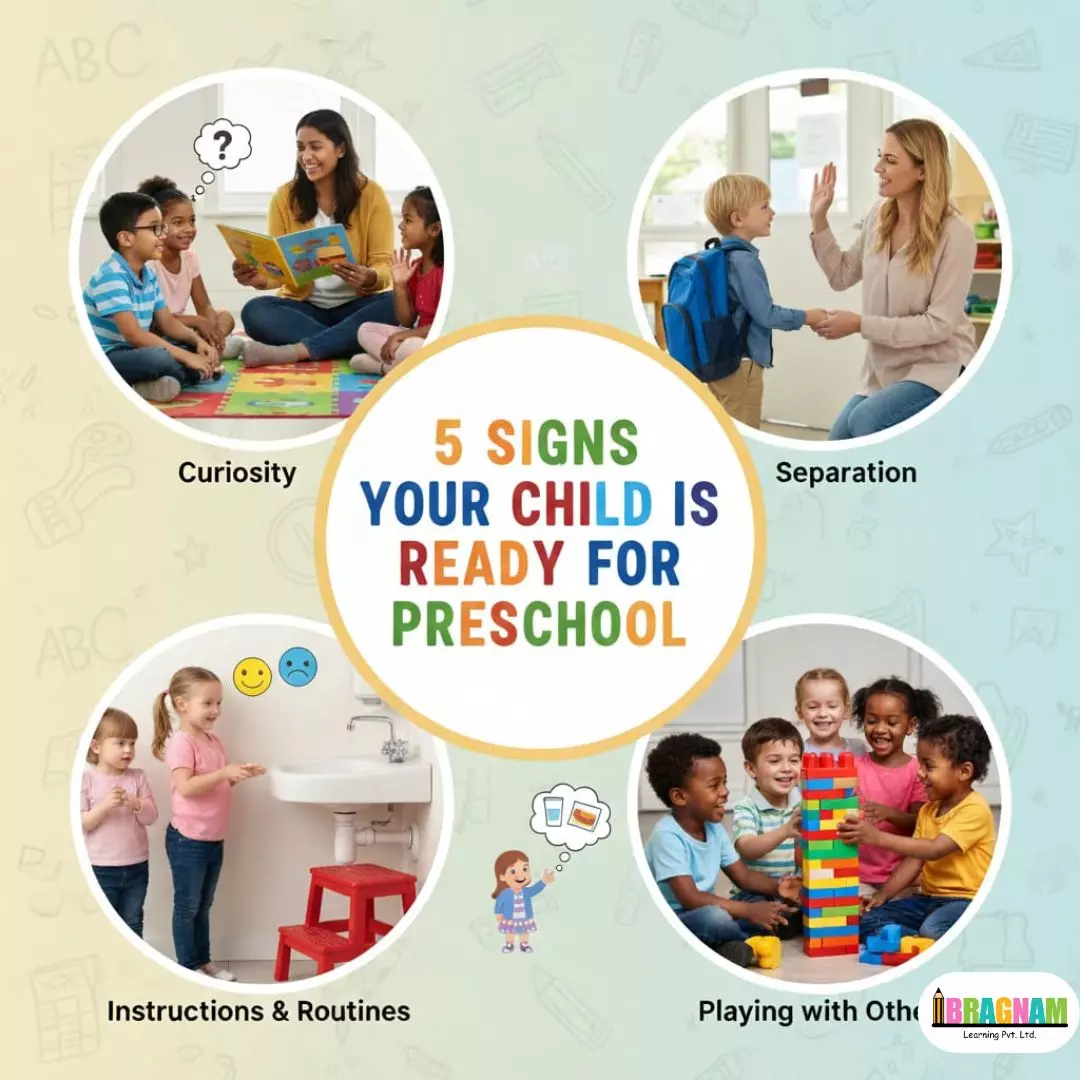
1. Your Child Shows Curiosity and Eagerness to Learn

Curiosity is a natural sign of preschool readiness. If your child loves exploring, asking questions, and observing the world around them, it shows their developing cognitive and language skills.

Children aged two to three often imitate adults, enjoy picture books, or experiment with toys in new ways. These are strong indicators they’re ready to start learning in a structured yet playful environment.

At Bragnam, we nurture this curiosity through sensory play, storytelling, and theme-based activities that make learning fun and meaningful.

2. They Can Stay Without You for Some Time

A major emotional milestone is learning to stay apart from parents for short periods. If your child feels comfortable spending time with caregivers or relatives, they’re likely ready to adapt to a preschool environment.

At Bragnam, our teachers ensure a smooth and loving transition. We create a comforting setting where children feel secure, supported, and excited to explore independently.

3. Your Child Follows Simple Instructions and Routines

Preschools introduce gentle structure—circle time, play, snacks, and tidy-up routines. When your child can follow directions like “Wash your hands” or “Put away toys,” they are ready for group learning.

Bragnam classrooms follow predictable rhythms using songs, cues, and interactive routines that make transitions smooth and enjoyable.

4. They Enjoy Playing with Other Children

Social play is one of the strongest indicators of preschool readiness. Children who enjoy sharing, taking turns, or engaging in pretend play are developing the cooperation and empathy needed for preschool.

Bragnam encourages peer interaction through fun group activities like music, art, and outdoor games. Even shy children grow confident and expressive as they build friendships in a joyful environment.

5. Your Child Can Communicate Basic Needs and Feelings

Effective communication helps children feel understood and supported in preschool. Your child doesn’t need full sentences—but they should be able to express hunger, thirst, or discomfort clearly.

Our teachers at Bragnam use songs, rhymes, and visual tools to help children build vocabulary naturally. As they express their feelings, confidence and comfort quickly follow.

Nurturing Preschool Readiness with Bragnam’s Approach

At Bragnam Learning Pvt Ltd, we believe readiness isn’t about age—it’s about holistic growth. Our play-based curriculum ensures that learning is joyful, interactive, and developmentally appropriate.

We focus on six key areas of early childhood development:

  • Physical development through movement, music, and outdoor play

  • Social and emotional growth through group activities and role play

  • Cognitive skills via puzzles, patterns, and basic literacy

  • Language development through phonics, storytelling, and rhymes

  • Creative expression with art, music, and dramatic play

  • Life skills that build independence and good habits

Our vibrant classrooms and caring educators create a foundation where confidence, curiosity, and joy thrive.

Helping Parents Make the Transition Smooth

Starting preschool is as big a change for parents as it is for children. Here are a few easy ways to prepare:

  • Talk positively about preschool and share exciting stories

  • Visit the campus together before the first day

  • Set a routine similar to preschool timings

  • Encourage independence with small daily tasks

  • Celebrate every milestone with love and praise

With patience, consistency, and encouragement, your child will soon look forward to each preschool day.

Final Thoughts

Preschool marks the beginning of an incredible learning journey. Recognizing these five signs will help you decide when your child is ready to start.

At Bragnam Learning, we make this transition joyful and enriching. Our mission is to inspire curiosity, build confidence, and create lifelong learners in every classroom.

Ready to explore our programs?
Contact your nearest Bragnam Play School today and take the first step toward a bright educational journey!

Go to Top