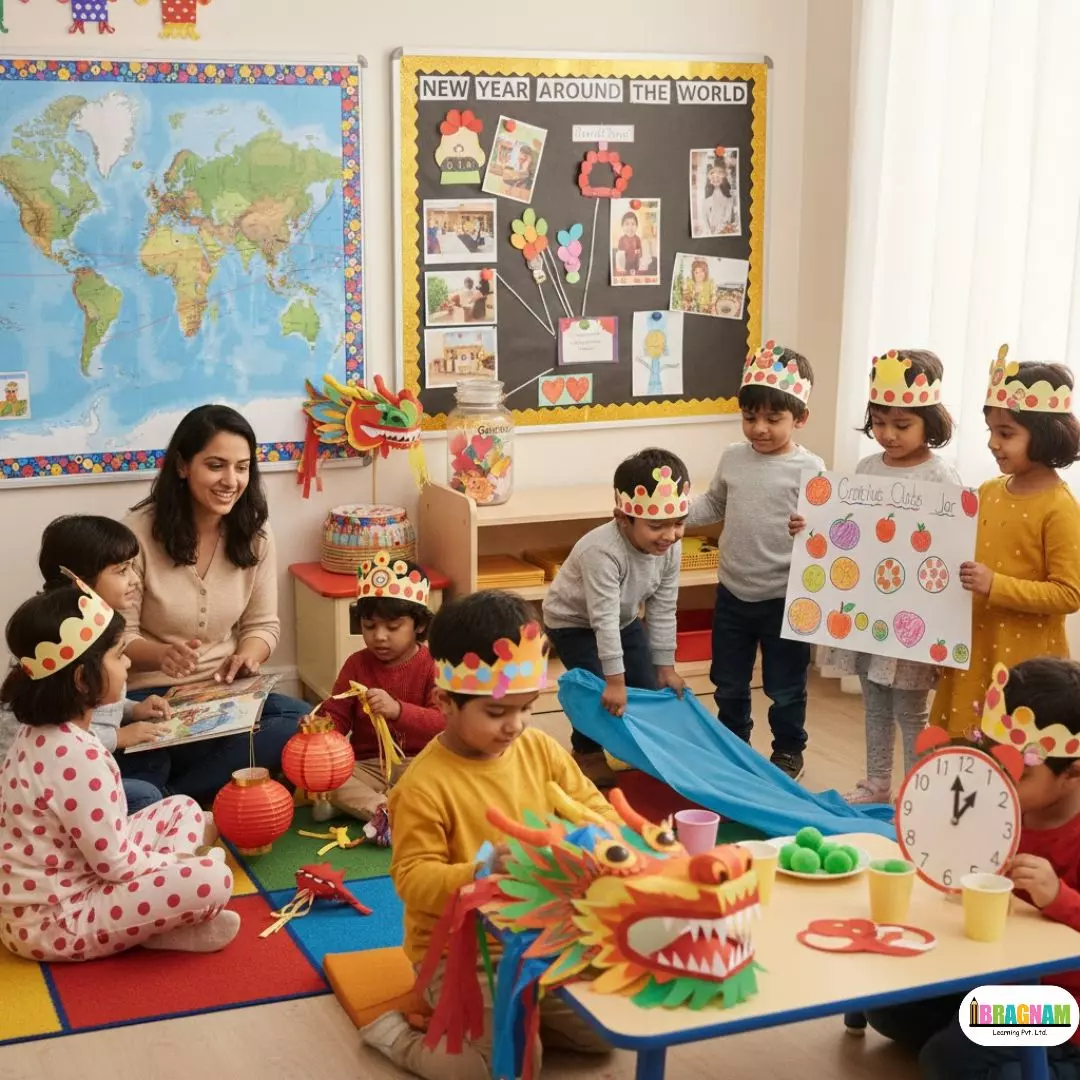
Teaching kindergarten children about different cultures and New Year traditions can be playful, hands-on, and magical when done through stories, songs, crafts, and simple class celebrations.
- Why New Year traditions matter in kindergarten
- Storytime: travel the world through books
- How to use stories effectively
- Story-based mini activities
- Hands-on crafts from around the world
- 1. Paper lanterns and dragon masks (Lunar New Year)
- 2. Grapes and clocks (Spain-inspired tradition)
- 3. Circles and polka dots (Philippines-inspired activity)
- 4. Lucky colours and ocean waves (Brazil-inspired play)
- Music, movement, and sensory play
- Simple musical ideas
- Sensory and role-play corners
- Family involvement and classroom displays
- Invite families to share
- Build a “New Year around the world” wall
- Integrating New Year traditions into learning
- Gentle tips for culturally respectful teaching
- FAQ: Fun ways to teach kids about different cultures and New Year traditions for kindergarten
Why New Year traditions matter in kindergarten
New Year is a natural moment to talk about fresh starts, family, and celebrations, which young children already recognize from home. When teachers link this excitement with simple activities from different cultures, children begin to develop empathy and curiosity about others.
- Learning about global holiday traditions builds early cultural awareness and social–emotional skills.
- Repeated exposure to diverse celebrations helps children understand that there are many “right” ways to celebrate.
Storytime: travel the world through books
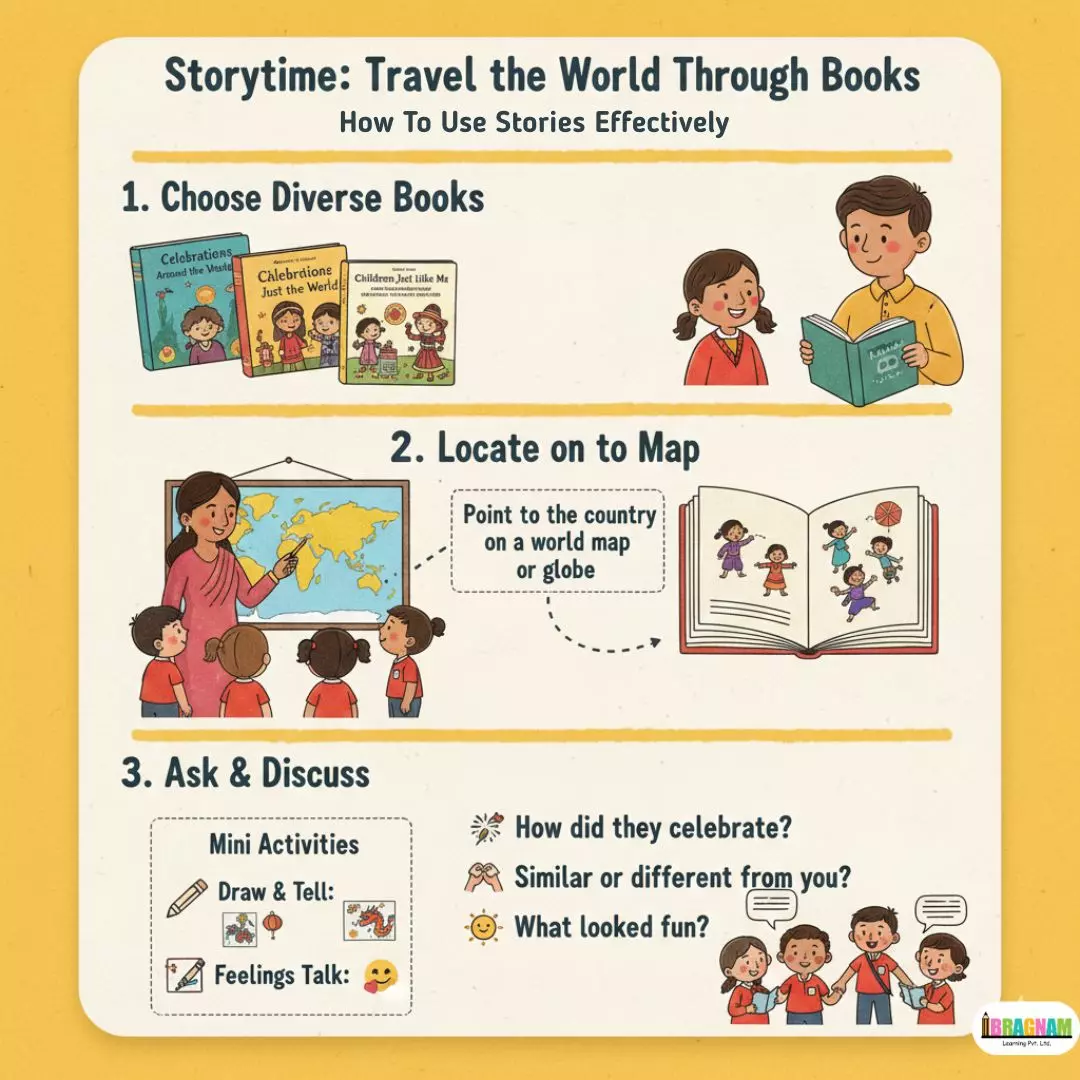
Stories are an easy way to introduce cultures without overwhelming young learners.
How to use stories effectively
- Choose short picture books that show children celebrating New Year or festivals in different countries (for example, collections like “Celebrations Around the World” or “Children Just Like Me”).
- Before reading, point to a world map or globe and show where the story’s children live, using very simple language.
- After reading, ask a few questions:
- How did the family celebrate?
- What was similar or different from your family?
- What looked fun in the story?
Story-based mini activities
- Draw and tell: Ask children to draw their favorite part of the celebration in the story and dictate a sentence about it.
- Feelings talk: Discuss how the children in the story might feel (excited, proud, happy, nervous) and link those feelings to the child’s own experiences of festivals or New Year.
Hands-on crafts from around the world
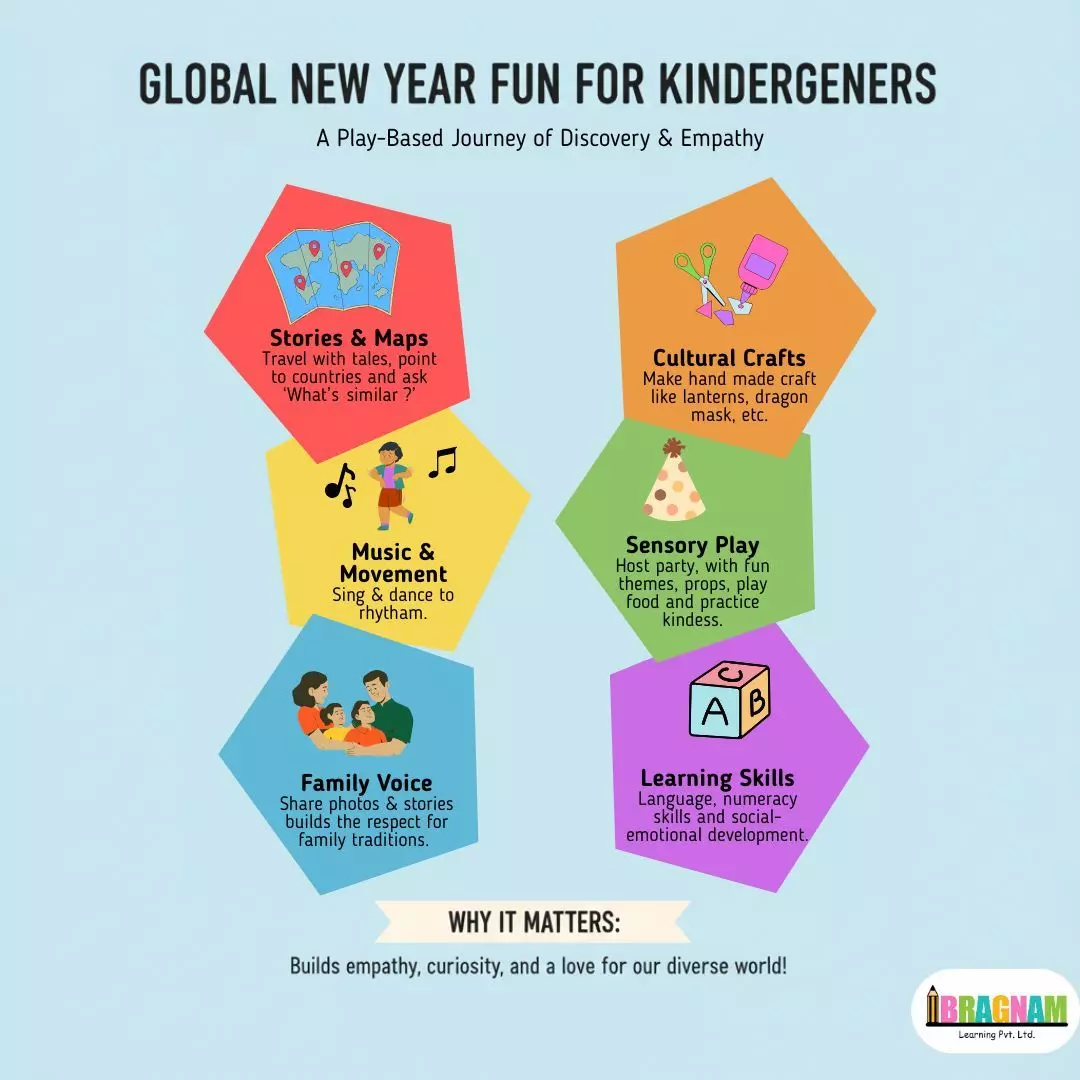
Young children learn best by doing, so simple crafts connected to New Year traditions make culture feel real and joyful.
1. Paper lanterns and dragon masks (Lunar New Year)
Lunar New Year is celebrated in many Asian cultures with lanterns, dragons, and special foods.
- Lantern craft:
- Use coloured paper, safety scissors, and string to create hanging lanterns.
- Talk about light as a symbol of hope and good luck in the new year.
- Dragon mask:
- Use paper plates, coloured paper, and streamers to make dragon or lion faces.
- Organize a mini “dragon parade” around the classroom while playing music.
2. Grapes and clocks (Spain-inspired tradition)
In Spain, many families eat 12 grapes at midnight for good luck in each month of the coming year.
- Use green pom-poms or paper “grapes” to count to 12 together in a playful way.
- Create a big paper clock and practice counting numbers 1–12 as you “ring in” pretend New Year.
3. Circles and polka dots (Philippines-inspired activity)
In the Philippines, round shapes and polka dots symbolize coins and prosperity.
- Invite children to draw or collage round shapes—fruits, bubbles, or coins—on a large class poster.
- Have a “circle dress-up day” where children wear polka dots or add dot stickers to paper crowns.
4. Lucky colours and ocean waves (Brazil-inspired play)
In Brazil, many people welcome the New Year by wearing white and jumping over seven ocean waves for good luck.
- Use a blue cloth or paper on the floor as “waves” and let children gently jump over them while counting from 1 to 7.
- Talk about colours that feel “lucky,” “calm,” or “happy,” and let children choose a colour to add to a class mural.
Music, movement, and sensory play
Music and movement help children remember information and connect it to positive emotions.
Simple musical ideas
- Play short clips of traditional New Year or festival music from different countries and invite children to move freely and safely to the rhythm.
- Use basic instruments (or homemade shakers) to keep a steady beat while you talk about how families might dance or sing together.
Sensory and role-play corners
Family involvement and classroom displays
- Set up a pretend “celebration corner” with:
- Play food from different cultures (plastic dumplings, fruits, breads).
- Simple costumes like scarves, hats, or crowns.
- Encourage children to “host” a New Year party and practice polite greetings, sharing, and taking turns.
Families are powerful partners in teaching children about cultures and traditions.
Invite families to share
- Ask families (with clear, respectful communication) if they would like to:
- Send a photo of their New Year or festival celebrations.
- Share a simple greeting, song, or tradition from their culture.
- Create an inclusive rule that children can always say “no” if they do not want to share personal traditions, keeping the environment safe and respectful.
Build a “New Year around the world” wall
- Add:
- A simple world map with photos or drawings showing different celebrations.
- Children’s crafts (lanterns, masks, circles, crowns).
- One child-friendly sentence under each item to explain the tradition in simple words.
Integrating New Year traditions into learning
New Year traditions can easily connect to core kindergarten skills like counting, language, art, and socio-emotional learning.
- Maths:
- Count grapes, waves, lanterns, or dragon scales.
- Sort items by colour, shape, or size.
- Language:
- Learn simple greetings like “Happy New Year” in different languages.
- Do vocabulary games with words like “celebrate,” “tradition,” “family,” and “hope.”
Social–emotional skills:
- Create a class “gratitude jar” where children dictate or draw things they are thankful for from the last year.
- Talk about simple “goals” such as helping friends, sharing toys, or trying a new activity.
Gentle tips for culturally respectful teaching
When teaching about different cultures and New Year traditions, the goal is to be respectful, accurate, and age-appropriate.
- Keep explanations short and concrete; avoid stereotypes or jokes about cultures.
- Emphasize that even within one country, families may celebrate in different ways.
- Use real photos or child-friendly videos when possible to show authentic practices.
FAQ: Fun ways to teach kids about different cultures and New Year traditions for kindergarten
Q1. How do you introduce different New Year traditions without confusing kindergarten children?
Start with one or two simple traditions at a time, connect them to familiar ideas like family, food, or fireworks, and use visuals such as books, photos, and maps to give clear context.
Q2. What are some quick New Year craft ideas for teaching about cultures?
Easy options include paper lanterns for Lunar New Year, dragon masks for parades, circle collages inspired by Filipino New Year, and crown-making for global “New Year kings and queens.”
Q3. How can I involve parents in teaching New Year traditions from around the world?
Invite parents to send photos, greetings, or simple stories about how they celebrate, and display these contributions on a classroom “family traditions wall” with child-friendly captions.
Q4. Are New Year activities suitable for children who do not celebrate New Year on January 1st?
Yes, because you can focus on the idea of “a fresh start” and explore different New Years such as Lunar New Year or regional New Year festivals, showing there are many calendars and celebration dates.
Q5. How can New Year traditions support early learning goals?
New Year activities can integrate counting, sorting, language development, creativity, and social–emotional skills through crafts, stories, music, and class discussions about kindness and goals.

Leave A Comment