
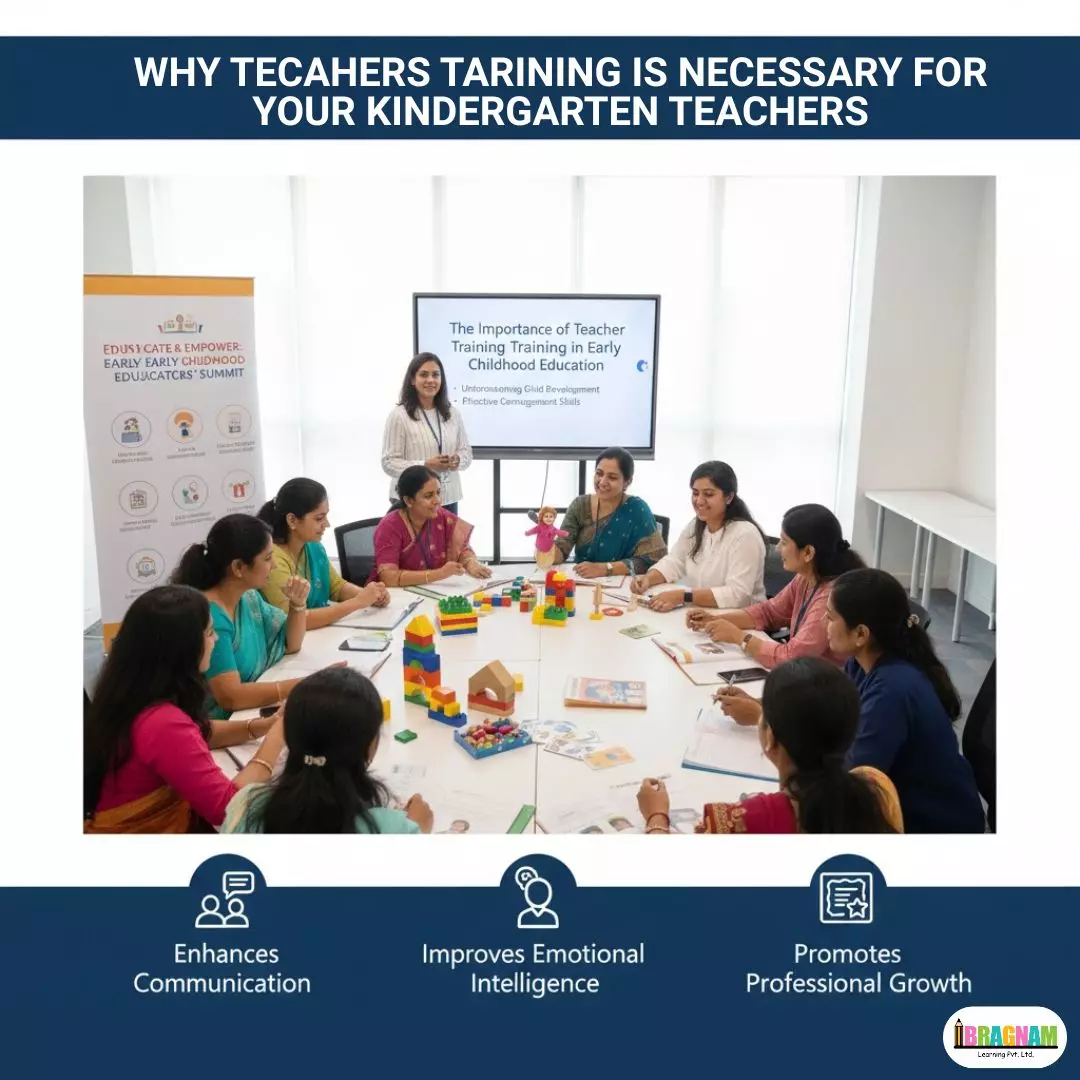
Kindergarten is the foundation of a child’s learning journey. It’s the first time many children interact with a structured environment, new faces, and guided learning experiences. But who ensures this environment is nurturing, stimulating, and developmentally appropriate?
The answer lies in well-trained kindergarten teachers. Teacher training isn’t just about lesson planning—it’s about understanding how young minds grow, play, and learn. Without proper training, even the most passionate educators may struggle to create the right learning atmosphere.
In this blog, we’ll explore why teacher training is essential for kindergarten educators, its benefits for children and institutions, and how investing in teacher development builds stronger early learning environments.
- The Importance of Teacher Training in Early Education
- 1. Understanding Child Development
- Benefits of Teacher Training for Kindergarten Educators
- 1. Builds Strong Classroom Management Skills
- 2. Enhances Teaching Quality
- 3. Promotes Effective Communication
- 4. Improves Emotional Intelligence
- 5. Encourages Continuous Professional Growth
- Types of Training Every Kindergarten Teacher Should Receive
- The Role of Teacher Training in a Kindergarten’s Success
- How Schools Can Implement Effective Teacher Training
- Why Investing in Teacher Training is a Win-Win
- Frequently Asked Questions (FAQs)
- Conclusion
The Importance of Teacher Training in Early Education
At the kindergarten level, teachers aren’t just instructors—they are facilitators of emotional, cognitive, and social growth. A trained teacher possesses both the knowledge and skills to help every child develop holistically.
1. Understanding Child Development
Children aged 2–6 experience rapid growth physically, emotionally, and intellectually. Teacher training programs help educators:
- Understand developmental milestones.
- Identify learning challenges or behavioral concerns early.
- Tailor activities according to each child’s learning style.
When teachers grasp the nuances of early childhood development, they can support children more effectively and prevent learning difficulties later on.
Benefits of Teacher Training for Kindergarten Educators
Comprehensive training bridges the gap between theoretical knowledge and classroom practice. Let’s explore the top benefits.
1. Builds Strong Classroom Management Skills
Managing a room full of curious toddlers is no easy feat! Trained teachers learn strategies to handle classroom routines, encourage positive behavior, and ensure discipline without being harsh.
2. Enhances Teaching Quality
A structured training program familiarizes teachers with various teaching methodologies—including play-based, Montessori, and experiential methods. This variety helps educators choose the right approach for their group of learners.
3. Promotes Effective Communication
Trained teachers communicate effectively not only with children but also with parents. They can provide constructive feedback about a child’s progress and collaborate with parents for better outcomes.
4. Improves Emotional Intelligence
Training programs also emphasize empathy, patience, and emotional awareness—qualities that define great kindergarten teachers. These traits help children feel safe, valued, and confident.
5. Encourages Continuous Professional Growth
When kindergartens invest in ongoing teacher training, educators remain motivated and updated with evolving educational practices. It enhances job satisfaction and reduces turnover rates.
Types of Training Every Kindergarten Teacher Should Receive
Not all training is the same. To nurture an educator’s full potential, schools should design programs covering key areas:
- Early Childhood Pedagogy: Exploring how children learn best through play and exploration.
- Classroom Management: Techniques for creating structured yet flexible classrooms.
- Child Psychology: Understanding emotions, motivations, and behaviors in young learners.
- Curriculum Planning: Designing balanced lesson plans that blend fun and learning.
- Parent Communication: Building strong home-school partnerships.
- Health and Safety Training: Ensuring hygiene, first aid, and emergency preparedness.
These modules collectively create confident, responsible, and creative teachers ready for real-world challenges.
The Role of Teacher Training in a Kindergarten’s Success
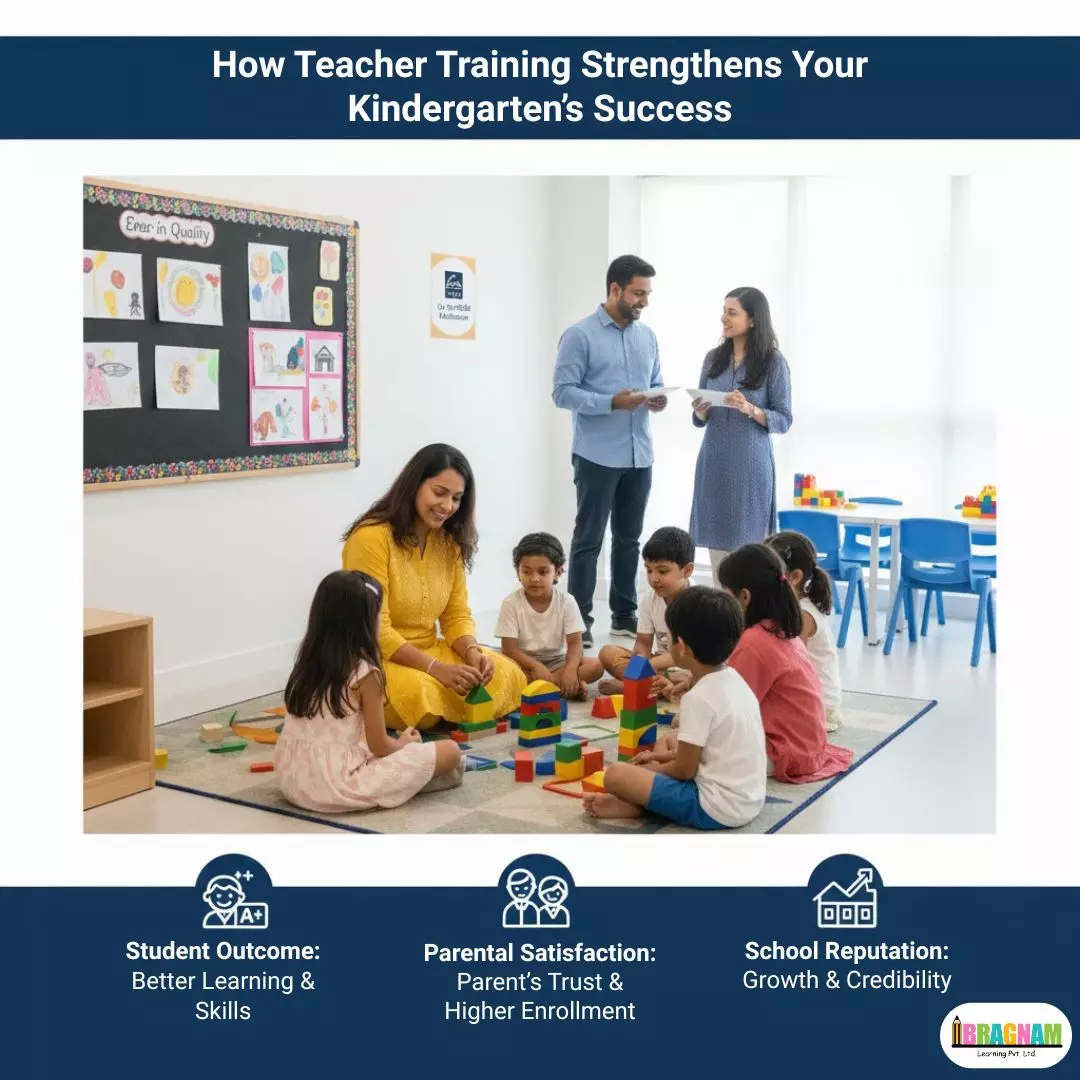
A kindergarten’s reputation depends heavily on teacher performance. Well-trained teachers directly influence:
- Student outcomes: Better literacy, numeracy, and social skills.
- Parental satisfaction: Increased trust and long-term enrollment.
- Operational efficiency: Reduced classroom disruptions, smoother operations.
When teachers are trained regularly, kindergartens thrive as safe, joyful learning spaces.
How Schools Can Implement Effective Teacher Training
Here are simple, actionable steps schools can adopt:
- Partner with certified training institutions. Collaborate with professional teacher training organizations that specialize in early childhood education.
- Offer regular workshops and refresher courses. Schedule quarterly or annual training sessions to keep educators updated.
- Encourage mentorship. Senior teachers can guide new recruits, creating a collaborative learning culture.
- Monitor and evaluate. Assess teacher performance before and after training to ensure measurable impact.
- Recognize and reward progress. Celebrating teacher achievements boosts morale and commitment.
Why Investing in Teacher Training is a Win-Win
When schools prioritize teacher training, the benefits ripple across the ecosystem:
- Children gain happier, more stimulating learning experiences.
- Teachers feel valued, confident, and capable.
- Parents trust the school’s quality and professionalism.
- Institutions build credibility and attract more admissions.
In short, investing in teacher training isn’t an expense—it’s an investment in the future.
Frequently Asked Questions (FAQs)
1. What is the main purpose of kindergarten teacher training?
To equip teachers with the skills and understanding necessary to support children’s early learning, emotional development, and overall well-being.
2. How often should kindergarten teachers undergo training?
Ideally, teachers should participate in refresher workshops or online training sessions at least once a year to stay updated.
3. What topics are covered in kindergarten teacher training programs?
These include child psychology, classroom management, early learning pedagogy, communication skills, and safety practices.
4. Can untrained teachers handle kindergarten classes effectively?
While passion helps, untrained teachers often struggle with structured learning, behavior management, and developmental milestones.
5. How does teacher training benefit parents and schools?
Trained teachers build stronger home-school partnerships, improve satisfaction rates, and contribute to better institutional performance.
Conclusion
Teacher training is the cornerstone of quality early education. It ensures that children receive the best possible start in life and that educators feel empowered to guide with confidence and care.
For kindergartens, investing in training isn’t optional—it’s essential for success, growth, and lasting impact.
Ready to transform your preschool’s learning environment?
Invest in teacher training today and see how it builds happier teachers, confident learners, and a thriving kindergarten community.


Leave A Comment