
- Boosting Social Skills: Helping Kindergarteners Make Friends and Build Relationships
- Why Boosting Social Skills Matter in Kindergarten
- Understanding Social and Emotional Development
- 1. Self-awareness and Emotion Recognition
- 2. Social Interaction and Empathy
- 3. Relationship-Building
- Practical Strategies for Boosting Social Skills in Kindergarten
- 1. Create Opportunities for Cooperative Play
- 2. Model Positive Behavior
- 3. Encourage Emotional Expression
- 4. Teach Problem-Solving Skills
- 5. Celebrate Kindness and Cooperation
- Building Social Skills Through Classroom Activities
- Circle Time Conversations
- Storytelling and Role Play
- Partner and Group Tasks
- Emotion Cards and Games
- The Role of Parents in Social Development
- Long-Term Benefits of Strong Social Skills
- Frequently Asked Questions (FAQs)
- 1. Why are social skills important in kindergarten?
- 2. How can parents teach social skills at home?
- 3. What if my child struggles to make friends?
- 4. How do teachers support social-emotional development?
- 5. What are good books for teaching friendship?
- Conclusion: Nurturing Connection and Confidence
Boosting Social Skills: Helping Kindergarteners Make Friends and Build Relationships
Boosting social skills in kindergarten is essential for helping children develop the confidence to make friends and build meaningful relationships. From classroom activities to home routines, boosting social skills supports lifelong emotional and academic success.
This guide explores why social-emotional development is essential and provides simple, effective strategies to help young learners build lasting friendships and healthy relationships.
Why Boosting Social Skills Matter in Kindergarten
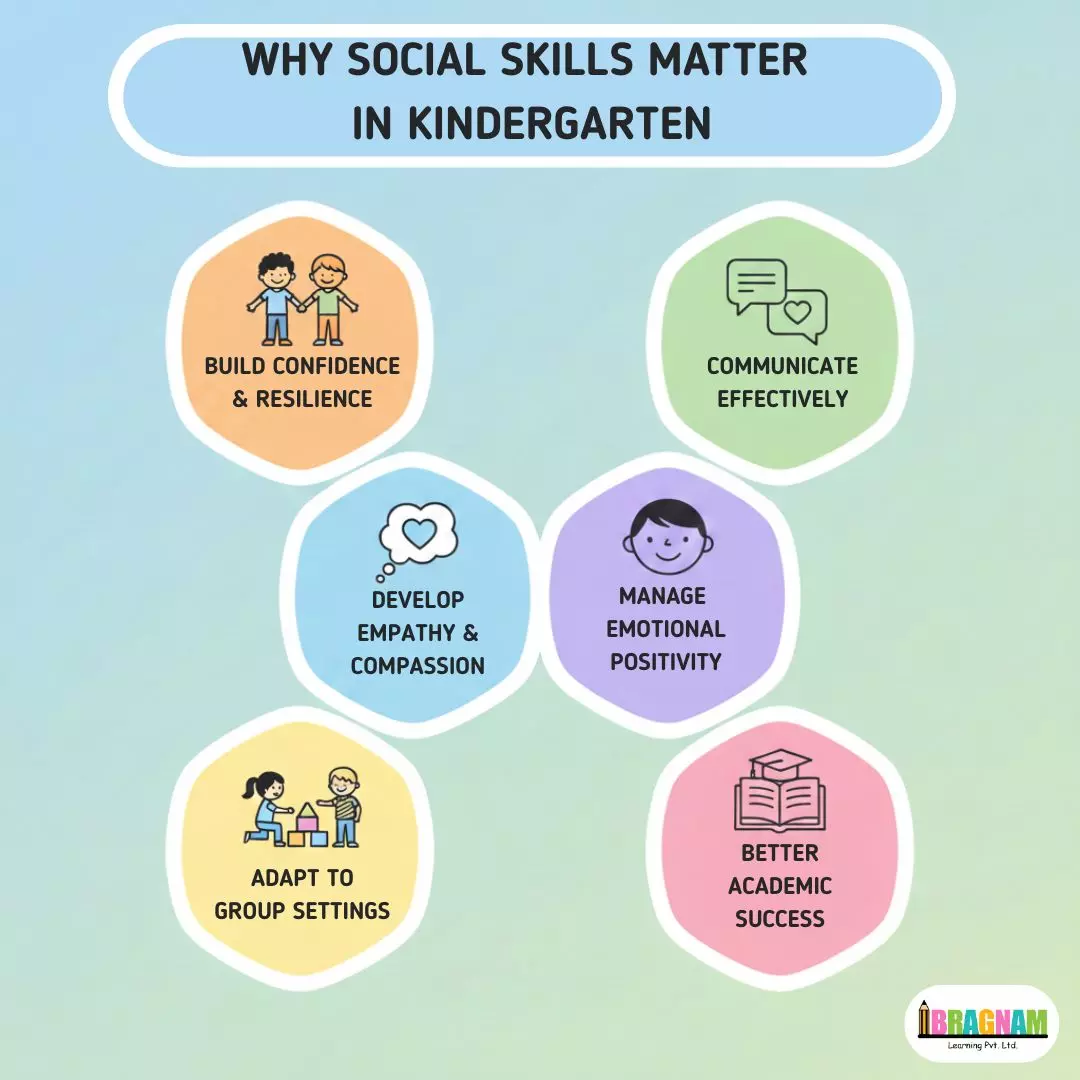
Boosting Social skills go far beyond learning how to say “hello” or “please.” They shape how children understand emotions, resolve conflicts, and work with others. Strong social-emotional development helps children:
- Develop empathy and compassion
- Communicate effectively with peers and adults
- Build self-confidence and resilience
- Manage emotions in positive ways
- Adapt to group settings with cooperation and respect
According to research by the Collaborative for Academic, Social, and Emotional Learning (CASEL), children with well-developed social-emotional skills tend to perform better academically, have better mental health, and show improved behavior throughout school years.
Understanding Social and Emotional Development
Boosting social skills involves nurturing:
1. Self-awareness and Emotion Recognition
Children identify feelings and learn emotional regulation, a key aspect of boosting social skills in kindergarten.
2. Social Interaction and Empathy
Empathy and positive social interactions are central to boosting social skills. Activities that encourage respect and sharing reinforce these abilities.
3. Relationship-Building
Building friendships is the end goal of boosting social skills, empowering children to cooperate and resolve conflicts.
When these skills develop together, they create a foundation for emotional intelligence and lifelong social confidence.
Practical Strategies for Boosting Social Skills in Kindergarten
Parents and educators can play a key role in guiding children to build strong social connections. Here are some actionable strategies to use at home or school.
1. Create Opportunities for Cooperative Play
Structured group activities naturally encourage teamwork and communication. Activities such as building blocks, art projects, or role-playing games teach children how to share, negotiate, and express ideas.
Examples of group games:
- Building a puzzle together
- Pretend play (e.g., “let’s open a shop”)
- Music and dance sessions
2. Model Positive Behavior
Children learn by observing adults. Use kind words, practice patience, and show respect in everyday interactions. Modeling good manners and empathy helps children mirror those behaviors with peers.
3. Encourage Emotional Expression
Ask open-ended questions like “How did that make you feel?” or “What do you think your friend felt?” This helps children verbalize emotions and develop empathy for others.
4. Teach Problem-Solving Skills
Small conflicts are part of daily life in kindergarten. Teach children to use calm strategies—such as talking it out, taking turns, or asking a teacher for help. The goal is to guide them toward independent conflict resolution.
5. Celebrate Kindness and Cooperation
Positive reinforcement encourages repetition. Praise children when they share, comfort a friend, or include someone new in play. Recognizing kind actions boosts confidence and social initiative.
Building Social Skills Through Classroom Activities
Teachers can make social learning part of everyday classroom life. Here are a few ideas:
Circle Time Conversations
Create a morning routine where children sit together, share news, and greet peers. This builds communication skills and strengthens teacher-child relationships.
Storytelling and Role Play
Use age-appropriate stories that illustrate emotions, friendship, and teamwork. Follow up with role-playing activities to help children understand how to act kindly in real-life situations.
Partner and Group Tasks
Assign tasks in pairs or small groups to promote cooperation and inclusion. Children learn to value others’ opinions while improving teamwork.
Emotion Cards and Games
Visual tools like “feelings cards” help children recognize emotions in themselves and others—an essential step in emotional regulation.
The Role of Parents in Social Development
Parents are a child’s first teachers, and their influence continues even after school begins. To support children socially:
- Arrange playdates or group activities with other children
- Offer praise when your child makes friends or helps others
- Discuss daily interactions—listen without judging
- Teach and reinforce empathy by talking about feelings
- Limit screen time to allow more personal engagement
When children experience consistent support from both home and school, they gain confidence and emotional balance.
Long-Term Benefits of Strong Social Skills
Children who master social skills early experience benefits that extend beyond kindergarten:
- Better classroom participation and teamwork
- Greater self-regulation and focus
- Improved emotional intelligence
- Stronger friendships and reduced loneliness
- Long-term success in academics and personal growth
Building friendships may seem simple, but the underlying skills—empathy, communication, and cooperation—prepare children for thriving in school and life.
Frequently Asked Questions (FAQs)
1. Why are social skills important in kindergarten?
Social skills help children connect with peers, express themselves clearly, and adapt to group environments. These abilities form the base for emotional and academic growth.
2. How can parents teach social skills at home?
Parents can model kindness, host playdates, encourage teamwork activities, and discuss emotions openly to foster empathy and cooperation.
3. What if my child struggles to make friends?
Encourage small steps, like greeting peers or joining group activities. Offer gentle coaching and build confidence through shared experiences.
4. How do teachers support social-emotional development?
Teachers use cooperative games, circle time discussions, and role-play to help students recognize emotions and interact positively with others.
5. What are good books for teaching friendship?
Titles like “The Rainbow Fish” by Marcus Pfister and “Have You Filled a Bucket Today?” by Carol McCloud are excellent for discussing empathy and sharing.
Conclusion: Nurturing Connection and Confidence
Boosting social skills in kindergarten helps children thrive not only in academics but in life. By encouraging kindness, empathy, and cooperation, parents and teachers can guide children toward healthy friendships and emotional well-being.
Remember, every gentle nudge, shared story, or kind conversation contributes to a child’s ability to connect confidently with others.



Leave A Comment