
Illuminating Traditions: The History of Dhanteras, Diwali, and Govardhan Puja
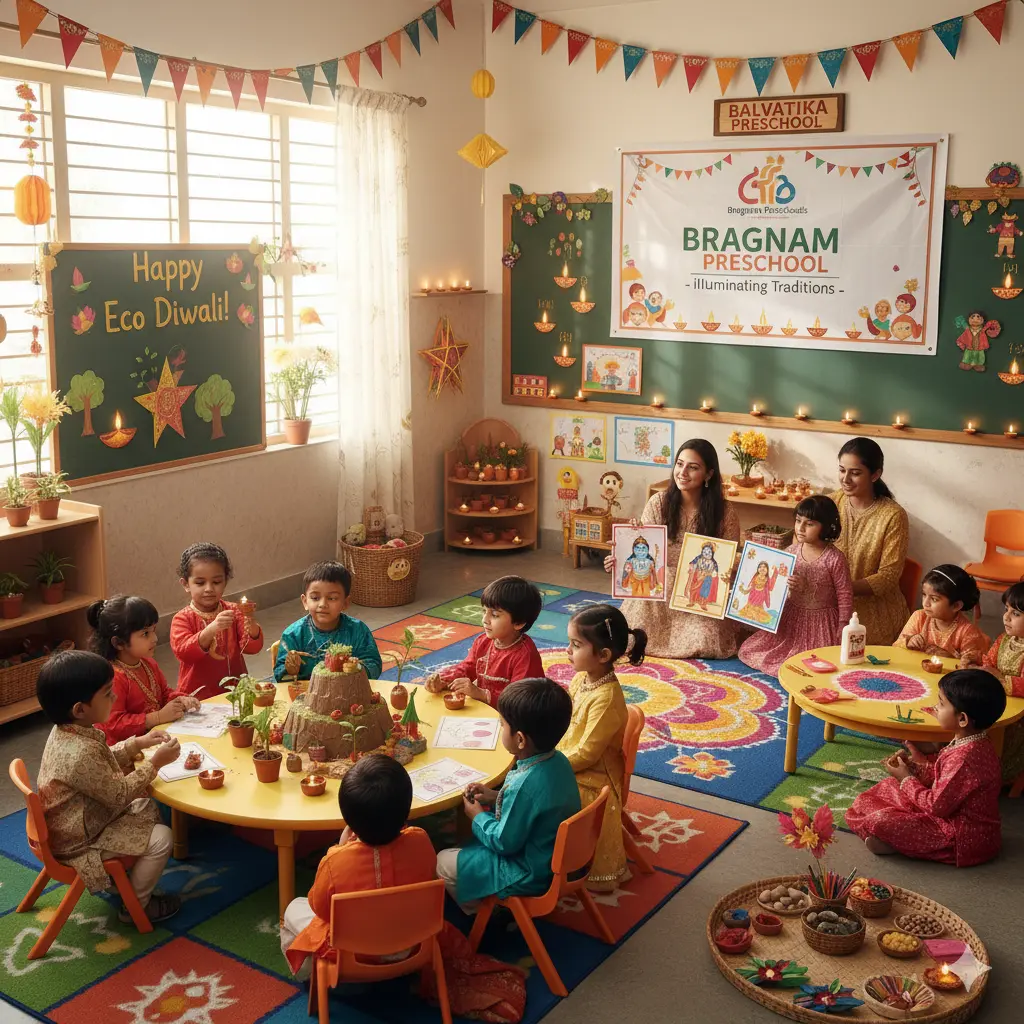
India’s festive season arrives each autumn with a symphony of lights, prayers, and family bonds. Among its most cherished festivals are Dhanteras, Diwali, and Govardhan Puja — celebrations that embody prosperity, devotion, and gratitude. At Bragnam Preschools, we believe festivals are beautiful stories that teach our children cultural roots and moral values. Let’s explore the historical significance and timeless lessons behind these radiant Indian festivals.
The Golden Beginning: History of Dhanteras
The festive week begins with Dhanteras, the day dedicated to wealth and wellness. “Dhan” translates to wealth, and “Teras” means the thirteenth day of the lunar fortnight. This day holds a special connection with Lord Dhanvantari, the divine physician known as the father of Ayurveda. According to ancient scriptures, Lord Dhanvantari emerged from the ocean during the cosmic event of Samudra Manthan, carrying a pot of Amrita (nectar) — symbolizing health and longevity.
On Dhanteras, families clean and decorate their homes, purchase gold, silver, or utensils as tokens of prosperity, and light lamps to welcome divine blessings. Beyond material wealth, this day reminds us to uphold physical well-being and inner abundance. At Bragnam, we often encourage children to make small “health charts” or drawings inspired by Dhanteras, teaching them that true wealth begins with a healthy body and mind.
The Festival of Lights: Diwali’s Historical Roots
Diwali, or Deepavali, meaning “a row of lights,” is celebrated over five days with immense joy across India. The festival marks the victorious return of Lord Rama to Ayodhya after 14 years of exile and his triumph over Ravana. The citizens of Ayodhya lit oil lamps throughout the city to welcome their beloved king, symbolizing the triumph of good over evil and light over darkness.
But Diwali is not limited to one legend. In different parts of India, this festival carries unique significance:
In Gujarat, it commemorates Goddess Lakshmi, the deity of wealth.
In Bengal, people worship Goddess Kali, representing power and destruction of ignorance.
In northern regions, families honor Lord Rama’s victory, while southern traditions relate Diwali to Lord Krishna’s triumph over Narakasura.
At Bragnam Playschools, Diwali celebrations begin with storytelling sessions where teachers narrate the epic tales of courage and virtue. Children craft colorful diyas, paper lanterns, and rangolis, learning the essence of faith, happiness, and family unity. Through these creative activities, little learners experience how Diwali’s glow is not just about lamps but also about lighting hearts with kindness.
The Day of Gratitude: Govardhan Puja
Immediately after Diwali comes Govardhan Puja, also known as Annakoot, celebrated to honor Lord Krishna’s act of protecting the residents of Vrindavan from a torrential storm. The story unfolds when the people began worshipping Lord Indra, the god of rain. Krishna gently advised them to worship Govardhan Hill, which nourished them through its natural bounty. Angered, Indra unleashed a storm, and Krishna lifted the entire Govardhan Hill on his little finger, sheltering his devotees beneath it until the storm ceased.
Govardhan Puja thus teaches gratitude and humility — reminding everyone to respect nature and remain thankful for nourishment and protection. In many temples, devotees create a symbolic hill using food grains, sweets, and vegetables, offering it to Krishna. The day also marks the bond between humans, nature, and divine grace.
In Bragnam centers, this festival becomes an opportunity to teach eco-consciousness. Children engage in “Nature Appreciation” activities — coloring pictures of hills and forests or planting a small seed to understand the importance of caring for the environment that sustains us.
Festivals that Teach Life Values
Together, Dhanteras, Diwali, and Govardhan Puja form a continuum of human virtues — health, joy, and gratitude. These aren’t just days of ritual but milestones of moral education. For preschoolers, these celebrations nurture emotional intelligence and moral understanding from a tender age. The rhythmic sound of bells, the glow of diyas, and the laughter in classrooms echo lessons in harmony, sharing, and hope.
At Bragnam, festivals are woven into our curriculum not merely as holidays but as cultural experiences. Activities such as diya painting, storytelling, and music sessions encourage children to value tradition while fostering creativity. When they understand why their families light lamps or share sweets, they inherit more than customs – they inherit India’s timeless spirit of togetherness.
Celebrating with Bragnam Across India
Every Bragnam Preschool celebrates these festivals with unique regional flair. Teachers narrate mythological tales in language children can understand, helping them connect history with real-life kindness. Parents often participate in festive decorations and share local stories. The shared laughter and learning make every Bragnam center shine with Diwali’s joy, Dhanteras’ prosperity, and Govardhan’s gratitude.
As lights illuminate homes across India, let us remind our children that the brightest light is the one that glows within — nurtured by goodness, culture, and love. 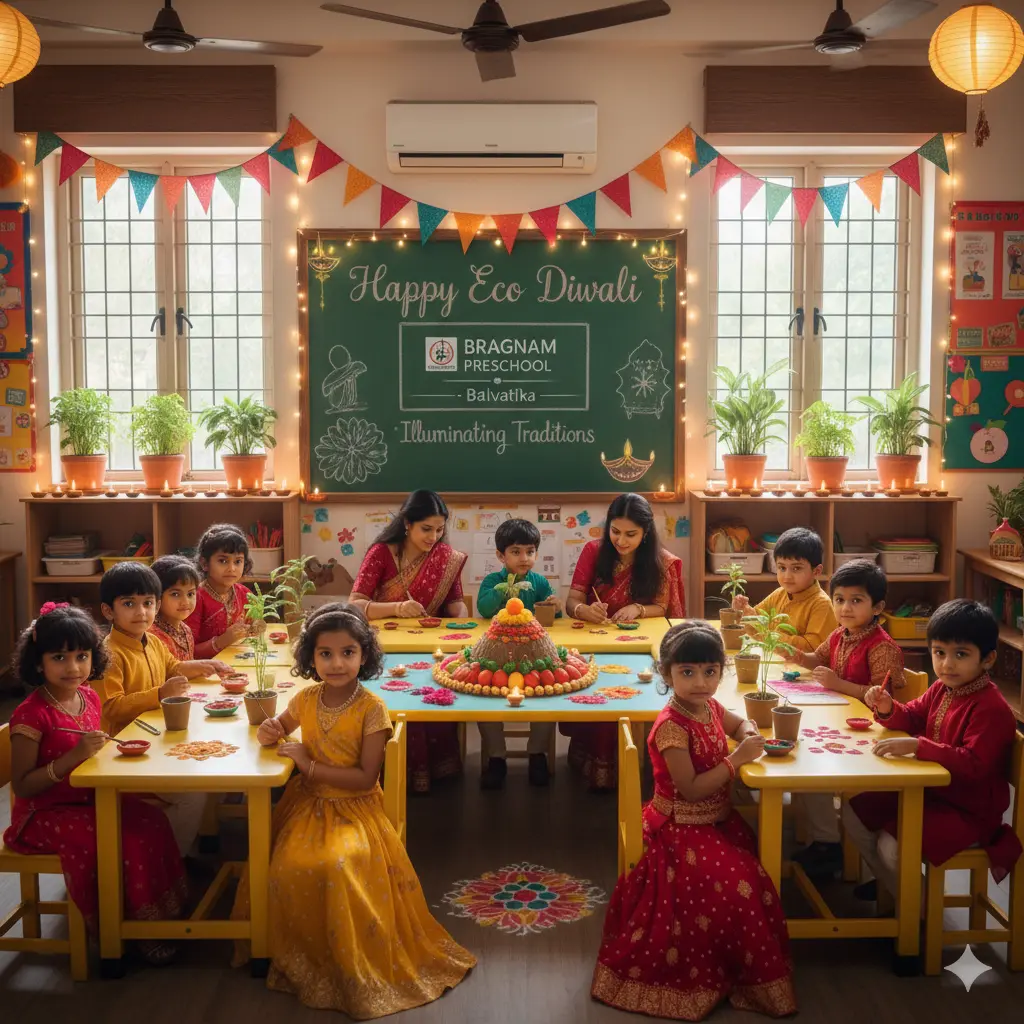

Leave A Comment